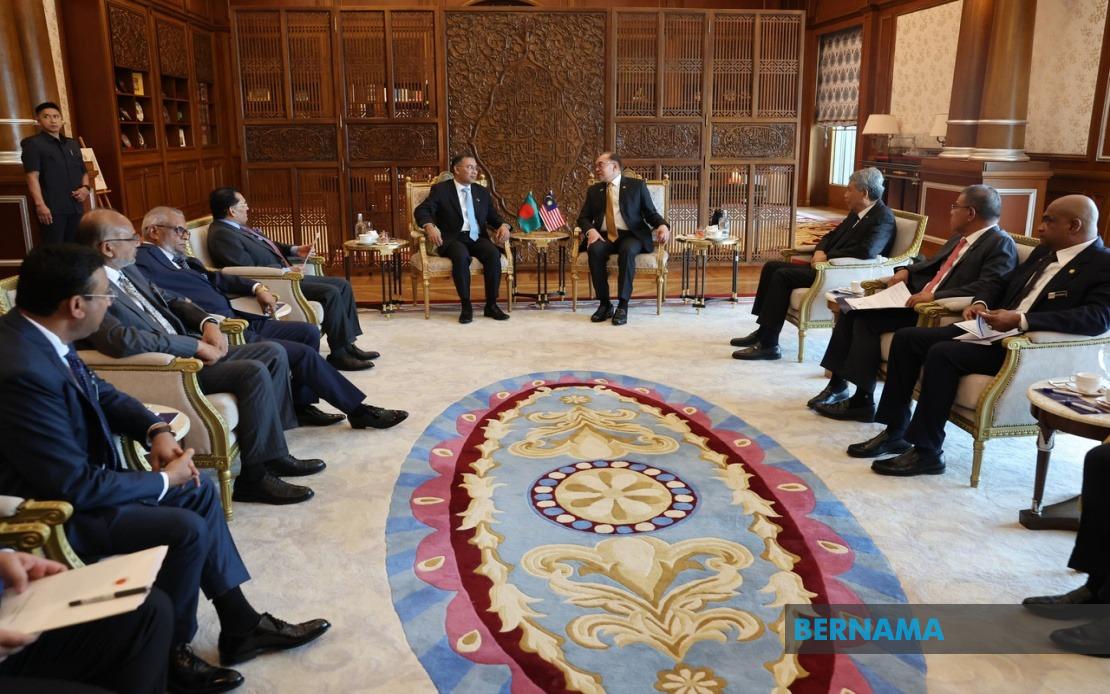
Prime Minister Datuk Seri Anwar Ibrahim has pledged that Malaysia and Bangladesh will intensify collaborative efforts to resolve the protracted Rohingya refugee situation by working through established ASEAN channels and engaging directly with Myanmar's government. The commitment emerged during bilateral talks in Putrajaya between Anwar and visiting Bangladesh Prime Minister Tarique Rahman, underscoring both nations' determination to tackle one of Southeast Asia's most pressing humanitarian challenges.
The Rohingya crisis remains a defining regional issue, with hundreds of thousands of displaced persons currently sheltered across Malaysia and Bangladesh following large-scale displacement from Myanmar's Rakhine State. By channelling their response through ASEAN mechanisms, Malaysia and Bangladesh signal their intention to address the problem not as isolated bilateral actors but as members of a cohesive regional bloc capable of exerting collective pressure on Myanmar. This approach carries significance for Southeast Asian diplomacy, as it reflects the growing recognition that refugee situations transcend national borders and demand multilateral solutions.
An important pillar of the proposed cooperation involves engaging Myanmar's authorities directly through diplomatic intermediaries, including the foreign ministers of both Malaysia and Bangladesh. This strategy acknowledges that sustainable resolution requires Myanmar's active participation in facilitating the safe and dignified return of Rohingya populations to their homeland. For Malaysia, which hosts a substantial Rohingya population beyond official refugee camps, the involvement of ASEAN platforms offers a potential avenue to coordinate burden-sharing among regional partners rather than shouldering the responsibility alone.
Bangladesh Prime Minister Tarique Rahman expressed grave concern about the humanitarian conditions endured by Rohingya communities sheltering in his country, which hosts the world's largest refugee camp in Cox's Bazar. He specifically acknowledged Malaysia's ongoing support for efforts aimed at ensuring repatriation is carried out safely and allows for human dignity to be preserved throughout the process. This mutual recognition of shared responsibility indicates that both governments view the refugee situation not as a temporary crisis but as a sustained challenge requiring coordinated medium and long-term strategies.
Beyond the Rohingya question, the bilateral visit marked an opportunity to advance Malaysia-Bangladesh ties across multiple economic and strategic domains. The two leaders reviewed progress in their overall relationship and identified sectors where collaboration could be expanded, including trade and investment, human resources, semiconductor manufacturing, energy production, agriculture and higher education. This diversified agenda reflects the maturing nature of Malaysia-Bangladesh relations and the recognition that economic interdependence can strengthen political bonds.
The formal signing of agreements during the visit underscored this broadening engagement. A Memorandum of Understanding on cultural cooperation was exchanged alongside two Exchanges of Notes addressing counter-terrorism research initiatives and bilateral investment promotion mechanisms. These instruments create institutional frameworks for sustained collaboration beyond the immediate diplomatic moment, establishing concrete structures through which both nations can pursue their mutual interests.
Trade statistics reveal the growing economic significance of the Malaysia-Bangladesh relationship. In 2025, bilateral commerce totalled RM12.18 billion, with Malaysian exports reaching RM10.08 billion, primarily driven by petroleum and energy products. Bangladesh supplied RM2.10 billion in imports to Malaysia, concentrated in textiles, apparel and footwear sectors. This trade composition reflects Bangladesh's established strengths in labour-intensive manufacturing while highlighting Malaysia's role as an energy supplier to the South Asian region.
Within the broader South Asian context, Bangladesh has emerged as Malaysia's second-largest trading partner after India, both as an export destination and source of imports. Globally, Bangladesh ranked as Malaysia's 28th largest trading partner in 2025, demonstrating the relationship's importance to Malaysia's diversified trade portfolio. The size and structure of this trade relationship creates mutual economic incentives for deepening diplomatic cooperation, as disruptions in either direction would impose costs on both economies.
Tarique Rahman's visit represented his inaugural bilateral foreign journey since assuming office in February 2026, a symbolic choice that underscores Bangladesh's prioritisation of relations with Malaysia and the broader Southeast Asian region. This precedent-setting visit signals Bangladesh's commitment to strengthening ties with ASEAN nations as part of a broader strategic reorientation toward Southeast Asia. For Malaysia, receiving Bangladesh's prime minister as his first official bilateral destination abroad carries implications for how both nations intend to position themselves within regional diplomatic hierarchies and partnerships.
The emphasis on working through ASEAN mechanisms distinguishes this approach from purely bilateral problem-solving. ASEAN's consensus-based decision-making and emphasis on non-interference present both opportunities and constraints. While the bloc's structures could amplify pressure on Myanmar through collective member engagement, ASEAN's traditional reluctance to criticise member states may limit the depth of intervention possible. Nevertheless, the Malaysia-Bangladesh initiative demonstrates an attempt to navigate these constraints by framing Rohingya resolution as a regional responsibility rather than an external imposition.
For Malaysia specifically, the Rohingya presence has become increasingly complex politically and socially. Hosting refugee populations creates demographic, resource and social cohesion challenges while simultaneously reflecting Malaysia's traditional humanitarian commitments. By working through ASEAN and bilateral channels with Bangladesh, Malaysia seeks to demonstrate active problem-solving rather than passive acceptance of the status quo. This approach may help manage domestic political sensitivities surrounding refugee issues while contributing to what Malaysian policymakers can frame as constructive regional diplomacy.
Looking forward, the success of Malaysia-Bangladesh cooperation on the Rohingya crisis will depend on whether ASEAN's collective efforts can persuade or pressure Myanmar into creating conditions conducive to voluntary, safe and dignified repatriation. Current geopolitical complexities within Myanmar complicate this objective, yet sustained diplomatic engagement through established regional channels represents an important pathway for incremental progress. The commitment articulated during Tarique Rahman's visit reflects both nations' understanding that regional stability and humanitarian responsibility are inseparable objectives.
%22%2F%3E%3C%2Fpattern%3E%3C%2Fdefs%3E%3Crect%20width%3D%22100%25%22%20height%3D%22100%25%22%20fill%3D%22url(%23ph4sj74g)%22%2F%3E%3Crect%20width%3D%22100%25%22%20height%3D%22100%25%22%20fill%3D%22url(%23ph4sj74p)%22%2F%3E%3Ctext%20x%3D%2250%25%22%20y%3D%2250%25%22%20text-anchor%3D%22middle%22%20dominant-baseline%3D%22central%22%20fill%3D%22rgba(255%2C255%2C255%2C0.95)%22%20font-family%3D%22Georgia%2C%20'Times%20New%20Roman'%2C%20serif%22%20font-weight%3D%22700%22%20font-size%3D%22170%22%20letter-spacing%3D%22-0.02em%22%3EMalaysia%3C%2Ftext%3E%3C%2Fsvg%3E)
%22%2F%3E%3C%2Fpattern%3E%3C%2Fdefs%3E%3Crect%20width%3D%22100%25%22%20height%3D%22100%25%22%20fill%3D%22url(%23ph2078wg)%22%2F%3E%3Crect%20width%3D%22100%25%22%20height%3D%22100%25%22%20fill%3D%22url(%23ph2078wp)%22%2F%3E%3Ctext%20x%3D%2250%25%22%20y%3D%2250%25%22%20text-anchor%3D%22middle%22%20dominant-baseline%3D%22central%22%20fill%3D%22rgba(255%2C255%2C255%2C0.95)%22%20font-family%3D%22Georgia%2C%20'Times%20New%20Roman'%2C%20serif%22%20font-weight%3D%22700%22%20font-size%3D%22170%22%20letter-spacing%3D%22-0.02em%22%3EMalaysia%3C%2Ftext%3E%3C%2Fsvg%3E)
%22%2F%3E%3C%2Fpattern%3E%3C%2Fdefs%3E%3Crect%20width%3D%22100%25%22%20height%3D%22100%25%22%20fill%3D%22url(%23ph40iosg)%22%2F%3E%3Crect%20width%3D%22100%25%22%20height%3D%22100%25%22%20fill%3D%22url(%23ph40iosp)%22%2F%3E%3Ctext%20x%3D%2250%25%22%20y%3D%2250%25%22%20text-anchor%3D%22middle%22%20dominant-baseline%3D%22central%22%20fill%3D%22rgba(255%2C255%2C255%2C0.95)%22%20font-family%3D%22Georgia%2C%20'Times%20New%20Roman'%2C%20serif%22%20font-weight%3D%22700%22%20font-size%3D%22320%22%20letter-spacing%3D%22-0.02em%22%3EMACC%3C%2Ftext%3E%3C%2Fsvg%3E)