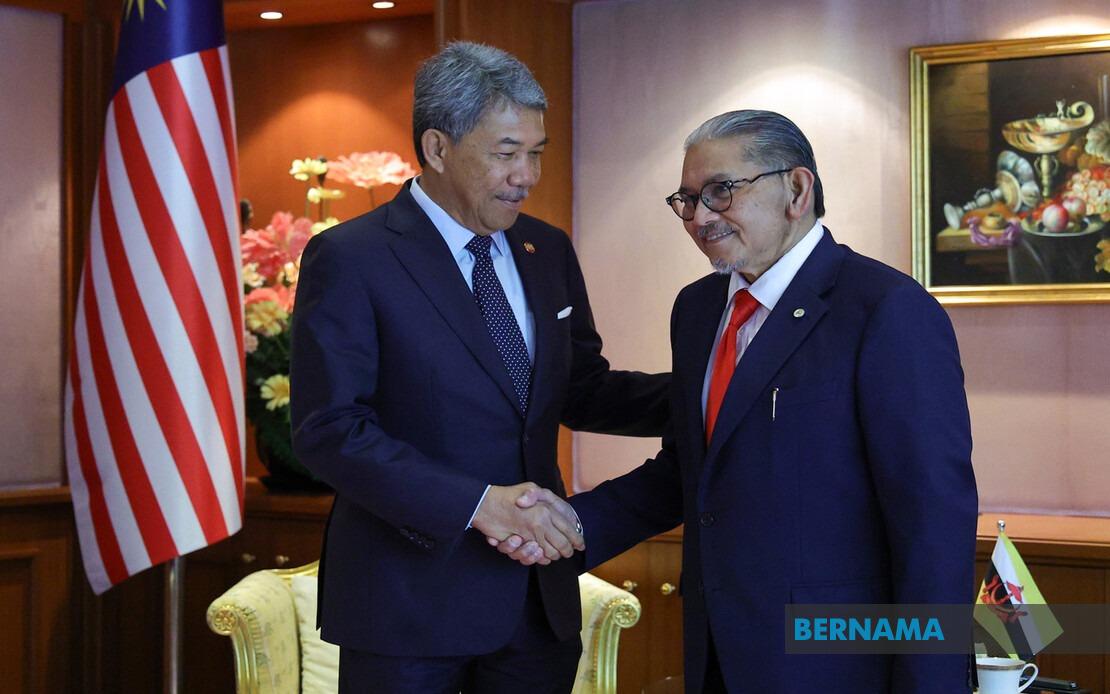
Malaysia and Brunei are cementing their partnership through expanded cooperation on critical regional issues, with discussions held during the 27th Meeting on the Implementation of the Exchange of Letters in Bandar Seri Begawan on Wednesday. The high-level gathering, jointly chaired by Malaysia's Foreign Minister Datuk Seri Mohamad Hasan and Brunei's Second Minister of Foreign Affairs Datuk Seri Setia Erywan Mohd Yusof, underscored the two nations' commitment to resolving longstanding boundary matters and enhancing people-to-people connectivity across the region.
The meeting addressed a comprehensive agenda centred on deepening bilateral relations, with particular focus on the demarcation of land and maritime boundaries that have long defined the relationship between the two Southeast Asian neighbours. These discussions reflect a pragmatic approach to border management, recognising that while the boundaries themselves are historically established, the practical work of formal demarcation requires careful attention to contemporary ground conditions and geographical considerations. This methodical process ensures that both nations move forward with precision and mutual understanding.
Progress on the land boundary demarcation has reached a significant milestone, with officials reporting that approximately 50 per cent of the work has been completed. Rather than establishing entirely new borders, the demarcation exercise aims to formally chart and document the existing boundary line through a process that accounts for various physical and administrative factors on the ground. Both countries are operating under the framework established in the 2009 Terms of Reference, which provides the technical guidelines and principles governing how this delicate work proceeds.
According to Mohamad, both nations anticipate further progress will be driven by ongoing reports from technical committees comprised of officials from each country who conduct fieldwork to assess conditions along the boundary. This collaborative approach ensures that the demarcation reflects accurate geographical data and acknowledges any practical circumstances that might affect how the line is formally marked. The methodical pace reflects the complexity of border demarcation in a region characterised by dense vegetation, varied terrain, and the need for absolute certainty among all parties involved.
Beyond boundaries, the two nations are pursuing deeper integration through enhanced emergency response capabilities. A significant outcome of the meeting was agreement to establish a joint Search and Rescue mechanism, with both countries committing to sign a memorandum of understanding to formalise this cooperation. This development is particularly relevant for a region where maritime activities, weather-related emergencies, and transboundary incidents require coordinated rapid response. Such mechanisms strengthen not only bilateral relations but also contribute to broader regional security and humanitarian objectives.
The proposed SAR agreement carries particular significance for Malaysia's maritime interests and for the safety of personnel operating in shared waters. For Brunei, similarly positioned on the island of Borneo with extensive coastlines, coordinated rescue operations represent a practical enhancement to national capabilities. The agreement will likely include provisions for information sharing, joint training exercises, and coordinated deployment of assets during emergencies, setting a model for regional cooperation that could be replicated with other Southeast Asian neighbours.
Another critical component of the bilateral agenda involves facilitating smoother movement for citizens of Brunei, Sarawak, and Sabah. This initiative recognises the deeply integrated nature of these communities, many of whom have family, commercial, and cultural ties that transcend official borders. By implementing measures to ease travel and mobility, Malaysia and Brunei are acknowledging the practical reality of a functionally interconnected region where unnecessary bureaucratic impediments can hinder legitimate cross-border interaction. Such facilitation efforts often include streamlined visa procedures, recognition of travel documents, and coordination of border checkpoints.
For Sarawak and Sabah specifically, improved facilitation with Brunei has economic and social implications. Trade between these Malaysian states and their neighbour can be stimulated by reducing transaction costs associated with border crossing, while families separated by the international line benefit from easier visits. The measures also support tourism and regional business activities that depend on fluid movement of people across the relatively porous border between these closely integrated communities.
The bilateral engagement reflects a broader pattern of Southeast Asian statecraft in which longstanding neighbours invest in institutional frameworks to manage shared challenges and opportunities. Malaysia and Brunei, despite their size differences and distinct development trajectories, share the Borneo island, comparable maritime interests, and overlapping strategic concerns in a region increasingly shaped by great power competition. By institutionalising cooperation through formal mechanisms like the Exchange of Letters meetings, both nations signal their commitment to peaceful resolution of any disagreements and their focus on mutual benefit.
For Malaysia's foreign policy under Mohamad's stewardship, the emphasis on pragmatic bilateral engagement with immediate neighbours reflects a recalibration toward addressing concrete regional issues. Rather than pursuing dramatic strategic realignments, the focus on boundary demarcation, rescue cooperation, and people mobility demonstrates a recognition that the foundation of regional stability lies in maintaining healthy relationships with nearby states and resolving technical matters systematically.
The 27th implementation meeting also signals continuity in Malaysia-Brunei relations, suggesting that despite occasional tensions or shifting international circumstances, both nations maintain regular channels for dialogue and problem-solving. The establishment of new cooperative mechanisms like the SAR agreement indicates that the relationship is not merely about managing existing arrangements but actively developing new areas of collaboration. This forward momentum is particularly important in a region where competing interests and external pressures can sometimes strain bilateral ties.
Looking forward, the successful completion of land boundary demarcation and the operationalisation of the SAR mechanism will serve as benchmarks of Malaysia-Brunei cooperation. These achievements could establish templates for addressing similar issues with other neighbours and demonstrate that pragmatic, institutionalised approaches can resolve technical matters efficiently. For Malaysia, strengthening ties with Brunei also reinforces its position as a stabilising force within ASEAN and signals its commitment to resolving regional questions through peaceful, consultative means.

