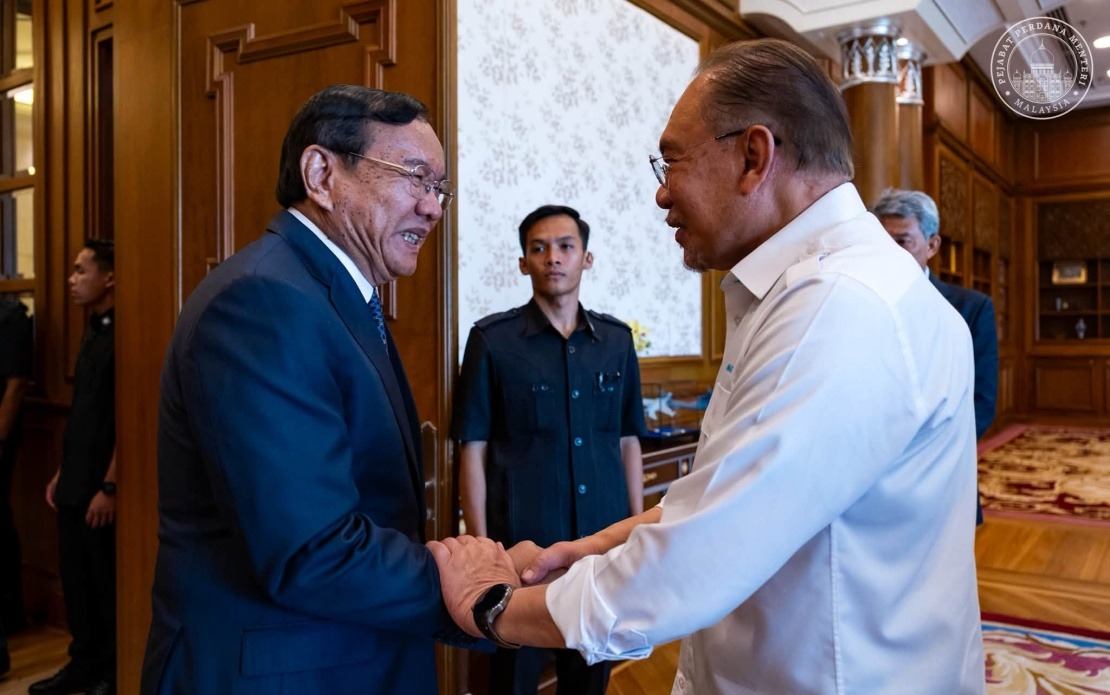
Malaysia and Cambodia are positioning themselves for closer strategic partnership, with Prime Minister Datuk Seri Anwar Ibrahim underlining a commitment to expanded cooperation across multiple development fronts during discussions with a high-ranking Cambodian delegation this week. The emphasis on joint endeavour reflects both nations' determination to leverage their complementary strengths in sectors ranging from emerging technologies to traditional industries with growing regional demand.
Cambodian Deputy Prime Minister and Minister of Foreign Affairs and International Cooperation Prak Sokhonn arrived in Kuala Lumpur for a two-day official visit, during which both sides seized the opportunity to review progress and map out fresh collaborative initiatives. The discussions covered the digital economy and artificial intelligence—areas where Malaysia has positioned itself as a regional technology hub—alongside the halal industry, where Malaysia's established credentials and certification systems hold significant influence across Southeast Asia and beyond. Food security, a persistent concern amid climate pressures and supply chain vulnerabilities, also featured prominently in talks aimed at ensuring both nations can safeguard nutritional resilience for their populations.
Human capital development emerged as another pillar of the renewed partnership, reflecting recognition that economic competitiveness ultimately depends on the quality, skills and productivity of workforces. Both countries stand to benefit from knowledge exchange programmes, technical training initiatives and educational collaboration that could strengthen professional capabilities across sectors. This dimension carries particular weight for Cambodia, where institutional capacity-building remains an ongoing priority, and Malaysia, which seeks to position itself as a regional training and expertise centre.
Security cooperation took on added urgency in the bilateral discussions, with both governments emphasising the need to combat cross-border crime. Given the porous nature of shared borders and the transnational character of contemporary criminal networks—human trafficking, drug smuggling, and arms trafficking among them—coordinated law enforcement efforts become essential. The commitment signals mutual recognition that regional stability and economic prosperity depend partly on preventing organised criminal activity from destabilising communities and supply chains on either side of the frontier.
The visit coincided with preparations for the Third Malaysia-Cambodia Joint Commission for Bilateral Cooperation (JCBC) meeting scheduled for August 4, a formal mechanism designed to provide institutional structure to bilateral relations and track implementation of agreed initiatives. Such standing commissions serve as barometers of diplomatic seriousness, offering both sides a framework within which to translate political rhetoric into concrete programmes, measurable outcomes and sustained engagement beyond the tenure of any single administration.
The timing carries added historical weight, as both nations look ahead to 2027, when they will commemorate the 70th anniversary of their diplomatic relations. This forthcoming milestone provides psychological and ceremonial motivation to strengthen ties now, ensuring that by the anniversary year, relations have visibly deepened and produced tangible benefits for citizens of both countries. For Malaysia and Cambodia, such anniversaries offer opportunities to reflect on shared history, reaffirm foundational principles of friendship, and signal to the international community that their partnership remains vibrant and forward-looking.
As Association of Southeast Asian Nations (ASEAN) member states, Malaysia and Cambodia are jointly custodians of regional architecture and shared responsibility for its stability. Anwar's remarks acknowledged this dimension explicitly, noting that the two countries bear responsibility for preserving peace, strengthening regional unity and advancing the ASEAN Community Vision 2045—a long-term strategic framework aimed at creating a single market and production base, promoting sustainable development, and enhancing the region's global standing. Bilateral cooperation, when woven into the broader regional context, contributes to these larger objectives by demonstrating how neighbouring states can manage differences constructively and identify mutual gains.
The focus on the digital economy and artificial intelligence reflects broader regional trends. Across Southeast Asia, governments recognise that technological adoption and innovation will determine economic trajectory over the coming decades. Malaysia's more advanced digital infrastructure and AI research capacity position it as a potential partner for knowledge transfer, while Cambodia's growing internet penetration and younger demographic offer a receptive market for digital solutions and training. Collaborative frameworks could accelerate both nations' participation in the global digital economy whilst keeping innovation anchored in regional contexts and values.
The halal industry warrants particular attention in the bilateral context. Malaysia has established itself as a global halal certification authority and hub, with recognised standards, institutes and certification bodies that command respect internationally. Cambodia, with its Muslim minority population and growing Muslim consumer base across the region, represents both a market and a potential beneficiary of Malaysian expertise. Deepening cooperation in this sector could yield commercial opportunities, strengthen supply chain linkages, and position both countries to capture growing global demand for halal-certified products in food, pharmaceuticals and cosmetics.
Security and anti-crime cooperation takes on regional significance as well. Transnational organised crime affects ASEAN as a whole, undermining development gains and destabilising communities. Bilateral cooperation between Malaysia and Cambodia on border security, intelligence sharing and law enforcement coordination contributes incrementally to collective regional security architecture. Such efforts also build institutional relationships and mutual trust among security personnel, creating informal networks that often prove as valuable as formal agreements when crises or urgent situations arise.
Prime Minister Anwar's emphasis on creating opportunities for mutually beneficial cooperation strikes a pragmatic note. The language avoids grandiosity, instead positioning bilateral ties as a foundation for concrete economic and security gains that serve both populations. This approach tends to generate more sustainable cooperation than initiatives grounded purely in diplomatic ceremony, as both governments and their constituencies perceive tangible returns.
The visit and forthcoming JCBC meeting represent a deliberate effort to elevate Malaysia-Cambodia relations beyond periodic high-level contacts into a structured, ongoing engagement generating regular progress and outcomes. For Malaysia, the initiative reinforces its regional leadership role and its capacity to serve as a technology and development partner for less-developed neighbours. For Cambodia, the engagement offers access to Malaysian expertise and markets whilst affirming its growing diplomatic confidence and importance to regional stability. Both perspectives converge on the proposition that stronger bilateral ties serve the broader regional interest and the aspiration of making Southeast Asia more prosperous, stable and unified.

