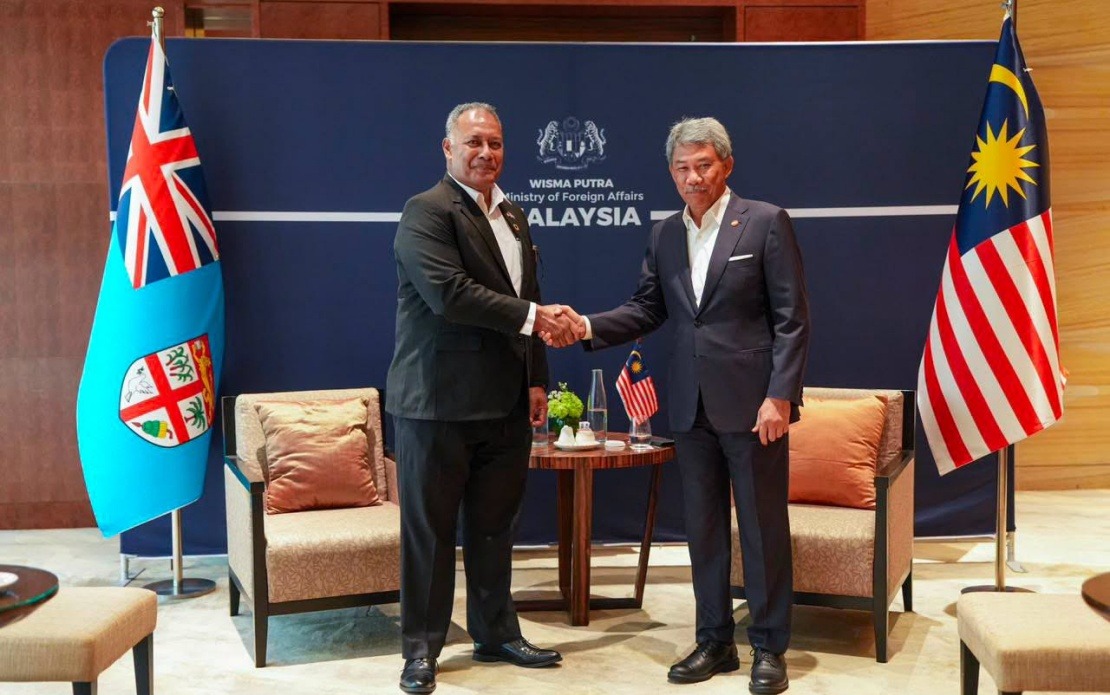
Foreign Minister Datuk Seri Mohamad Hasan held substantive discussions with Fijian Foreign and External Trade Minister Sakiasi Raisevu Ditoka on Tuesday to map out an enhanced cooperation framework between the two nations. The talks, which included a working lunch, reflected both countries' commitment to deepening their relationship across multiple sectors, signalling Malaysia's growing strategic interest in the Pacific region at a time when maritime nations are intensifying diplomatic engagement.
The bilateral partnership encompasses several priority areas that align with both nations' development objectives. Chief among these are trade and investment facilitation, human capital development initiatives, forestry collaboration, renewable energy projects, and cultural exchange programmes. By framing cooperation across such diverse fields, Malaysia and Fiji are moving beyond transactional relationships to build comprehensive partnerships that can withstand external economic pressures and create mutual benefits across different sectors of their economies.
The timing of this engagement carries regional significance. Ditoka's working visit from August 9 to 12 culminated in Tuesday's ministerial discussions, following his official reopening of the Fijian High Commission in Kuala Lumpur on Monday. The reopening of the diplomatic mission underscores both nations' commitment to maintaining robust institutional frameworks for engagement. For Malaysia, strengthening ties with Pacific island nations reflects a broader strategic pivot toward deepening connections in the Indo-Pacific region, where geopolitical competition has intensified among major powers seeking influence.
During their talks, the two ministers also addressed wider regional and global issues, examining how Malaysia and Fiji can collaborate within Pacific forums and multilateral organisations. This broader diplomatic canvas suggests that bilateral cooperation serves not merely bilateral interests but also regional stability and development goals. For Malaysian policymakers, engagement with Pacific nations represents an opportunity to amplify Southeast Asia's voice in forums where island nations carry significant collective weight and voting influence in international bodies.
Trade figures reveal the economic foundation upon which this partnership rests. According to the Foreign Ministry, total bilateral trade between Malaysia and Fiji reached RM880.01 million, equivalent to US$206.2 million, in 2025. Malaysia's exports to Fiji totalled RM867.92 million, or US$203.41 million, while imports from Fiji amounted to RM12.09 million, approximately US$2.80 million. This trade composition reflects Malaysia's strength in manufacturing and export-oriented sectors, with the substantial trade surplus suggesting Fiji primarily imports Malaysian manufactured goods and intermediate products.
The export-heavy nature of bilateral trade presents both opportunity and challenge. For Malaysia, the significant trade surplus indicates healthy demand for its products in the Fijian market, but also suggests limited diversification in the composition of trade. Future cooperation frameworks might explore how Fiji's agricultural, marine and resource sectors can find greater access to Malaysian markets, creating more balanced and sustainable trade relationships. Investment flows and technology transfer in renewable energy and forestry could reshape this dynamic considerably.
Renewable energy emerges as a particularly promising avenue for collaboration. Fiji, as an island nation vulnerable to climate change and dependent on imported fossil fuels, faces urgent pressures to transition toward sustainable energy sources. Malaysia possesses considerable expertise in palm oil-based biofuel production, solar technology deployment, and hydroelectric systems. Collaborative projects in these domains could position Malaysia as a preferred partner in Fiji's clean energy transition while creating commercial opportunities for Malaysian firms in Pacific markets where energy infrastructure development is accelerating.
Forestry cooperation similarly holds practical significance. Malaysia's forestry sector, encompassing both commercial timber operations and sustainable management practices, offers knowledge that Fiji can adapt to its own tropical forest contexts. Given increasing global scrutiny of forestry practices and growing certification requirements for timber exports, joint initiatives could help Fiji enhance the value and marketability of its forest products while maintaining environmental stewardship standards that appeal to conscious international consumers.
Human capital development initiatives represent the partnership's long-term investment dimension. Malaysian educational institutions and vocational training programmes could be made available to Fijian students and professionals, building networks of individuals with shared training backgrounds who can facilitate future business and diplomatic relationships. Such exchanges create enduring bonds between nations, fostering people-to-people connections that transcend official cycles and governmental transitions.
Cultural cooperation, while sometimes underestimated in strategic assessments, provides essential soft power dimensions. Malaysian cultural performances, culinary traditions, and artistic heritage can gain exposure in Fiji, while Fijian cultural products reach Malaysian audiences. These exchanges build public familiarity and goodwill, creating constituencies in both nations invested in maintaining positive bilateral relations. In an era where cultural nationalism influences public opinion, governments that successfully promote their cultural narratives gain advantages in public diplomacy.
For Malaysia's regional positioning, this engagement reflects recognition that Pacific island nations, despite their small individual populations, collectively represent significant influence in global forums. Climate change, maritime rights, and sustainable development priorities unite ASEAN and Pacific island perspectives in many international negotiations. By strengthening bilateral relationships with individual Pacific nations, Malaysia enhances its influence in regional coalitions and demonstrates commitment to regional cooperation beyond Southeast Asia's immediate geographical boundaries.
The reopening of Fiji's High Commission in Kuala Lumpur signals confidence in the bilateral relationship's trajectory and provides institutional capacity for sustained engagement. A functioning diplomatic mission enables regular dialogue, coordinates cultural events, manages trade matters, and facilitates people-to-people exchanges more effectively than distant engagement. This physical presence in Malaysia's capital also signals to Malaysian businesses and institutions that Fiji is a serious partner worthy of commercial and academic attention.
Moving forward, the success of this enhanced partnership will depend on translating these discussions into concrete projects with measurable outcomes. Trade growth, investment flows, and human exchanges will serve as barometers of cooperation's effectiveness. For Malaysian readers and businesses, this deepening engagement creates opportunities in renewable energy project development, forestry ventures, educational service exports, and cultural initiatives across the Pacific. The partnership also positions Malaysia as a bridge between Southeast Asia and the Pacific, a role that enhances its broader diplomatic standing and economic reach.

