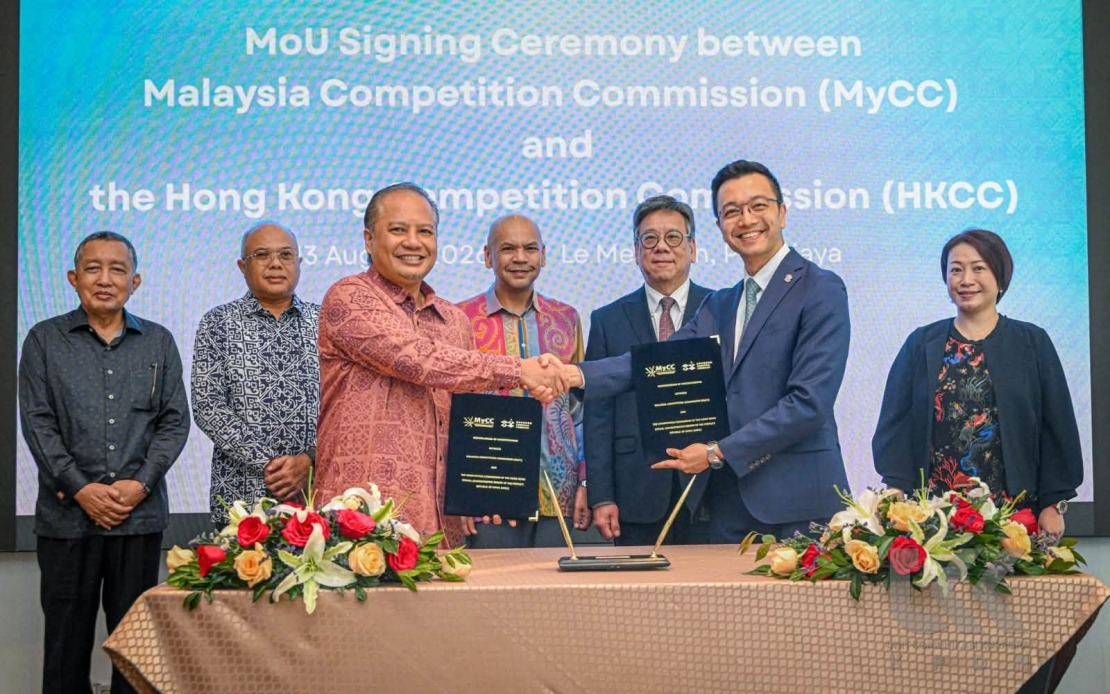
Malaysia's competition regulator has joined forces with its Hong Kong counterpart through a formal agreement aimed at tackling increasingly complex enforcement challenges that transcend national borders. The Malaysia Competition Commission (MyCC) and the Hong Kong Competition Commission (HKCC) signed the Memorandum of Understanding on August 13, signalling a regional commitment to maintaining fair market practices in one of Asia's most economically significant zones. Domestic Trade and Cost of Living Minister Datuk Armizan Mohd Ali described the partnership as integral to the government's broader strategy of fostering transparent, competitive markets that ultimately benefit Malaysian consumers and enterprises.
This collaboration represents the fourth formal competition law partnership that MyCC has established with international counterparts during the current administration's tenure. Earlier agreements with the Türkiye Competition Authority, the Korea Fair Trade Commission, and the Philippine Competition Commission demonstrate a deliberate pattern of institutional network-building among Asia's leading economic regulators. The sequential nature of these agreements suggests a carefully coordinated diplomatic approach, with each partnership extending Malaysia's regulatory reach and influence across strategically important markets. Hong Kong's inclusion in this framework is particularly significant given its role as a regional financial and trading hub, where anti-competitive practices can have ripple effects throughout Southeast and East Asia.
The structural complexity of modern commerce necessitates this kind of international cooperation. Businesses operating across multiple jurisdictions often exploit regulatory gaps or engage in anti-competitive conduct that no single national authority can effectively address alone. When a Malaysian company and a Hong Kong entity, for instance, collaborate to fix prices or restrict market access affecting consumers in both territories, investigators require access to information and witnesses across borders—something domestic legal authority cannot compel. The MoU creates a formal channel through which MyCC and HKCC can exchange intelligence, coordinate investigations, and pursue enforcement actions with greater speed and precision than relying on ad-hoc diplomatic requests.
The agreement encompasses several operational dimensions that will transform how the two agencies approach enforcement. Information sharing on legislative developments forms a foundational layer, allowing each authority to learn from the other's evolving legal frameworks and policy experiments. Malaysia's competition landscape has matured considerably since the Competition Act 2010 came into force, but the continuous evolution of enforcement techniques and jurisprudence in Hong Kong offers valuable insights. Similarly, Hong Kong regulators benefit from observing how MyCC adapts regional best practices to Southeast Asian market conditions and cultural contexts. This bidirectional learning prevents regulatory stagnation and encourages adoption of proven methodologies.
Capacity-building through technical collaboration will enhance both agencies' institutional strength. Training programmes and workshops enable frontline investigators and prosecutors from MyCC to absorb advanced techniques in evidence gathering, economic analysis, and digital forensics from more resourced counterparts, while HKCC officers gain exposure to regional market dynamics and enforcement challenges unique to Southeast Asia. The provision for officer secondments—temporary placements of staff in the counterpart agency—creates deeper professional networks and mutual understanding. Research collaboration allows both bodies to investigate emerging competition issues collectively, whether relating to algorithmic collusion in digital markets or the anti-competitive effects of supply chain consolidation, producing more robust analytical frameworks than either could develop independently.
Cross-border competition enforcement has become increasingly urgent as e-commerce, digital platforms, and global supply chains blur traditional market boundaries. A single algorithm manipulating prices across Malaysia and Hong Kong simultaneously, or a cartel restricting access to essential logistics infrastructure affecting both economies, demands coordinated regulatory response. MyCC and HKCC can now establish joint investigative task forces, harmonize remedies imposed on offenders, and prevent sophisticated businesses from playing one jurisdiction against another. This coordination capability particularly matters for consumer protection, as anti-competitive practices in one market often drive up prices for Malaysian households while artificially suppressing competition in Hong Kong.
Minister Armizan's comments emphasize that this partnership aligns with Malaysia's broader regional integration agenda. The country has positioned itself as a competitive economy within ASEAN and a bridge between Southeast Asia and East Asia, and maintaining effective competition enforcement supports that positioning. When Malaysia's regulatory environment is perceived as robust and professionally administered, it attracts legitimate foreign investment and deters predatory business practices that undermine market confidence. The Hong Kong partnership, combined with existing agreements in Turkey, Korea, and the Philippines, creates a geographical network spanning Europe, Northeast Asia, and Southeast Asia—positioning MyCC as a credible, internationally engaged institution.
The commitment to continued expansion of competition authority partnerships signals that this arrangement with Hong Kong is not an endpoint but rather one step in an ongoing internationalization strategy. KPDN's stated intention to further strengthen ties with regional and international authorities suggests MyCC will likely pursue similar agreements with Singapore's Competition and Consumer Commission, Thailand's Office of Trade Competition, and possibly authorities in Vietnam or Indonesia as those agencies develop mature enforcement capacity. Each new partnership incrementally expands the network's density and effectiveness, creating competitive pressure on bad actors to operate cleanly across multiple jurisdictions simultaneously.
For Malaysian consumers and small businesses, these institutional developments carry tangible implications. When cross-border cartels face coordinated enforcement from multiple jurisdictions, they become operationally riskier and less profitable, deterring their formation. When foreign multinational corporations realize that anti-competitive practices in Malaysia will trigger investigation and potential sanctions coordinated with Hong Kong counterparts, they adjust pricing and market access policies accordingly. When local enterprises understand that competing on merit will be protected through professional, internationally benchmarked enforcement, they invest more confidently in innovation rather than anti-competitive shortcuts. The MoU thus represents not merely bureaucratic paperwork but a structural enhancement to the competitive ecosystem upon which Malaysia's economic dynamism depends.
The timing of this agreement also reflects post-pandemic normalization of international regulatory engagement. For several years, travel restrictions and operational constraints hampered face-to-face cooperation between agencies. As travel and in-person collaboration resume, competition authorities globally have begun formalizing the informal knowledge-sharing and case coordination that occurred during lockdowns through more permanent institutional arrangements. Malaysia's signing of this MoU reflects confidence that international regulatory collaboration remains a priority in the post-pandemic era and that MyCC's institutional standing justifies partnership with sophisticated regional regulators.
Implementing this MoU effectively will require sustained commitment and resources. Information-sharing protocols must balance transparency with protection of confidential business information obtained during investigations. Training programmes require dedicated budget and personnel release. Joint investigations demand careful coordination of prosecutorial strategies and evidence standards, which can differ between Malaysian common law traditions and Hong Kong's hybrid legal system. The MoU provides the framework, but success ultimately depends on how MyCC and HKCC operationalize these commitments through concrete action, institutional incentives, and regular interaction among enforcement teams.

