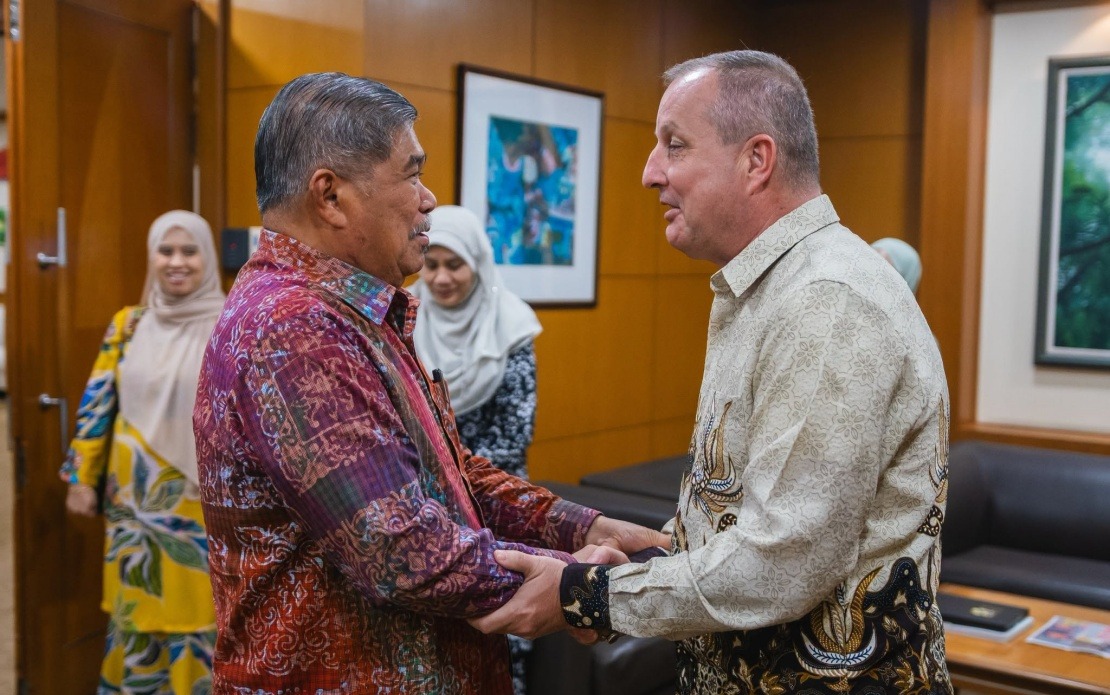
Malaysia and Hungary have launched a concerted effort to deepen their partnership in agriculture and food security, signalling strengthened bilateral ties in a sector increasingly vital to both nations' economic resilience and self-sufficiency. The initiative gained momentum during a formal meeting between Agriculture and Food Security Minister Datuk Seri Mohamad Sabu and Hungarian Ambassador to Malaysia Dr. Sándor Sipos in Kuala Lumpur, where officials mapped out a collaborative roadmap encompassing research, trade, and investment opportunities across the agri-food value chain.
The cooperation framework includes Hungary's participation in the Malaysian Agriculture, Horticulture and Agrotourism Exhibition (MAHA) 2026, a biennial showcase that attracts agricultural stakeholders, technology providers, and investors from across Southeast Asia and beyond. This participation represents more than ceremonial engagement; it signals Hungary's intention to position itself as a credible partner in Malaysia's agricultural marketplace and to explore commercial openings within the region's growing agri-food sector. For Malaysia, hosting Hungarian agricultural expertise and innovations at MAHA 2026 offers local farmers and entrepreneurs direct access to European farming practices and technologies adapted for tropical and subtropical climates.
At the institutional level, the first Malaysia-Hungary Joint Working Group meeting has been operationalised to coordinate policy matters, regulatory alignment, and strategic initiatives across both governments. This formal mechanism provides a structured channel for addressing trade barriers, harmonising standards, and identifying priority sectors for deeper engagement. Such frameworks are particularly valuable in agriculture, where phytosanitary requirements, product certification, and import protocols often present obstacles to bilateral commerce. By establishing a dedicated JWG, both nations demonstrate commitment to removing bureaucratic friction and creating a more fluid business environment for agricultural enterprises.
The technical backbone of the partnership rests on research collaboration between the Malaysian Agricultural Research and Development Institute (MARDI) and Hungary's University of Agriculture and Life Sciences (MATE). This institutional pairing brings together Malaysia's expertise in tropical agriculture with Hungary's advanced capabilities in temperate-zone farming, genetics, and animal husbandry. The collaboration encompasses the Erasmus+ Researcher exchange programme, enabling scientists and technicians from both countries to spend periods working in foreign laboratories and field stations. Such exchanges catalyse knowledge transfer, foster personal relationships among researchers, and often lead to joint publications and patents that benefit both nations' agricultural innovation ecosystems.
Research priorities identified in the collaboration include genetics and breeding technology—domains where Hungary possesses considerable capability—as well as the development of high-quality livestock products. For Malaysia, access to Hungarian breeding lines and genetic material could support efforts to improve local cattle, poultry, and aquaculture productivity while reducing dependence on imports of specialist breeding stock. Conversely, Hungary's researchers gain exposure to tropical agriculture methodologies and climate-adaptive crop varieties that may have application in a warming European context. This reciprocal learning model represents a mature approach to scientific cooperation, moving beyond unidirectional technology transfer toward genuine intellectual exchange.
The economic dimensions of the partnership centre on expanding bilateral trade and attracting investment in the agri-food sector. Hungary, despite its modest size, has developed internationally competitive industries in wheat, corn, pork, and dairy products. Malaysian agricultural businesses seeking to acquire technology, expertise, or even capital partnerships have opportunities to engage with Hungarian firms. Similarly, Hungarian companies operating in food processing, agricultural machinery, and biotechnology may identify market entry points in Malaysia and other Southeast Asian economies. Enhanced cooperation creates platforms for business-to-business networking and could yield joint ventures in areas such as feed production, horticulture processing, or agro-based manufacturing.
For Malaysian farmers and entrepreneurs, the cooperation opens pathways to international knowledge networks at a critical juncture. Malaysia's agricultural sector faces structural challenges including land constraints, labour scarcity, and rising production costs. Hungarian experience in intensive, technology-driven farming within European land and labour constraints offers relevant benchmarks. Breeders working in Malaysia can benefit from Hungarian germplasm and selective breeding protocols. Researchers gain access to collaborative funding streams and international peer review communities. Agri-food exporters acquire pathways to understand European regulatory expectations, potentially facilitating future market entry into the European Union through Hungarian intermediaries or partnerships.
The timing of this initiative reflects broader geopolitical and economic currents. Southeast Asia's food security has become a central concern amid global supply chain disruptions, climate variability, and competition for agricultural resources. Hungary, positioned at the intersection of Central European agriculture and Eurasia, brings geographic advantages and political neutrality valuable to Malaysia's non-aligned foreign policy approach. By deepening ties with Budapest, Malaysia diversifies its agricultural partnerships beyond traditional suppliers and creates additional buffers against supply concentration risks.
Minister Mohamad's emphasis on sustainability of the relationship suggests this is envisioned as long-term institutional cooperation rather than episodic engagement. The mention of enhanced food security aligns with Malaysia's national food security roadmap, which prioritises agricultural productivity gains, strategic reserves, and supply chain resilience. Hungarian partnerships contribute to this agenda through technology transfer, institutional capacity building, and access to global agricultural networks. The framework also reflects Malaysia's recognition that advanced agricultural economies—whether in Europe or Asia—possess knowledge and technologies applicable to tropical and Southeast Asian contexts, and that deliberate relationship-building with such economies yields multiplicative returns across multiple tiers of the agri-food system.

