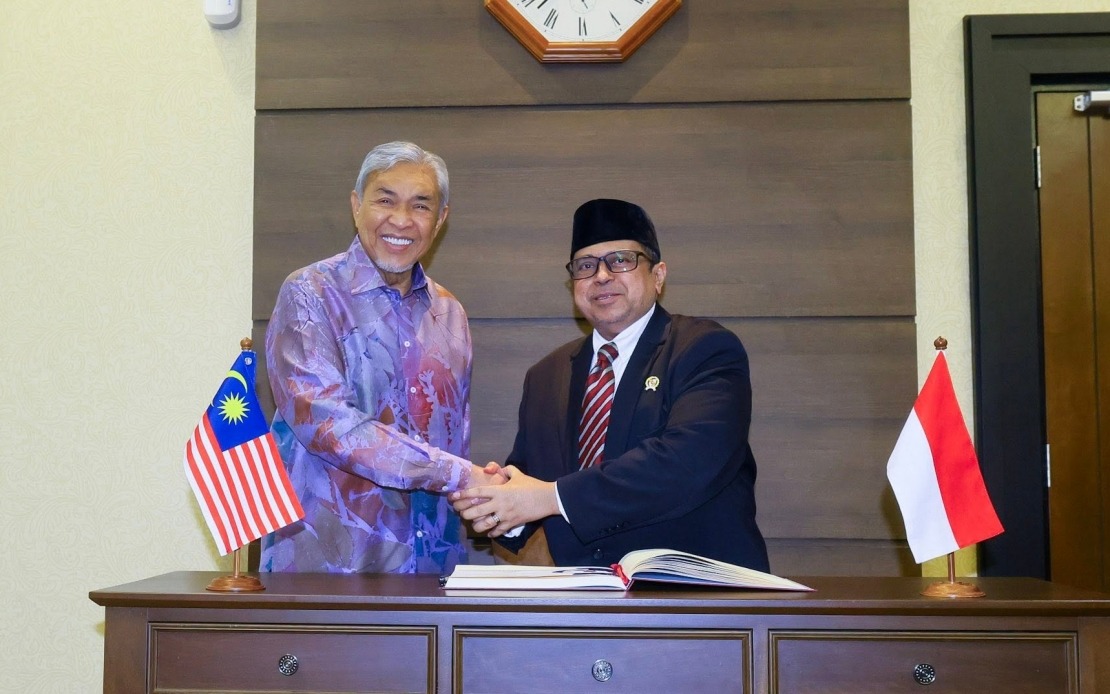
Malaysia and Indonesia are embarking on a comprehensive effort to cement their position as global leaders in halal certification and trade, with discussions underway to establish multiple new governance structures designed to streamline standards across the Muslim world. Deputy Prime Minister Datuk Seri Dr Ahmad Zahid Hamidi outlined the vision during a meeting with Indonesia's Ambassador to Malaysia, Raden Datuk Mohammad Iman Hascarya Kusumo, and the head of Indonesia's Halal Product Assurance Organising Body (BPJPH), Dr Ahmad Haikal Hassan, held at Parliament on June 25. The bilateral engagement signals renewed momentum in bilateral relations at a time when both Southeast Asian economies are competing to capture an expanding global halal market worth hundreds of billions of dollars annually.
The cooperation framework extends well beyond traditional trade partnerships, encompassing initiatives across rural development, human capital training, and the broader modernisation of supply chains in both countries. By pooling resources and expertise, Malaysia and Indonesia aim to create integrated systems that would allow producers, exporters, and traders to navigate certification processes more efficiently. This is particularly significant given that both nations possess substantial Muslim populations and established halal infrastructure, positioning them uniquely to set benchmarks that other developing economies can adopt. The depth of coordination proposed during these discussions suggests recognition that fragmented approaches to halal standards fragment markets and disadvantage businesses seeking to operate across borders.
Central to the partnership is the establishment of the Malaysia-Indonesia Halal Council (MIHC), which would function as a bilateral institution to harmonise practices between the two nations. Ahmad Zahid, who chairs the Malaysia Halal Industry Development Council, emphasised that this foundational body would serve as a stepping stone toward even broader regional cooperation. Beyond bilateral engagement, both countries are contemplating the creation of an ASEAN Halal Council that would coordinate across Southeast Asia, potentially setting common standards for the ten-member regional bloc. For Malaysian businesses, this represents an opportunity to influence rule-setting at a regional level before competition intensifies from other Muslim-majority nations and Western companies seeking certification for their products.
The proposed World Halal Development Council represents perhaps the most ambitious component of this cooperation framework, suggesting aspirations to establish Malaysia and Indonesia as custodians of global halal standards. Such an institution would position both nations at the centre of international discussions about certification, trade practices, and investment flows in the halal sector. This is particularly important given that countries including Turkey, Saudi Arabia, and others are also investing heavily in halal governance structures. By moving first with these institutional innovations, Malaysia and Indonesia could establish themselves as reference points that other nations defer to, creating lasting geopolitical and economic influence within Muslim-majority markets.
The expansion of halal trade and investment represents a strategic economic priority for both countries as they seek diversification beyond traditional sectors. Indonesia's vast agricultural and manufacturing base, combined with Malaysia's advanced processing capabilities and logistics infrastructure, create natural synergies for developing integrated supply chains. Companies operating across both nations would benefit from reduced bureaucratic friction, simplified certification pathways, and expanded market access. For Malaysian enterprises, this opens pathways to source raw materials from Indonesia at competitive prices while leveraging Malaysia's branding advantage in halal certification, a critical factor influencing purchasing decisions among Muslim consumers globally.
The timing of these cooperation discussions reflects broader geopolitical and economic trends. The global halal market has grown exponentially over the past decade, driven by rising incomes in Muslim-majority countries, stricter regulatory requirements, and increasing consumer awareness about authenticity and ethical sourcing. Indonesia and Malaysia have recognised that maintaining competitive advantage requires not just producing halal products but shaping the institutional and regulatory frameworks that define what halal means. By establishing councils and harmonising standards, both nations are effectively creating barriers to entry for competitors while generating opportunities for their own businesses to access new markets.
The human capital development component of this cooperation recognises that technical expertise in halal certification, auditing, and quality assurance remains concentrated in a limited pool of professionals. Joint training programmes and knowledge-sharing initiatives would expand this talent base across both countries, creating employment opportunities while building institutional capacity that would be difficult for competitors to replicate. Malaysian universities and training centres could partner with Indonesian counterparts to develop curriculum standards, creating a regional labour market for halal specialists.
The longstanding bilateral relationship between Malaysia and Indonesia provides a foundation of trust and shared understanding that facilitates rapid implementation of these cooperative frameworks. Unlike partnerships between geographically distant nations or those with conflicting interests, Malaysian and Indonesian officials can build on decades of institutional experience and personal relationships. This proximity advantage is particularly valuable when attempting to harmonise standards that require ongoing dialogue and adjustment based on market realities and technological developments.
For broader Southeast Asia, these Malaysia-Indonesia initiatives have significant implications. The establishment of an ASEAN Halal Council could accelerate regional integration in the halal sector, potentially driving compliance across smaller economies that might otherwise lack resources for sophisticated certification systems. This could either benefit or disadvantage regional competitors depending on how inclusive the standards-setting process becomes. Thai producers of halal goods, for instance, would need to navigate whatever frameworks emerge from this Malaysia-Indonesia leadership.
The economic implications extend to consumer-facing sectors including food and beverages, cosmetics, pharmaceuticals, and fashion. Companies across these industries operating in Southeast Asia would potentially face simplified compliance requirements if harmonised standards are implemented effectively. This could reduce their operational costs while potentially raising quality standards, ultimately benefiting consumers through more transparent product labelling and greater consumer confidence in halal certification.
The strategic vision articulated by Ahmad Zahid demonstrates that both governments view the halal industry not merely as a commercial sector but as a domain of national strategic importance. By controlling the narratives and institutions that define halal standards, Malaysia and Indonesia are positioning themselves to influence economic behaviour across Muslim-majority markets and among Muslim diaspora communities worldwide. This institutional and regulatory leadership could generate returns far exceeding those from simple trade in halal products.

