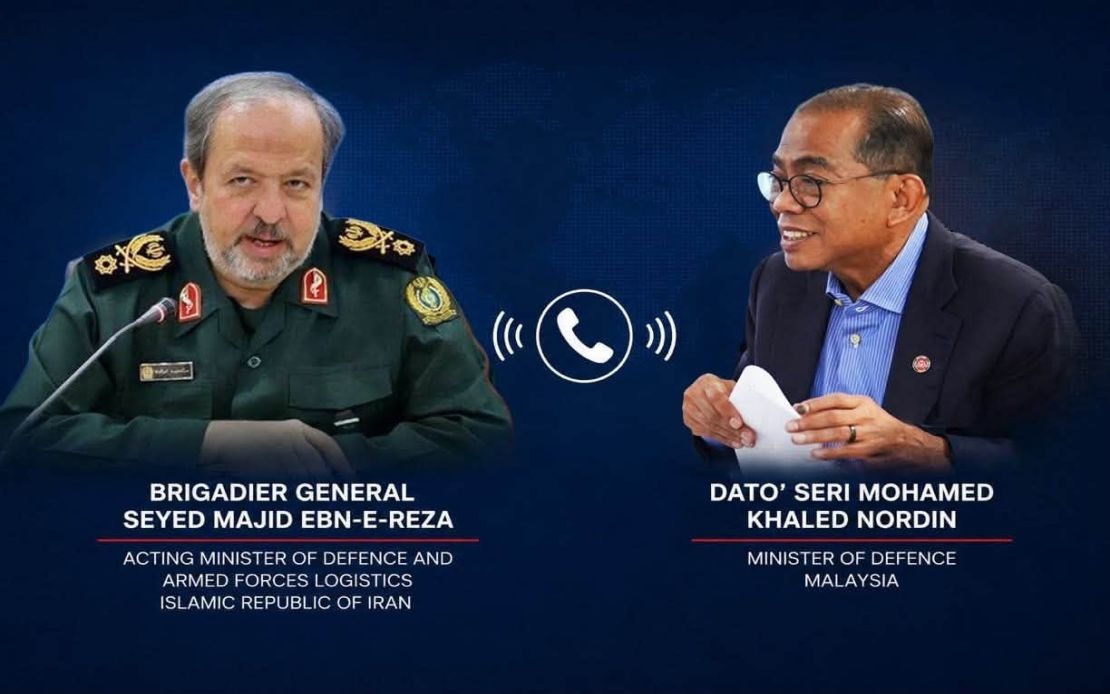
Malaysia has signalled its intention to significantly deepen its defence relationship with Iran, with Defence Minister Datuk Seri Mohamed Khaled Nordin recently affirming the two nations' shared commitment to expanding cooperation across military and security matters. During a telephone conversation with Iran's Acting Minister of Defence and Armed Forces Logistics, Brigadier General Seyed Majid Ebn-e-Reza, Mohamed Khaled outlined Malaysia's vision for a more robust partnership grounded in the longstanding ties that bind the two countries together, particularly given their shared Islamic heritage and strategic interests in the Indo-Pacific region.
At the heart of this diplomatic initiative lies a proposed Memorandum of Understanding on defence cooperation, which Malaysia hopes to finalise in the coming months. The formal agreement would serve as an institutional framework for future military exchanges, joint training exercises, and technology-sharing arrangements. For Malaysia, such an MoU represents an important step toward diversifying its defence partnerships beyond traditional allies and reflects the country's non-aligned foreign policy approach, which emphasises balanced engagement with global powers and regional actors across ideological and geopolitical divides.
The Defence Minister's outreach also touched on Iran's prospective participation in the Langkawi International Maritime and Aerospace Exhibition scheduled for next year. This prestigious biennial event, held on Malaysian soil, provides an ideal platform for showcasing defence capabilities and fostering commercial partnerships in the aerospace and maritime sectors. Iran's inclusion would signal Malaysia's openness to broadening defence trade and technological cooperation with Tehran, while simultaneously positioning Malaysia as a neutral venue where regional and international defence players can engage constructively.
Beyond the technical aspects of military cooperation, Mohamed Khaled's conversation with his Iranian counterpart included expressions of solidarity regarding the humanitarian costs of ongoing regional conflicts. Malaysia formally conveyed its condolences for the loss of Iranian military personnel, government officials, and civilians caught in the broader West Asian upheaval, underscoring Kuala Lumpur's sensitivity to the region's volatile security dynamics and its commitment to acknowledging the human dimension of geopolitical tensions.
The Malaysian Defence Ministry's statements also reflected a pragmatic acknowledgement of Iran's defence industrial capabilities and self-reliance. By commending Iran's development of indigenous defence systems, Malaysia was essentially recognising Tehran's technological progress and military modernisation efforts, a gesture that carries diplomatic weight in signalling respect for Iranian sovereignty and technological advancement. This framing is particularly significant given international sanctions that have constrained Iran's access to foreign defence technologies, making its domestic innovations noteworthy from a military perspective.
Crucially, Malaysia's diplomatic engagement touched on maritime security concerns, particularly the critical Strait of Hormuz, through which roughly one-third of global seaborne petroleum trade transits. Mohamed Khaled explicitly acknowledged Iran's role in facilitating safe passage during periods of heightened regional tension, effectively recognising Tehran's responsibility in maintaining freedom of navigation through these vital waterways. This recognition addresses a shared Malaysian interest: ensuring that maritime routes remain open and secure for international commerce, which is essential for Malaysia's own trade-dependent economy and its role as a major Southeast Asian maritime hub.
The initiative must be understood within Malaysia's broader strategic context. As a Muslim-majority Southeast Asian nation with significant interests in regional stability, Malaysia has long sought to maintain pragmatic relations with both Western powers and Middle Eastern actors. The expansion of defence ties with Iran complements Malaysia's existing military partnerships while simultaneously demonstrating independence in foreign policy formulation. This balancing act is particularly important given Malaysia's membership in regional organisations like ASEAN, which collectively prefer to avoid alignment with any particular power bloc while maintaining strategic flexibility.
For Iran, meanwhile, Malaysia's overture represents valuable diplomatic recognition at a time when Tehran faces considerable international isolation. Military cooperation agreements with countries like Malaysia help legitimise Iran's defence establishment, create opportunities for technology transfer and joint research, and expand Iran's strategic footprint in Southeast Asia—a region of growing geopolitical significance. The proposed MoU would join a constellation of similar agreements Iran has negotiated with other Asian nations, forming part of Tehran's broader pivot toward Asia in response to Western sanctions and pressure.
From Malaysia's defence industrial perspective, deepening ties with Iran could potentially open avenues for cooperation in niche areas such as maritime security technology, unmanned systems, and defensive systems development. Malaysian defence companies, while smaller than those in major defence-producing nations, have demonstrated competence in specific domains. Partnerships with Iranian counterparts could facilitate knowledge exchange and potentially create new export opportunities, though such collaborations would necessarily operate within Malaysia's international legal obligations and commitments.
The timing of this diplomatic move is noteworthy. Coming amid broader discussions about regional security architectures and the need for inclusive dialogue on Middle Eastern conflicts, Malaysia's emphasis on maintaining space for diplomatic solutions and dialogue reflects a moderate positioning. By framing its defence engagement with Iran in terms of friendship-building and constructive cooperation rather than geopolitical alignment or military posturing, Malaysia demonstrates its preference for dialogue-based approaches to regional tension reduction, a principle it has consistently advocated through ASEAN platforms.
For Malaysian observers, this development illustrates how Kuala Lumpur manages its foreign policy in a multipolar world. The country simultaneously maintains security partnerships with Western nations, develops defence ties with Middle Eastern actors, and prioritises regional stability through ASEAN mechanisms. This pluralistic approach allows Malaysia to protect its interests while positioning itself as a voice for moderation and dialogue, enhancing its diplomatic influence disproportionate to its military or economic size.
The proposed defence cooperation framework also carries implications for broader Southeast Asian security dynamics. As individual nations pursue bilateral defence partnerships, they collectively shape regional security arrangements. Malaysia's engagement with Iran, conducted transparently and within established diplomatic channels, contributes to a more multipolar security environment where no single actor dominates regional discourse, potentially creating greater space for smaller nations to exercise strategic autonomy and pursue interests aligned with regional stability objectives.

