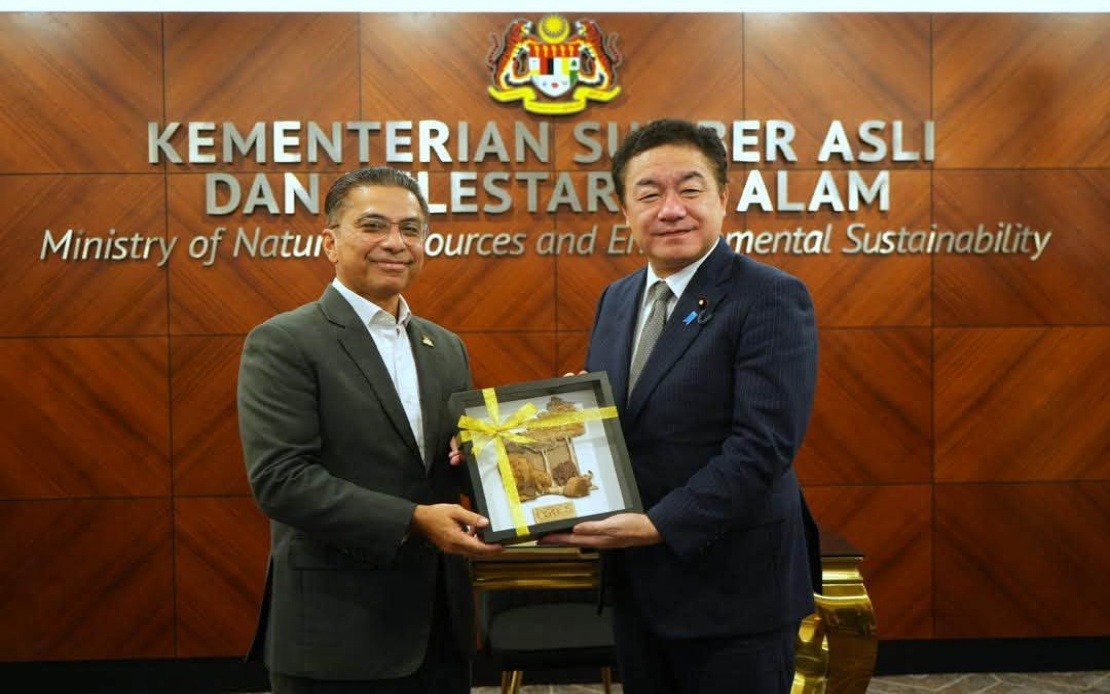
Malaysia and Japan are moving forward with expanded strategic cooperation spanning rare earth elements, critical minerals processing, and climate action initiatives. The commitment was reaffirmed during a recent diplomatic engagement at the Ministry of Natural Resources and Environmental Sustainability in Putrajaya, where Japan's Parliamentary Vice-Minister of Economy, Trade and Industry Komori Takuo met with Deputy Natural Resources and Environmental Sustainability Minister Syed Ibrahim Syed Noh. The discussion builds on agreements reached during a high-level bilateral summit in June, demonstrating both nations' determination to deepen their partnership within the established Malaysia-Japan Comprehensive Strategic Partnership framework.
For Malaysia, the engagement represents a critical moment in advancing its positioning as a value-added processor of rare earth materials rather than a mere exporter of raw commodities. The government has maintained a deliberate moratorium on exporting unprocessed rare earth elements, a policy stance that was prominently emphasised during the talks with Tokyo. This approach reflects Malaysia's strategic objective of capturing greater economic value from its substantial rare earth reserves by developing domestic processing infrastructure and creating sophisticated downstream manufacturing capabilities. By restricting raw material exports, Malaysia aims to ensure that advanced refining, separation, and manufacturing activities remain anchored within the country, thereby generating employment and technological expertise locally.
Japan's role in this framework extends beyond bilateral commercial interest. As a resource-dependent nation with limited domestic mineral reserves, Japan has a vested interest in securing stable supplies of rare earth elements processed to its specifications. Simultaneously, Tokyo recognises that partnering with Malaysia on value-added processing creates a more resilient supply chain than relying on raw material imports alone. This mutual interest underpins the technical cooperation and technology transfer mechanisms that both nations are leveraging through established channels such as the Japan International Cooperation Agency (JICA) and the Japan Organisation for Metals and Energy Security (JOGMEC). Malaysia's explicit appreciation for these collaborative arrangements underscores the tangible benefits flowing from such partnerships.
Beyond the minerals sector, climate action represents an equally significant pillar of the bilateral engagement. Both nations are advancing towards finalising negotiations on a draft Memorandum of Cooperation governing the Joint Crediting Mechanism (JCM), a sophisticated instrument rooted in Article 6.2 of the Paris Agreement. This carbon market cooperation mechanism enables countries to collaborate on emissions reduction projects while generating tradeable carbon credits. For Malaysia, such arrangements are integral to fulfilling its Nationally Determined Contribution targets, which outline the country's commitment to reducing greenhouse gas emissions in line with global climate commitments. The anticipated completion of the MoC by year-end would unlock new avenues for climate finance and investment in low-carbon technologies across Malaysia's economy.
The JCM framework holds particular relevance for Southeast Asia's energy transition trajectory. Malaysia, like many regional economies, faces the dual challenge of managing economic growth whilst transitioning away from carbon-intensive energy sources. By establishing formal carbon market mechanisms with developed economies such as Japan, Malaysia can access green finance and technology that might otherwise remain prohibitively expensive or inaccessible. Japanese expertise in renewable energy, energy efficiency, and emissions reduction technologies can be deployed more readily when supported by structured cooperation agreements. This arrangement benefits Malaysia's broader sustainability agenda whilst providing Japanese companies and financial institutions with investment opportunities in the region's burgeoning green economy.
The convergence of rare earth processing and climate cooperation within a single diplomatic initiative reflects a sophisticated understanding of how these sectors intersect. Rare earth element processing is inherently energy-intensive and can generate substantial environmental impacts if conducted without stringent controls. By partnering with Japan on both the industrial and environmental dimensions, Malaysia can develop processing capabilities that meet international environmental standards whilst remaining internationally competitive. This integrated approach distinguishes Malaysia from competitors who may prioritise production volume over environmental stewardship, potentially creating a reputational advantage in global supply chains increasingly scrutinised for their carbon footprint and sustainability practices.
The composition of both delegations underscores the comprehensive nature of these discussions. Malaysia's team included senior officials from the Natural Resources Ministry, the Foreign Ministry, and key government agencies, reflecting whole-of-government engagement rather than isolated sectoral conversations. Japan's representation, led by Ambassador Shikata Noriyuki and senior METI officials, similarly demonstrated high-level institutional commitment. Such delegations typically indicate that discussions have progressed beyond exploratory stages and that both governments are prepared to advance concrete commitments requiring inter-agency coordination and resource allocation.
For regional observers, Malaysia's strategy illuminates a broader Southeast Asian challenge: how to leverage natural resource endowments whilst avoiding the resource curse that historically limited economic diversification in commodity-dependent economies. By insisting on domestic processing of rare earths and integrating climate considerations into industrial development, Malaysia is attempting to escape the pattern whereby raw material extraction generates minimal local value and leaves environmental liabilities for future generations. The success of this approach will influence how other Southeast Asian nations with significant mineral resources—including Indonesia, Vietnam, and Thailand—formulate their own industrial policies and international partnerships.
The timeline for finalising the JCM agreement by year-end suggests both parties view this as an urgent priority, likely reflecting deadlines in their respective climate commitments and fiscal planning cycles. The investment in low-carbon technologies that such mechanisms are designed to catalyse requires regulatory certainty and established frameworks, which formal MOCs provide. Malaysia's confidence that combining Japanese green technology expertise with domestic sustainable resource potential will generate competitive advantages appears grounded in realistic assessment of complementary capabilities rather than aspirational thinking.
Looking forward, the sustainability of this partnership will depend on translating diplomatic commitments into tangible outcomes: successful transfer of processing technologies, meaningful carbon market transactions, and meaningful increases in value-added manufacturing. The involvement of experienced organisations like JICA and JOGMEC provides institutional mechanisms for converting high-level agreements into operational programmes. For Malaysian stakeholders—from policymakers to industrial operators—these developments signal that international cooperation on rare earths and climate action is moving from the conceptual stage toward implementation, with Japan emerging as a preferred technology and investment partner in these critical sectors.

