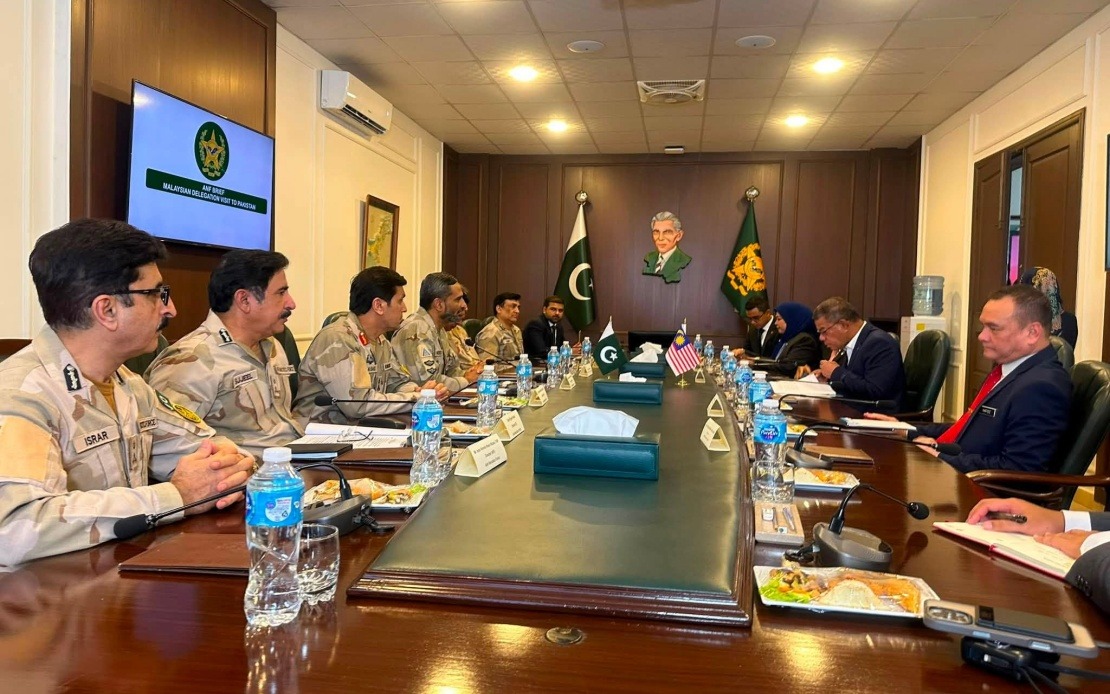
Malaysia and Pakistan are moving toward a more structured partnership in combating narcotics trafficking, with Home Minister Datuk Seri Saifuddin Nasution Ismail announcing plans for a formal Memorandum of Understanding during his visit to Islamabad this week. The initiative reflects growing recognition that drug threats spanning from Afghanistan through South Asia and into Southeast Asia demand coordinated, cross-border enforcement strategies that transcend traditional bilateral arrangements.
During discussions at the Anti-Narcotics Force headquarters in Islamabad, Saifuddin Nasution received detailed briefings on Pakistan's own challenges with drug flows originating from Afghanistan. The significance of Pakistan's geographic position cannot be overstated for Malaysian policymakers—the country sits at a critical juncture where narcotics destined for Asian markets transit through its territory, making intelligence cooperation and operational coordination essential for intercepting contraband before it reaches Malaysian shores.
The drug landscape facing both nations has fundamentally transformed over the past decade. Rather than dealing solely with traditional opiates, enforcement agencies now confront a bewildering array of synthetic substances, particularly methamphetamine and its derivatives, manufactured by transnational organised crime syndicates that operate with sophisticated logistical networks and constantly adapt to law enforcement pressure. These groups exploit geographical advantages, corrupt officials, and porous borders to move enormous quantities of contraband across multiple countries, making purely domestic responses increasingly ineffective.
Existing collaboration between Malaysia and Pakistan, though limited in public visibility, has already yielded tangible results. Between 2012 and 2018, the two nations jointly coordinated more than 28 significant cases, demonstrating that operational cooperation yields real seizures and disrupts criminal activities. However, Saifuddin Nasution emphasised that formalising these ad-hoc arrangements through an MoU would establish clearer protocols and institutional mechanisms for sustained engagement rather than sporadic joint efforts dependent on individual officials' initiatives.
The proposed framework targets several operational deficiencies in current arrangements. Intelligence sharing remains fragmented, with agencies in different countries operating from incomplete information about drug flows, trafficking routes, and organised crime networks. The MoU aims to establish systematic channels for real-time intelligence exchange, enabling Malaysian and Pakistani authorities to identify shipments before they depart, intercept contraband mid-transit, and prosecute kingpins operating across borders. Coordinated, intelligence-led operations represent a more sophisticated approach than traditional enforcement that typically reacts to discovered trafficking after the fact.
Beyond immediate narcotics control, Malaysia's engagement with Pakistan reflects broader strategic calculations about regional stability. The Home Minister's meeting with Pakistan's Deputy Prime Minister and Foreign Minister Mohammad Ishaq Dar touched on economic dimensions, including discussions about rice and meat supplies that could address Malaysia's food security concerns. These seemingly unrelated topics form part of a comprehensive engagement strategy recognising that development partnerships and security cooperation reinforce one another, building the trust and institutional relationships necessary for effective law enforcement collaboration.
The agreement to establish a Joint Working Group between Malaysia's Interior Ministry and Pakistan's Interior and Narcotics Control Minister Syed Mohsin Raza Naqvi signals commitment to moving beyond symbolic gestures toward sustained institutional engagement. Such groups typically develop operational protocols, identify training needs, coordinate personnel exchanges, and build personal relationships among officials who must work together during crises. For Malaysian law enforcement, exposure to Pakistan's experience managing drug threats emanating from Afghanistan provides valuable perspective on tactics, vulnerabilities, and interdiction methodologies applicable in Southeast Asian contexts.
Concurrently, Malaysia is leveraging the visit to study Pakistan's National Database and Registration Authority systems. NADRA's biometric technologies and digital identity infrastructure hold implications for Malaysian security operations, particularly in tracking individuals with transnational criminal connections, verifying traveller identities at borders, and managing information crucial for law enforcement. As the MADANI Government pursues digital transformation across public sector agencies, incorporating proven identity and database systems from Pakistan could enhance Malaysia's ability to monitor cross-border movement and identify suspicious patterns indicative of drug trafficking or organised crime.
The signing of the International Transfer of Prisoners Agreement addresses another critical gap in bilateral relations. Such arrangements enable Malaysia to repatriate convicted Pakistani nationals and vice versa, reducing prison overcrowding while ensuring criminals serve sentences in home countries where they face stronger rehabilitation incentives and lesser chances of continued criminal activity. This mechanism has proven valuable in the region for managing transnational criminal cases where individuals possess dual loyalties or maintain connections facilitating ongoing illicit operations from prison.
For Southeast Asian observers, the Malaysia-Pakistan initiative highlights how drug trafficking increasingly demands regional and international responses that extend far beyond traditional ASEAN frameworks. Afghanistan's opium production, estimated at record levels in recent years despite Taliban assertions of enforcement, floods through Pakistan into Central Asia, South Asia, and onward through migration and trafficking corridors into East and Southeast Asia. Malaysian enforcement officials recognise they cannot effectively combat methamphetamine and heroin imports while treating these drugs as purely Southeast Asian problems requiring only regional solutions.
The narcotics MoU also reflects evolving threat assessment within Malaysian security establishments. Sophisticated criminal networks operating across multiple countries now possess resources exceeding those available to individual national enforcement agencies. Only through coordinated intelligence, shared databases, aligned legal frameworks, and personnel trained in international protocols can governments disrupt supply chains effectively. Pakistan's experience confronting organisations that manufacture, process, and distribute narcotics offers lessons applicable to Malaysian agencies increasingly encountering organised crime groups displaying similar sophistication and transnational reach.
Looking forward, the success of Malaysia-Pakistan cooperation hinges on sustained political commitment and resource allocation. Memoranda of Understanding establish frameworks, but institutional follow-through determines outcomes. Regular meetings of the Joint Working Group, consistent intelligence sharing despite competing priorities, and willingness to commit personnel and funding to coordinated operations will determine whether the arrangement produces genuine seizures and prosecutions or devolves into another dormant bilateral agreement. For Malaysia, where drug abuse remains a significant social problem with implications for public health and security, partnership with Pakistan represents essential groundwork for tackling transnational trafficking challenges that no single nation can address alone.

