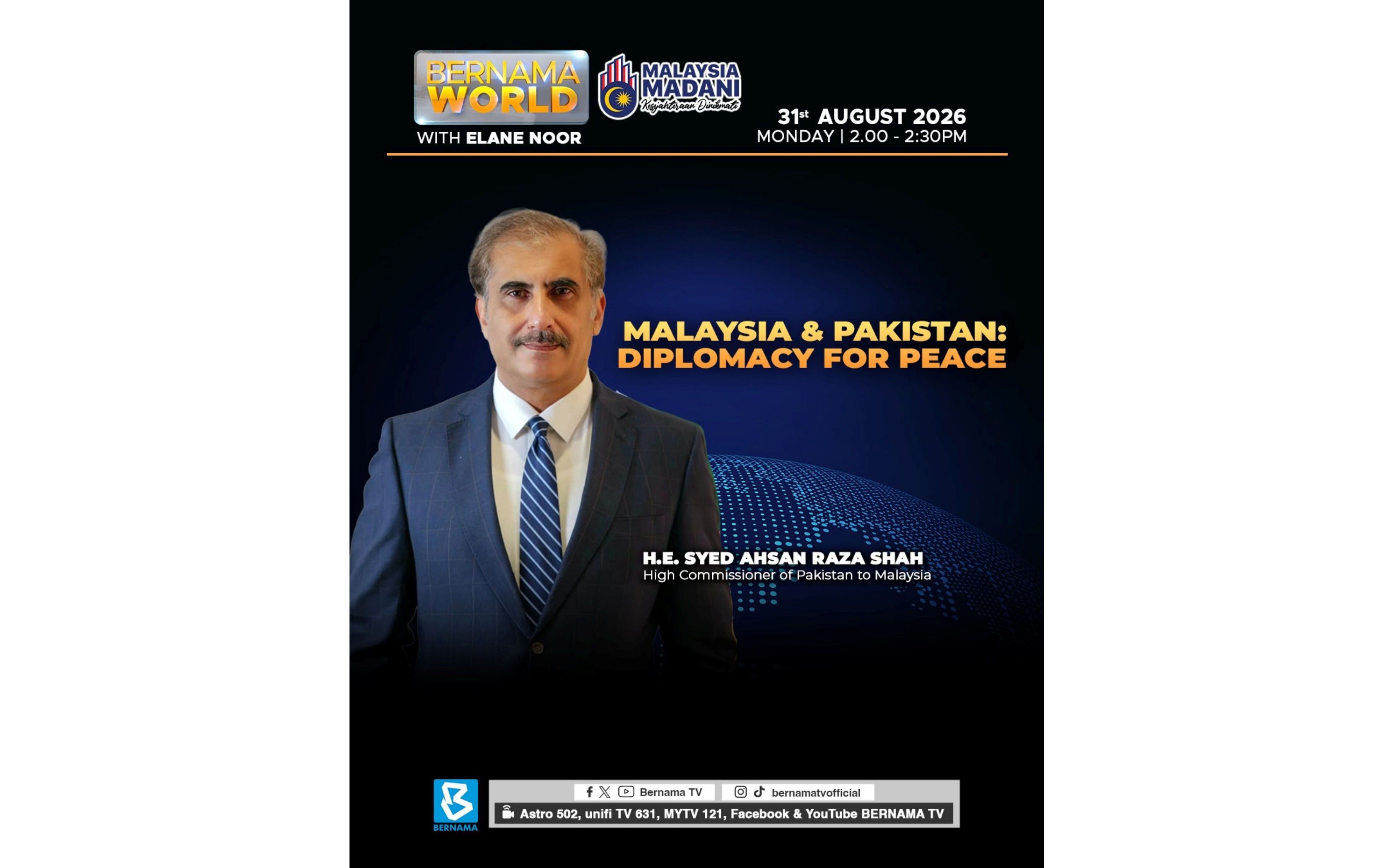
Syed Ahsan Raza Shah, Pakistan's High Commissioner to Malaysia, has called for enhanced collaboration between Kuala Lumpur and Islamabad in the field of conflict resolution and mediation. Speaking to Bernama World on Monday, Shah characterised such partnership as a "strategic necessity" given the increasingly volatile geopolitical landscape threatening both regional and international stability. The diplomat's remarks underscore a growing recognition that Southeast Asia and South Asia face interconnected security challenges requiring coordinated diplomatic responses from nations with proven track records in brokering peace.
Both Malaysia and Pakistan bring distinct advantages to the mediation table, according to Shah. He highlighted how each country has demonstrated competence in facilitating dialogue during major regional crises. Malaysia's role under Prime Minister Datuk Seri Anwar Ibrahim in addressing the Thailand-Cambodia border dispute exemplified swift diplomatic intervention when established regional mechanisms appeared inadequate. When hostilities flared between the two ASEAN neighbours, Malaysia moved decisively to broker a ceasefire and subsequently the Kuala Lumpur pact, showcasing the effectiveness of calibrated political pressure coupled with impartial mediation.
Pakistan's position as a bridge between Western and Middle Eastern powers has similarly proven valuable in crisis situations. Shah emphasised Islamabad's unique positioning to facilitate dialogue between the United States and Iran, two powers with deeply entrenched positions and minimal direct communication channels. Pakistan's geographic proximity to Iran, combined with historical ties spanning decades, alongside its longstanding strategic relationship with Washington, created an unusual diplomatic opening. Shah expressed pride in Pakistan's role in the Islamabad accord, viewing it as evidence of what determined mediation can achieve even when disputants appear irreconcilable.
The High Commissioner identified several practical principles that underpin successful mediation efforts, drawing from Pakistan's experience and Malaysia's recent diplomatic achievements. Trust emerges as the foundational requirement; all parties must perceive the mediator as acting with genuine impartiality and honest intent. Without this confidence, negotiations falter regardless of other favourable conditions. Shah stressed that mediators cannot afford to be perceived as harbouring hidden agendas or parochial interests, as suspicion poisons the entire process and hardens positions rather than softening them.
Equally important is the recognition that conflict resolution rarely follows a linear path from antagonism to agreement. Shah advocated for incremental approaches that accumulate small concessions and areas of agreement rather than pursuing comprehensive settlements in single marathon sessions. This methodical strategy allows negotiators to build momentum, establish precedent, and gradually reshape perceptions of what is negotiable. Patience becomes a diplomatic virtue; mediators must weather rhetorical salvos, maintain equanimity through apparent setbacks, and continue pressing forward when momentum stalls. The temptation to react emotionally to inflammatory statements or provocative actions must be resisted in favour of strategic forbearance.
Prime Minister Anwar Ibrahim's personal diplomatic acumen has significantly enhanced Malaysia's mediation capacity, in Shah's assessment. The High Commissioner highlighted Anwar's ability to develop genuine rapport with international counterparts, a quality that transcends formal protocols and creates informal channels for problem-solving. This interpersonal dimension of diplomacy, often overlooked in structural analyses, frequently determines whether initial conversations evolve into substantive negotiations. Leaders who feel personally respected and understood by mediators prove more willing to take political risks required for compromise.
The concept of "post-normal times", which Anwar has employed to characterise the contemporary global environment, captures an essential truth about contemporary conflict dynamics. Traditional diplomatic frameworks and established conflict resolution mechanisms developed during the Cold War and its immediate aftermath increasingly prove inadequate for hybrid threats, asymmetric conflicts, and crises spanning multiple domains. Malaysia and Pakistan must therefore engage in continuous learning, systematically examining successes and failures, and adapting methodologies to evolving circumstances. Sharing best practices between the two nations accelerates this learning curve and prevents duplicating mistakes.
Beyond the immediate benefits of bilateral cooperation, Shah warned of the broader regional implications of unchecked geopolitical tensions. Conflicts that originate in one geographical region inevitably generate spillover effects across borders, creating economic disruption, refugee flows, security threats, and strategic complications elsewhere. A conflict in the Middle East directly affects Malaysian interests through disrupted trade routes, energy market volatility, and potential security implications within Malaysia's diverse society. Similarly, instability in South Asia ripples through Indian Ocean commerce affecting Southeast Asian economies. This interconnectedness means that Malaysia has direct interests in Pakistan's stability and regional peace efforts, just as Pakistan benefits from Southeast Asian security.
The diplomatic framework both Shah and Malaysian officials are advocating represents a pragmatic response to multipolarity and the diffusion of power in international relations. Neither Malaysia nor Pakistan possesses superpower status, yet both occupy positions allowing them to speak with credibility to multiple constituencies. Malaysia commands respect within ASEAN and the broader developing world; Pakistan maintains relationships with Islamic nations, Western powers, and Asian neighbours. Combining these networks and leveraging their complementary diplomatic assets could enhance both nations' capacity to influence outcomes during crises.
Implementing such cooperation requires institutional mechanisms transcending ceremonial exchanges. Regular workshops bringing together diplomats, conflict resolution specialists, and think tank analysts from both countries would facilitate knowledge transfer. Joint diplomatic initiatives, where Malaysia and Pakistan coordinate positions and messages in international forums, could amplify their influence on critical issues. Training programmes allowing junior diplomats to observe mediation efforts firsthand would build institutional memory and develop the next generation of mediators. Such systematic collaboration transforms verbal commitments into operational capabilities.
The High Commissioner's remarks arrive at a moment when regional tensions command increased attention from both analysts and policymakers. The strategic competition between major powers, sectarian conflicts in the Middle East, and maritime disputes in Asian waters create an environment where competent mediation becomes increasingly valuable. Malaysia's geographic position in one of the world's most economically dynamic regions, combined with its careful cultivation of balanced foreign policy relationships, positions it as a credible interlocutor. Pakistan's role as a significant Muslim-majority nation with substantial Western engagement similarly enhances its diplomatic reach. Their collaboration could establish a model for how middle powers effectively exercise influence in an anarchic international system.
Moving forward, the relationship between Malaysia and Pakistan in conflict resolution will likely deepen as geopolitical pressures intensify rather than diminish. Both nations face incentives to prevent regional conflicts from escalating, given the economic and security costs of widespread instability. The diplomatic machinery both countries have developed offers valuable assets that, when coordinated and combined, create force multiplier effects. What Syed Ahsan Raza Shah has articulated is not merely a suggestion for enhanced cooperation, but rather a recognition of mutual necessity in an era where unilateral approaches prove increasingly ineffective against transnational challenges.

