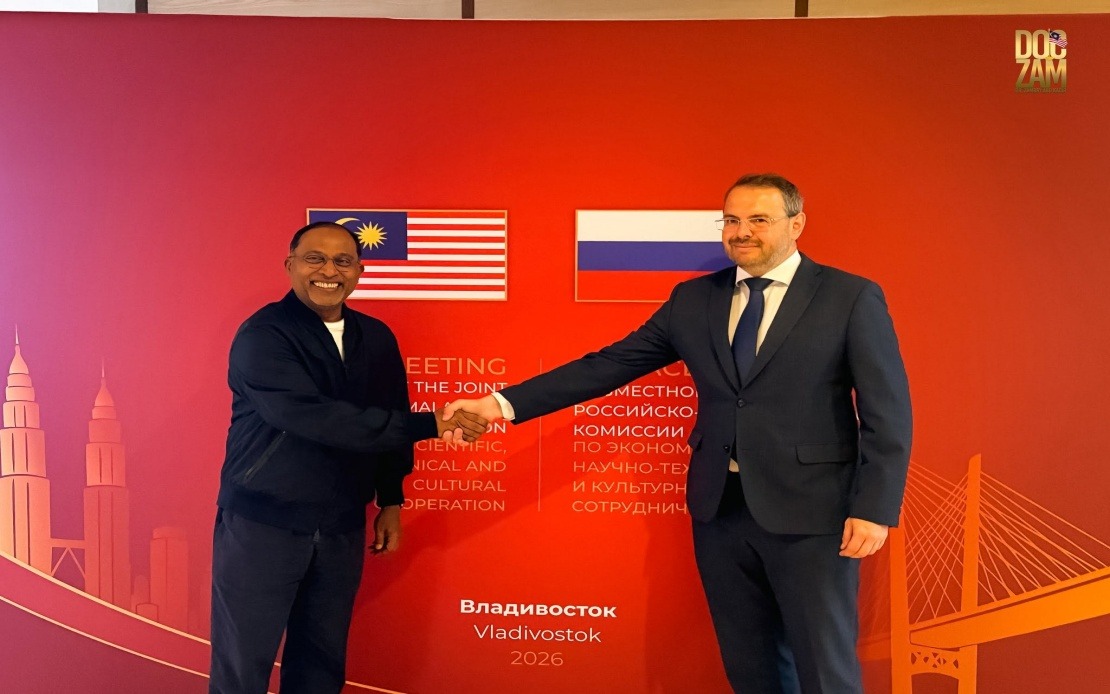
Malaysia and Russia are preparing to unlock fresh opportunities across multiple sectors of mutual interest, with the Fifth Malaysia-Russia JC-ESTC Meeting set to chart ambitious new directions for the relationship. Higher Education Minister Datuk Seri Dr Zambry Abd Kadir is heading the Malaysian delegation to Vladivostok from August 12 to 15, where discussions will centre on broadening trade corridors and investment flows, whilst simultaneously exploring partnerships in cutting-edge technologies and strategically important industries that could reshape bilateral engagement for years to come.
The Joint Commission on Economic, Scientific and Technological Cooperation, established in 2015, has become the institutional backbone for structured dialogue between the two nations. By characterizing the platform as action-oriented and outcome-focused, Zambry is signalling Malaysia's determination to move beyond declaratory statements towards tangible projects that generate measurable returns for both economies and their citizens. This reframing reflects a pragmatic shift in how bilateral mechanisms are evaluated—no longer assessed merely on the breadth of discussion but on the concrete deliverables that emerge from high-level engagement.
In the higher education sphere, Malaysia is prioritizing student mobility and academic exchange as catalysts for deepening human-to-human connections. Joint research initiatives between Malaysian and Russian universities have long remained underdeveloped relative to the technical capabilities available in both nations, particularly in fields where Russia maintains significant expertise such as aerospace, physics, and materials science. By channeling resources toward university-to-university partnerships and talent cultivation in emerging domains like artificial intelligence, quantum computing, and advanced manufacturing, Malaysia seeks to position itself as a knowledge partner rather than simply a consumer of foreign expertise. This strategic emphasis on scientific collaboration carries implications for Malaysia's broader innovation agenda and its ability to attract international research talent to local institutions.
The delegation's composition underscores the complexity and interdependence of modern bilateral relations. Representation from seventeen Malaysian ministries and agencies spanning economic development, trade, energy, agriculture, and cultural affairs demonstrates that Malaysia-Russia cooperation extends far beyond the traditional diplomatic channels. Such broad-based engagement reflects recognition that strategic partnerships in the contemporary era require coordination across multiple government portfolios. For Malaysia, where economic diversification and technological advancement remain key policy priorities, Russia represents an untapped reservoir of expertise in sectors ranging from energy infrastructure to agricultural innovation that could complement domestic capacity-building efforts.
Zambry's welcoming by Russian Deputy Minister of Science and Higher Education Konstantin Mogilevsky upon arrival carries symbolic weight, indicating Moscow's commitment to the bilateral relationship at a senior level. The scheduled co-chairmanship with Russian Minister of Science and Higher Education Valery Falkov ensures that decisions made during the meeting carry institutional weight and ministerial accountability for implementation. This parity in leadership reflects the relationship's maturation from a purely trade-focused arrangement into a comprehensive strategic partnership where both parties view the other as essential to their respective development trajectories.
The emphasis on complementary strengths reveals a nuanced understanding of what each nation can contribute. Russia's formidable capabilities in science, technology, and energy infrastructure align with Malaysia's ambitions to advance its industrial base and reduce dependence on traditional manufacturing sectors. Conversely, Malaysia's growing digital economy, financial services sophistication, and position as a regional hub offer Russians pathways into Southeast Asian markets and investment opportunities that might prove less accessible through alternative bilateral channels. This reciprocal value proposition strengthens incentives for genuine collaboration rather than transactional engagement.
Energy cooperation deserves particular attention given the geopolitical and economic stakes involved. Malaysia's existing hydrocarbon reserves face long-term depletion, yet energy security remains fundamental to economic stability and industrial competitiveness. Russian expertise in renewable energy transitions, coupled with potential cooperation in nuclear technology deployment and alternative fuel development, could position Malaysia advantageously as global energy systems undergo fundamental transformation. Similarly, Russian interest in Southeast Asian markets and stable long-term energy partnerships aligns with Malaysia's ability to serve as a gateway to the broader region.
The timing of this meeting also reflects broader strategic recalibration in Malaysia's foreign policy architecture. By deepening ties with Russia across multiple dimensions, Malaysia reinforces its positioning as a non-aligned nation capable of building relationships across different geopolitical spheres without sacrificing core national interests. This approach has become increasingly important as Malaysia navigates complex regional dynamics involving competing great powers and seeks to maximize diplomatic and economic leverage through strategic autonomy.
Zambry's commitment to translating good bilateral relations into projects, investments, and technology exchanges signals Malaysian expectations for tangible outcomes rather than ceremonial declarations. The minister's recognition that mutual respect and complementary interests must underpin cooperation suggests realistic acknowledgment that partnerships cannot be manufactured through political goodwill alone. Sustainable engagement requires genuine alignment of economic incentives and technological capabilities. Going forward, the true measure of the Fifth JC-ESTC Meeting's success will not be the comprehensiveness of agreed frameworks but rather the speed and scope with which Malaysia and Russia translate commitments into operational reality, creating genuine value chains and knowledge networks that benefit both societies.

