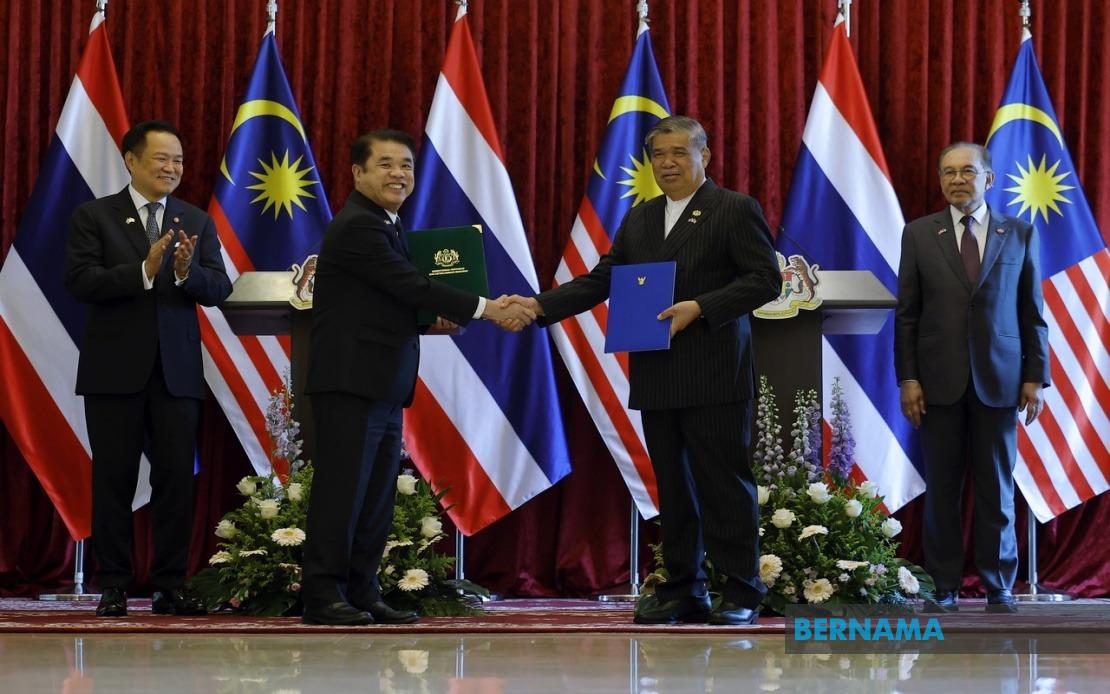
Malaysia and Thailand have moved swiftly to resolve contentious fisheries market access disputes, signalling renewed momentum in their agricultural and trade relationship. The breakthrough came during Prime Minister Anutin Charnvirakul's inaugural official visit to Malaysia, where the two countries' leaders witnessed the signing of a comprehensive Memorandum of Understanding on Agricultural Cooperation. Prime Minister Datuk Seri Anwar Ibrahim and Anutin oversaw the exchange between Agriculture and Food Security Minister Datuk Seri Mohamad Sabu and Thai counterpart Suriya Juangroongruangkit, underscoring the political importance both governments attach to resolving food security challenges.
The most tangible outcome of the bilateral engagement centres on accelerating the implementation timeline for the agricultural framework. Thailand had initially sought a one-and-a-half-month window before the MoU took force, but Malaysian officials successfully negotiated a dramatic compression to just one week. This compressed schedule reflects Kuala Lumpur's determination to expedite the removal of trade barriers and establish functioning mechanisms for resolving future disputes. Speaking at the joint press conference, Anwar characterised the settlement as evidence of both nations' shared commitment to strengthening regional food security while simultaneously broadening bilateral commercial ties.
The fisheries sector has long been a friction point between the neighbouring countries, with competing interests over market access and product standards creating periodic tensions. Malaysia had introduced import controls on Thai fisheries products in June, requiring Certificates of Analysis for barramundi shipments and temporarily restricting imports of five specific shrimp species. These measures, while justified on food safety grounds, reflected underlying anxieties about product quality and the need for more transparent trading protocols. The resolution of these outstanding cases through ministerial-level engagement demonstrates that both governments prefer negotiated settlements over prolonged trade disputes that could disrupt supply chains and increase costs for importers and consumers.
Thailand's Prime Minister welcomed the ministerial collaboration in resolving fisheries access challenges, positioning food security as a central pillar of his government's engagement with Malaysia. The convergence of interests around agricultural cooperation reflects broader regional concerns about supply chain resilience and the vulnerability of food systems to external shocks. For Thailand, which is a major exporter of agricultural and fisheries products, maintaining unfettered access to neighbouring markets is economically significant. Similarly, Malaysia's reliance on imported agricultural inputs makes it strategically advantageous to cultivate stable, predictable trading relationships with major regional suppliers like Thailand.
The new Agricultural Cooperation MoU establishes a multifaceted framework encompassing crop production, livestock management, fisheries, and trade facilitation mechanisms. Beyond these conventional trade pillars, the agreement incorporates research and development initiatives, capacity-building programmes, and harmonisation of biosecurity standards and sanitary and phytosanitary measures. This institutional architecture is designed to move bilateral agricultural relations beyond ad-hoc negotiations toward structured, continuous dialogue mechanisms. By establishing transparent procedures for addressing disputes and coordinating on technical standards, both nations aim to reduce friction and accelerate problem-solving when contentious issues emerge.
The emphasis on sanitary and phytosanitary harmonisation carries particular significance for Southeast Asian trade dynamics. Divergent food safety standards and certification requirements have historically fragmented regional markets and created opportunities for protectionist measures disguised as consumer protection. Through coordinated work on SPS measures, Malaysia and Thailand signal their intent to develop mutually acceptable standards that facilitate trade while maintaining legitimate health and safety objectives. This approach potentially benefits other regional trading partners by establishing precedents for standard-setting collaboration within ASEAN and beyond.
Bilateral agricultural and agri-food commerce between the two countries has demonstrated robust growth, with trade reaching RM20.33 billion during the twelve-month period ending December 2025. This substantial volume underscores the economic interdependence underpinning both governments' commitment to stable, predictable trading relationships. Malaysia's agricultural exports to Thailand centre on specialty products including coffee, cocoa, tea, and spices, alongside processed food items that command premium positioning in Thai markets. Conversely, Thai shipments to Malaysia concentrate on meat and meat-based products, reflecting Thailand's substantial livestock and meat processing industries.
The timing of this breakthrough carries strategic implications beyond immediate commercial interests. Both governments face mounting domestic pressure to ensure food security amidst global supply chain volatility and climate-related production uncertainties. By institutionalising cooperation mechanisms and resolving outstanding trade irritants, Malaysia and Thailand position themselves to respond more effectively to regional food supply challenges. The one-week timeline for MoU implementation suggests both parties anticipate that operational frameworks will require rapid activation, possibly in response to emerging supply pressures or anticipated disruptions.
The bilateral engagement also reflected broader geopolitical considerations. Prime Minister Anutin's first official visit to Malaysia represents a symbolic recalibration of the relationship following periodic tensions. By prioritising agricultural and food security cooperation during this high-profile visit, both leaders transmitted signals about their commitment to deepening institutional ties and moving beyond episodic disputes. For Malaysia, strengthening agricultural ties with Thailand aligns with longer-term strategies to reduce supply chain dependencies and diversify sourcing, while for Thailand, securing sustained market access in Malaysia buttresses its position as a regional agricultural powerhouse.
Looking forward, the success of this agricultural cooperation framework will depend substantially on whether both governments allocate sufficient institutional resources and political capital to make the coordination mechanisms function effectively. The establishment of structured dialogue channels between agriculture ministries creates foundations for preemptive problem-solving, potentially preventing future disputes from escalating into trade conflicts. For Malaysian consumers and businesses, the resolution of fisheries access issues and harmonisation of standards should translate into more reliable product availability and potentially lower prices as trade normalises.
The resolution of Malaysia-Thailand fisheries disputes and expedited implementation of agricultural cooperation reflects a maturing approach to regional trade management. Rather than allowing technical or commercial disagreements to metastasise into broader bilateral tensions, both governments have prioritised pragmatic negotiation and institutional framework development. As regional trade becomes increasingly complex and supply chain vulnerabilities more apparent, the Malaysian-Thai model of structured cooperation in agricultural commerce offers instructive lessons for other ASEAN partners seeking to balance commercial interests with legitimate regulatory concerns.

