Malaysia and Uzbekistan are positioning themselves for expanded agricultural cooperation that could reshape food production capabilities across Central Asia and Southeast Asia. The two countries recognise that combining their respective strengths in farming technology and crop production offers significant mutual benefits in an era of increasing global food insecurity and climate uncertainty. The partnership reflects a broader strategic understanding between the nations, with agriculture serving as a cornerstone of their bilateral relationship at the highest political levels.
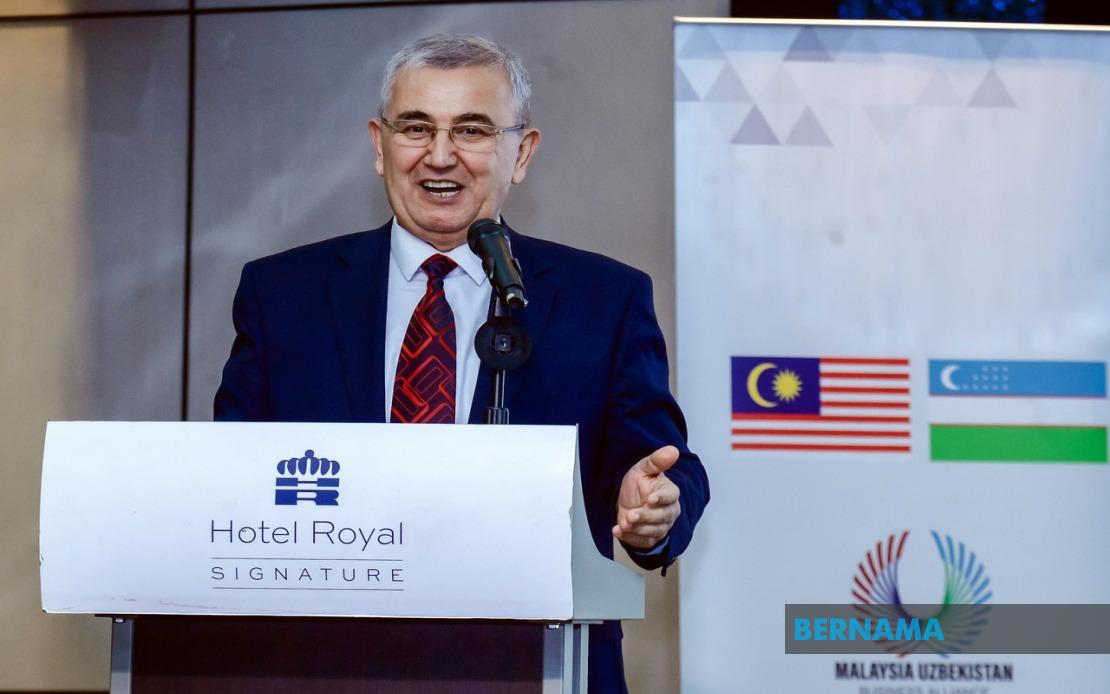
Uzbekistan Ambassador to Malaysia Dr Karomidin Gadoyev highlighted that agricultural collaboration has remained central to discussions between Malaysian and Uzbek leadership over the past two years. Prime Minister Datuk Seri Anwar Ibrahim visited Uzbekistan in May 2024, while President Shavkat Mirziyoyev travelled to Malaysia in February 2023, with agriculture featuring prominently in both high-level delegations. Most recently, the visit by Agriculture and Food Security Minister Datuk Seri Mohamad Sabu to Uzbekistan has catalysed concrete initiatives, signalling serious intent from both governments to move beyond general cooperation frameworks into tangible projects.
The complementary nature of the two economies forms the foundation of this partnership. Malaysia brings established expertise in paddy cultivation, aquaculture, fisheries management, precision agriculture technologies, and agricultural research through institutions like MARDI. Uzbekistan, conversely, possesses sophisticated knowledge in energy-efficient irrigation systems critical for arid and semi-arid regions, established horticulture sectors producing premium fruits, and integrated agri-food processing capabilities. This natural division of comparative advantage means both nations can address specific sectoral gaps while avoiding direct competition.
Digital transformation and artificial intelligence have emerged as primary cooperation vectors. Both countries recognise that smart farming technologies and data-driven agricultural practices are essential for maximising yields while conserving water and other resources. Uzbekistan explicitly intends to integrate Malaysian technological experiences and expertise into its farming systems, viewing digital agriculture as a mechanism for substantial productivity gains. This technological alignment is already manifesting in practical collaborations, with Malaysian agricultural drone manufacturer Miracule establishing its first showroom in Uzbekistan and planning assembly operations to support widespread adoption of unmanned aerial systems for crop monitoring and precision application of inputs.
Aquaculture represents a particularly promising frontier for collaboration. Uzbekistan's landlocked geography and rapidly growing population of nearly 40 million people have created sustained demand for aquatic protein sources that domestic production cannot fully satisfy. Malaysia's biofloc technology, which reduces feed costs by approximately 30 percent while simultaneously increasing productivity and lowering overall production expenses, directly addresses Uzbek developmental priorities. Malaysian enterprises have already commenced evaluating investment opportunities in Uzbek shrimp farming and broader fisheries projects, indicating that initial exploration is transitioning into commercial engagement.
Bilateral agri-food trade has grown substantially, reaching more than RM338 million in 2025, with Malaysian palm oil and palm oil-derived products commanding the largest export share. However, both governments view this figure as merely the foundation for much larger commercial flows. Gadoyev expressed confidence that agri-food trade could double or even triple within five to ten years as cooperation deepens and infrastructure for larger-scale exchanges develops. Malaysia is exploring the possibility of using Uzbekistan as a regional processing hub for crude palm oil intended for Central Asian distribution, while Uzbek producers prepare to expand shipments of premium fresh fruits, dried fruits, and processed food commodities to Southeast Asian markets.
The strategic implications for Malaysia extend beyond bilateral trade metrics. By establishing Uzbekistan as a test market and processing centre for palm oil products, Malaysian enterprises gain foothold access across Central Asia's five-nation market. The region's growing middle classes and rising food consumption preferences create substantial opportunities for value-added agri-food products. Conversely, importing Uzbek agricultural products diversifies Malaysia's food supply chain and reduces dependence on traditional suppliers, enhancing national food security resilience. This mutual vulnerability reduction addresses concerns among policymakers across both nations regarding supply chain fragility exposed by recent global disruptions.
Private sector engagement has already begun moving beyond governmental dialogue into concrete commercial activity. MARDI's ongoing work with Uzbek agricultural institutions to develop and test innovations demonstrates institutional-level commitment to knowledge sharing and collaborative research. The presence of Malaysian companies exploring drone technology deployment and shrimp farming investments shows that private actors perceive genuine commercial opportunity in Uzbek agricultural development. This combination of official encouragement and bottom-up commercial interest creates conditions for sustained partnership rather than fleeting diplomatic engagement.
Malaysia's invitation to Uzbekistan to participate in MAHA 2026 represents strategic leverage of established platforms to strengthen nascent partnerships. The Malaysia Agriculture, Horticulture and Agrotourism Exhibition attracts industry participants, policymakers, and commercial buyers across the region and internationally. Uzbek participation would expose Central Asian agricultural products to Malaysian importers and regional traders while simultaneously familiarising Uzbek agricultural enterprises with Southeast Asian market standards, regulations, and consumer preferences. This trade show participation serves as both showcase and networking venue, potentially catalysing business connections that might not occur through formal governmental channels alone.
The partnership also signals regional geopolitical dimensions worth examining. Central Asia has traditionally oriented towards Russia and China for agricultural technology and trade relationships. Malaysia's engagement in this sphere represents an alternative development pathway for Uzbek agriculture and a diversification of Central Asia's external partnerships. For Malaysia, establishing influence in food production and supply chains across Central Asia strengthens the nation's regional economic footprint beyond Southeast Asia and creates opportunities for Malaysian companies in underserved markets. The cooperation reflects recognition among both governments that strategic industries like food production should not remain dependent on a single geopolitical orbit.
Climate and resource challenges underscore the urgency of this partnership. Both nations face water scarcity concerns—Uzbekistan due to its arid geography and competing demands from irrigation-intensive agriculture, Malaysia due to increasing precipitation volatility and competing urban-agricultural demands. Collaborating on water-efficient farming technologies, precision irrigation systems, and climate-resilient crop varieties creates shared benefits addressing a collectively felt vulnerability. As global climate impacts intensify, nations that can demonstrate adaptive agricultural capabilities and diversified supply chains will possess significant economic advantages.
Looking forward, the trajectory of Malaysia-Uzbekistan agricultural cooperation will depend on whether initial enthusiasm translates into sustained institutional frameworks and commercial viability. The involvement of both governmental agencies and private enterprises suggests healthy prospects. Regular high-level visits, active participation in trade exhibitions, and concrete investments in drone assembly and aquaculture projects provide indicators that momentum will persist. Within Southeast Asia, this partnership model may offer instructive lessons for deepening agricultural cooperation with other Central Asian nations facing similar food security challenges and technological aspirations.

