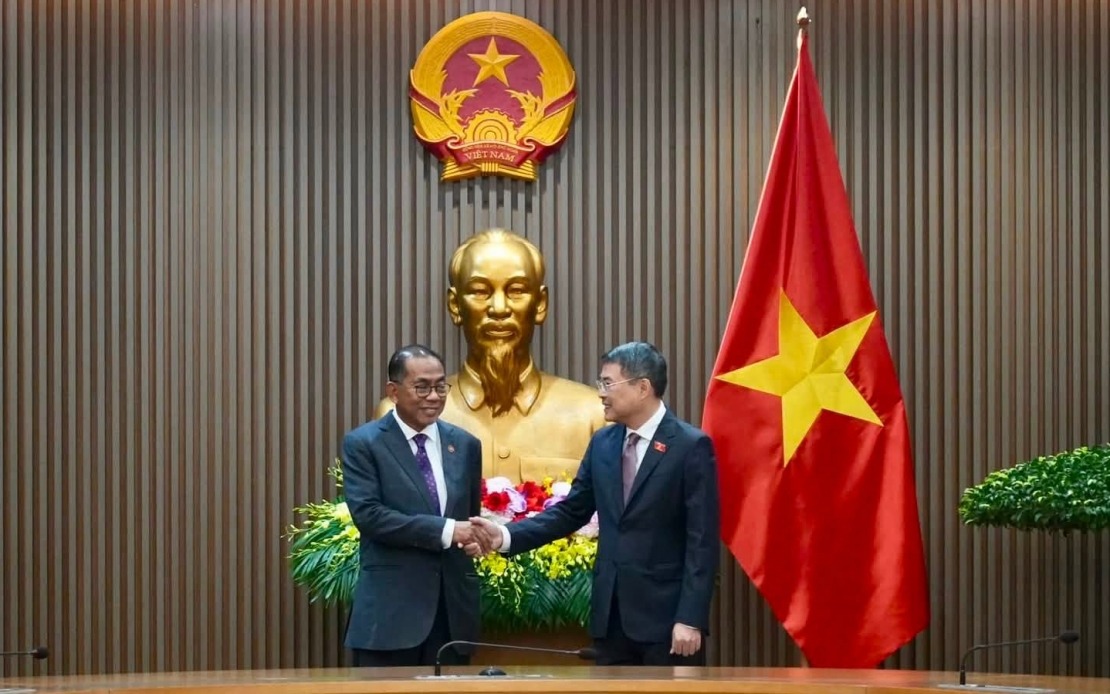
Malaysia and Vietnam are moving to deepen their long-standing defence relationship, with both nations pledging to expand cooperation across multiple strategic sectors including maritime security, technological advancement, and industrial defence capabilities. The commitment emerged during Defence Minister Datuk Seri Mohamed Khaled Nordin's official visit to Vietnam, where he held discussions with Prime Minister Lê Minh Hưng to chart the course for their evolving security partnership.
Malaysia views Vietnam as a trusted and dependable ally in an increasingly complex security landscape, with both countries aligned on fundamental strategic principles and steadfast in their commitment to ASEAN values. The foundation for this partnership rests on dialogue and diplomacy as the primary mechanisms for preserving peace and regional stability—principles that have become more critical as the region grapples with mounting security pressures. This alignment reflects a broader Southeast Asian consensus that multilateral engagement and adherence to ASEAN protocols remain the most effective frameworks for managing interstate relations.
The scope of Malaysia-Vietnam defence cooperation now extends to several interconnected domains. Maritime security stands as a priority area, reflecting the vital importance of sea lanes and coastal protection in Southeast Asia's geopolitical calculus. Capability development initiatives will enable both militaries to enhance their operational readiness and professionalism, while technological collaboration promises to modernise defence systems and infrastructure. Additionally, both nations intend to deepen ties within the defence industry, fostering knowledge transfer and potentially creating joint ventures that strengthen mutual self-sufficiency in critical defence sectors.
The 2023 Memorandum of Understanding on Defence Cooperation serves as the institutional framework guiding these efforts, providing a structured roadmap that translates political will into concrete partnerships. This formal agreement establishes clear parameters for collaboration and creates accountability mechanisms, ensuring that commitments translate into substantive outcomes rather than remaining symbolic gestures. The MoU's continued relevance underscores both governments' determination to move beyond rhetoric and implement measurable initiatives.
Beyond traditional defence matters, Malaysia and Vietnam have identified an array of contemporary security threats demanding coordinated responses. Great power competition—an oblique reference to strategic rivalries involving major external actors—poses challenges to ASEAN's strategic autonomy and non-aligned positioning. Grey zone activities, including coercive tactics short of conventional conflict, represent an emerging threat taxonomy that conventional military doctrines struggle to address effectively. Cyber threats and cognitive warfare exploit digital dependencies and information environments in ways that traditional defence establishments are still learning to counter, while artificial intelligence presents both opportunities and risks for military modernisation.
Supply chain disruptions, increasingly weaponised during geopolitical tensions, have demonstrated Southeast Asian nations' vulnerability to external shocks. The pandemic and recent great power frictions have exposed how defence industries reliant on global supply chains face critical vulnerabilities. By strengthening bilateral defence industry partnerships, Malaysia and Vietnam can enhance resilience and reduce exposure to supply disruptions while building indigenous capabilities that enhance regional self-reliance.
The regional security environment has grown markedly more complex over recent years, with multiple overlapping challenges creating unprecedented demands on ASEAN member states. Traditional concerns about interstate conflict persist alongside newer threats spanning the cyber, space, and information domains. This multifaceted challenge set requires more sophisticated cooperation mechanisms than were necessary in earlier decades, compelling nations to pool expertise and resources across multiple sectors simultaneously.
ASEAN's collective resilience—the capacity of the regional grouping to absorb shocks and maintain cohesion—depends fundamentally on member states forging stronger bilateral partnerships that complement multilateral mechanisms. Malaysia and Vietnam's deepening defence ties exemplify this layered approach to regional security architecture. By reinforcing bilateral relationships while operating within ASEAN frameworks, both nations contribute to the broader institutional ecosystem that has managed regional stability for decades.
The emphasis on strategic partnership reflects recognition that Southeast Asia's stability and prosperity are inextricably linked to security. Economic growth, investment flows, and human mobility all depend on predictable security conditions and the absence of major conflicts. Malaysia's positioning as a moderate Islamic-majority democracy and Vietnam's growing strategic weight create natural complementarities, with their partnership potentially extending influence across multiple regional security initiatives. For Malaysian readers, this expanding relationship signals that their nation remains actively engaged in shaping Southeast Asian security architecture rather than passively accepting external frameworks.
The timing of this deepening partnership carries additional significance given broader regional dynamics. China's increasing assertiveness, the United States' continuing strategic interest in the region, and European powers' renewed engagement have created a crowded geopolitical space where ASEAN nations must carefully navigate competing pressures. Malaysia and Vietnam's commitment to strengthening their ties reflects a determination to maintain agency and shape their strategic environment through enhanced intra-ASEAN cooperation rather than becoming proxies in external rivalries.
Looking forward, the concrete expansion of Malaysia-Vietnam defence cooperation in maritime security, technology, and industry capabilities will test both governments' commitment to their stated ambitions. Implementation challenges will inevitably arise, requiring sustained political will and bureaucratic coordination. Successful execution of the 2023 MoU and its successors could establish precedents for deeper Southeast Asian defence integration, potentially influencing how other ASEAN member states approach bilateral security partnerships. For Malaysia specifically, demonstrating leadership in strengthening regional defence architecture through practical partnerships reinforces its standing as a responsible middle power committed to rules-based regional order.

