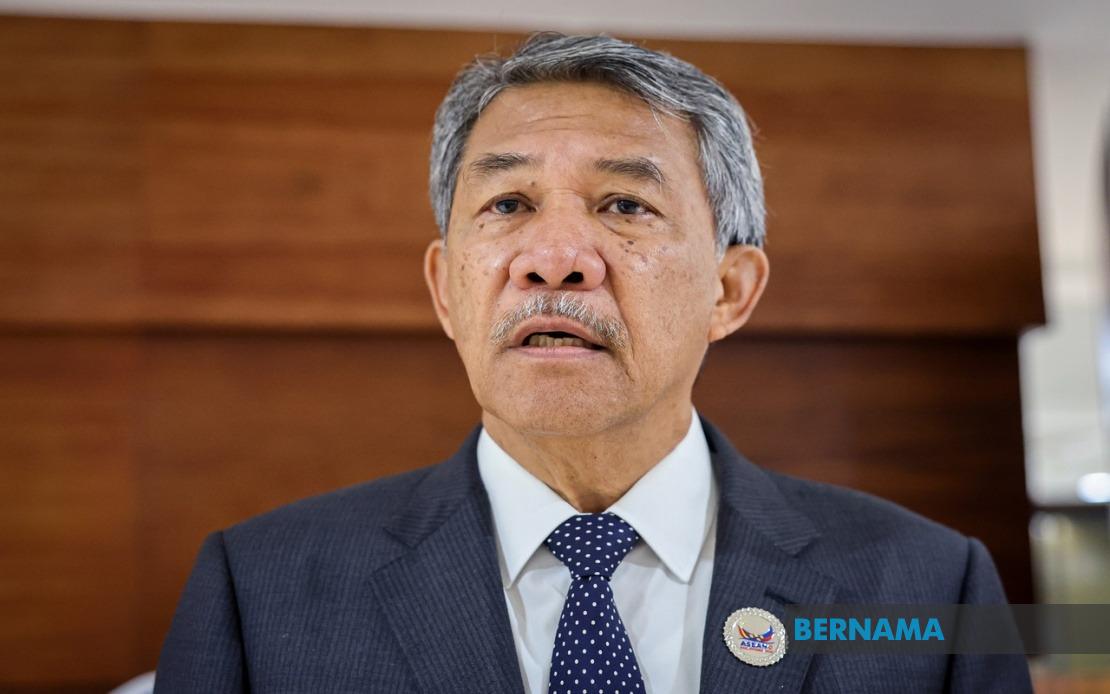
Malaysia has been selected to lead ASEAN's engagement with Turkiye following the regional bloc's decision to elevate the transcontinental nation to Dialogue Partner status. The move was announced by Foreign Minister Datuk Seri Mohamad Hasan during the 59th ASEAN Foreign Ministers' Meeting in Manila, underscoring Kuala Lumpur's diplomatic influence within Southeast Asia's premier multilateral forum. The appointment reflects Malaysia's bridging role between the Muslim-majority world and ASEAN, as well as its sustained advocacy for expanding the regional bloc's external partnerships.
The acceptance of Turkiye as a Dialogue Partner represents a significant expansion of ASEAN's external engagement architecture. Rather than rushing the decision, member states conducted thorough deliberations across multiple levels—from secretariat officials to foreign ministers to regional leaders—demonstrating the bloc's commitment to rigorous vetting procedures. This methodical approach stands in contrast to criticisms that have occasionally surfaced regarding the pace of ASEAN institutional decision-making, signalling that when consensus matters, the organisation can move decisively once convinced of mutual benefit.
Turkiye's elevation carries strategic implications for Southeast Asia. As a NATO member straddling Europe and Asia, Ankara brings valuable connectivity to ASEAN dialogues on global affairs, from supply chain resilience to security architecture. The relationship also opens commercial possibilities, particularly in defence manufacturing, energy, and consumer goods sectors where Turkish enterprises have competed effectively. For Malaysia specifically, the coordinator role positions the country as the primary interface for bilateral ASEAN-Turkiye initiatives, a responsibility that enhances Kuala Lumpur's diplomatic portfolio and influence over the direction of regional affairs.
Malaysia's 2025 chairmanship of ASEAN proved instrumental in advancing the Turkiye partnership. During its tenure, Kuala Lumpur had proposed Turkiye's admission, effectively framing the initiative that member states would later formalise. This illustrates how the rotating ASEAN chair position, often viewed as largely ceremonial, can shape substantive outcomes when wielded strategically by thoughtful leadership. The successful navigation of the proposal through ASEAN's consensus-based decision-making process demonstrated Malaysia's diplomatic dexterity in building coalitions around shared interests.
Simultaneously, ASEAN accepted the United Kingdom as a new member of the ASEAN Regional Forum, further diversifying the bloc's external partnerships. The ARF, established in 1994 as the regional framework for dialogue on political and security matters, has been the primary vehicle through which ASEAN engages major powers on contemporary challenges. The UK's admission reflects post-Brexit repositioning by London, which has sought renewed engagement with Indo-Pacific affairs through expanded multilateral participation. For ASEAN, British involvement in the ARF provides additional perspectives on maritime security, technology governance, and climate transitions—issues where European experience intersects with regional concerns.
Central to the Manila discussions was the theme of ASEAN centrality in an increasingly fractious geopolitical environment. Foreign Minister Mohamad emphasised that preserving ASEAN's position as the driving force in regional architecture remains fundamental to the bloc's relevance. This concern reflects underlying anxiety within Southeast Asia that great power competition—particularly between the United States and China—could marginalise ASEAN or force member states into choosing sides rather than maintaining strategic autonomy. The emphasis on protecting ASEAN centrality signals member states' determination to resist external pressure that might subordinate the organisation to larger powers' strategic objectives.
The discussions also revisited ASEAN Community Vision 2045, the bloc's long-term roadmap for deepening integration and resilience. According to ASEAN Secretary-General Dr Kao Kim Hourn's presentation, implementation requires member states to strengthen collective capacity in digitalisation, human development, and sustainable development. For Malaysia, the vision encompasses deepening intra-ASEAN trade, harmonising regulatory standards, and building cross-border infrastructure—objectives that require sustained political commitment beyond electoral cycles and competing national priorities.
Navigating an uncertain geo-economic landscape emerged as a recurring concern among foreign ministers. The Manila meeting occurred amid persistent tensions in the South China Sea, fragmentation in global supply chains, and divergent approaches to technology governance among major powers. ASEAN's response, rather than adopting rigid positions, involves maintaining principled flexibility—supporting peaceful resolution of disputes, advancing rules-based multilateralism, and selectively engaging all parties without subordinating independence to any single power. This approach demands sophisticated diplomacy from coordinators like Malaysia, which must balance relationship-building with principled advocacy.
The expansion of dialogue partnerships and ARF membership reflects ASEAN's strategy of widening influence networks rather than deepening integration with any single power bloc. By accepting multiple dialogue partners—including traditional Western powers, rising economies, and regional players like Turkiye—ASEAN creates redundancy in relationships that reduces dependence on any single external actor. Malaysia's expanded coordinator responsibilities position the country at the nexus of these networks, potentially amplifying its voice in shaping how ASEAN engages globally.
For Malaysian stakeholders, the appointment carries practical implications. Government agencies and private sector entities seeking to develop Turkiye partnerships will increasingly channel initiatives through official ASEAN mechanisms, creating opportunities for Malaysian intermediaries and service providers. Additionally, Malaysia's role as coordinator establishes precedent for future leadership positions within ASEAN structures, reinforcing the country's reputation as a reliable steward of regional consensus-building.
Looking forward, Malaysia's success in managing ASEAN-Turkiye relations will partly determine whether the Dialogue Partner framework delivers tangible benefits to member states. Beyond ceremonial interactions, meaningful dialogue requires substantive agenda-setting, working-group coordination, and regular high-level engagement that produces practical outcomes—whether trade agreements, security collaboration, or people-to-people exchanges. The coming months will reveal whether the designation represents genuine strategic partnership or primarily symbolic expansion of ASEAN's external network.

