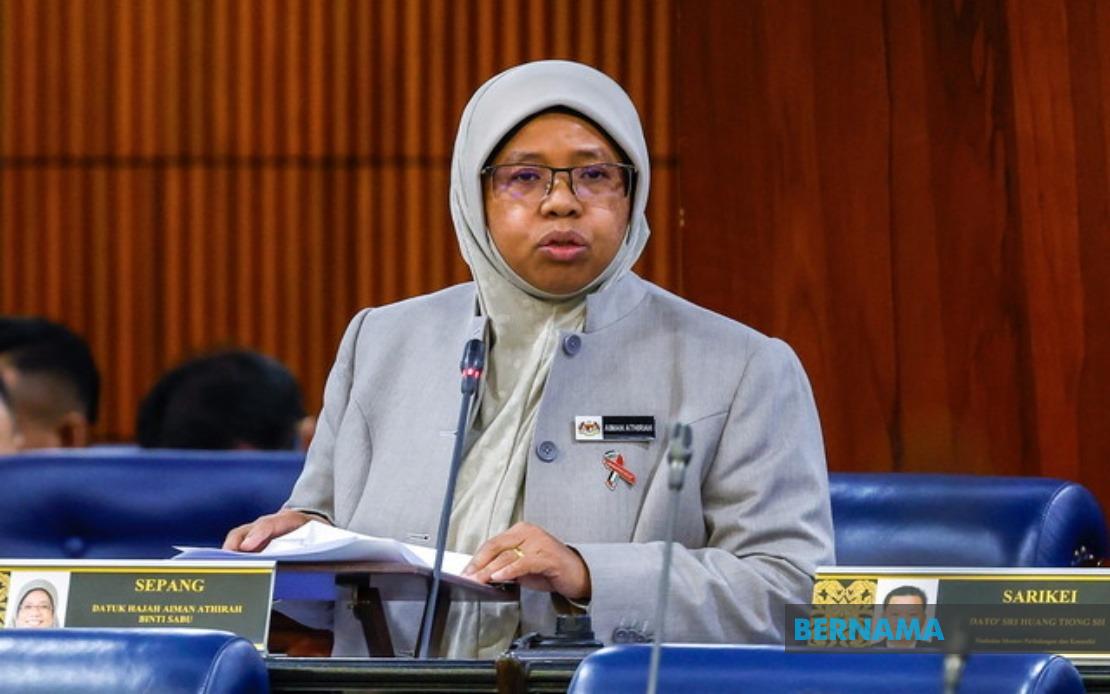
The Ministry of Housing and Local Government (KPKT) has given the go-ahead to a sweeping portfolio of infrastructure and housing projects targeting two historically underserved communities, approving 573 schemes in Chinese new villages alongside 21 separate initiatives in Indian villages. Deputy Minister Datuk Aiman Athirah Sabu outlined the comprehensive programme during parliamentary proceedings this week, confirming the combined financial commitment of RM73 million for the current fiscal year as part of a sustained effort to address development gaps in these communities.
Within the Chinese new villages component, which dominates the portfolio numerically, infrastructure remains the primary focus. The ministry has sanctioned 366 projects dedicated to roads, drainage, water supply, and other essential services that form the backbone of viable settlements. Of these infrastructure undertakings, roughly 40 percent—148 projects—have already reached completion, while the remaining 218 continue in active execution. This steady progression suggests a deliberate implementation strategy designed to deliver tangible improvements to residents' daily lives over an extended timeframe rather than attempting an unrealistic acceleration that might compromise quality.
Beyond infrastructure, the Housing Repair Assistance Programme represents a significant allocation within the Chinese new villages initiative, with 197 approved projects addressing the maintenance and renovation needs of existing dwellings. The completion rate here stands considerably lower than infrastructure work, with just 47 finished against 150 still progressing. This disparity likely reflects the greater complexity of residential improvement work compared to public amenity construction, as each repair project must accommodate individual homeowner circumstances and preferences. A further 10 housing construction assistance projects have received approval but have not yet commenced, suggesting the pipeline includes freshly greenlit schemes awaiting resource mobilisation.
The allocation for Indian villages, though numerically smaller, represents a significant policy pivot given the historical neglect of these communities. Eighteen villages scattered across six states—Johor, Melaka, Selangor, Kuala Lumpur, Perak, and Negeri Sembilan—form the initial cohort for the RM2 million investment, encompassing infrastructure development, public amenities, and safety enhancement measures. The project distribution reveals an active implementation phase, with five schemes already completed, thirteen under construction, two in the procurement phase, and one remaining in planning stages. This staggered approach allows for adaptive management and ensures resources flow to ready projects while others progress through approvals.
The broader historical context underscores the significance of these recent commitments. Between 2023 and 2024, the government channelled RM328.9 million toward Chinese new village development across 613 identified settlements nationwide. This substantial cumulative investment, now supplemented by 2024's RM73 million allocation, indicates sustained prioritisation of these communities after decades of relative marginalisation. For Indian villages, however, a more recent trajectory applies—dedicated government coordination through KPKT commenced only this year, with RM15 million allocated for projects benefiting 22,144 individual recipients across 50 identified villages via 87 distinct undertakings.
The funding architecture reflects dual-track implementation mechanisms designed to reach communities through complementary channels. The primary RM10 million component flows through KPKT's 2025 budget initiative, encompassing 54 projects under direct ministry supervision. This approach leverages existing government infrastructure and expertise to ensure consistent standards and accountability. Simultaneously, RM5 million flows through the Indian Community Socioeconomic Development Programme, administered via the Malaysian Indian Transformation Unit (MITRA), an entity specifically established to address the developmental priorities of Malaysia's Indian-descended citizens.
For Malaysian policymakers and regional observers, this portfolio illustrates the ongoing challenge of delivering equitable development to ethnically distinct communities with distinct historical grievances. Chinese new villages emerged during the colonial emergency as government-controlled settlements, while Indian estates grew from plantation labour systems. Both communities subsequently faced infrastructure deficits as urban expansion and economic restructuring bypassed them. The current programme acknowledges these accumulated inequities through targeted allocation while attempting to operationalise delivery at scale.
The infrastructure emphasis within these projects carries particular significance for community sustainability. Roads, water systems, and drainage represent foundational requirements that enable subsequent economic activity and improve health outcomes. In Chinese new villages, where rural populations often depend on agricultural or small-scale commercial activities, improved connectivity directly affects market access and income prospects. Similarly, public amenity enhancement in Indian villages—encompassing safety measures and communal facilities—addresses long-standing quality-of-life concerns that compound economic marginalisation.
Implementation momentum varies meaningfully across project categories. The 40 percent completion rate for Chinese new village infrastructure contrasts with the substantially higher completion proportion across the complete portfolio, suggesting either more complex infrastructure projects requiring extended execution periods or earlier approval dates that have accumulated to higher completion percentages. The housing assistance programmes, conversely, reflect the labour-intensive nature of residential work and the necessity of coordinating with individual homeowners possessing varying financial circumstances and preferences.
Looking forward, the expansion of dedicated resources to Indian villages through 2025 represents a significant policy recalibration. The establishment of explicit coordination mechanisms and substantial year-one allocation suggests government recognition that Indian communities have historically received insufficient attention within development frameworks. The scale—50 villages and 22,144 beneficiaries initially—indicates ambition while remaining achievable within the allocated budget parameters. Whether this pilot expansion ultimately extends to additional villages and increased budgets will depend on implementation success and political prioritisation in subsequent budget cycles.
The geographic distribution across six states suggests careful stakeholder consultation and possibly proportional allocation reflecting community demographics. Johor, traditionally hosting significant Indian plantation populations, receives attention alongside Selangor and Kuala Lumpur, where substantial Indian communities face urbanisation pressures. This state-level spread distributes implementation responsibilities across multiple local governments and creates diverse learning opportunities as projects progress at varying speeds across different administrative jurisdictions.

