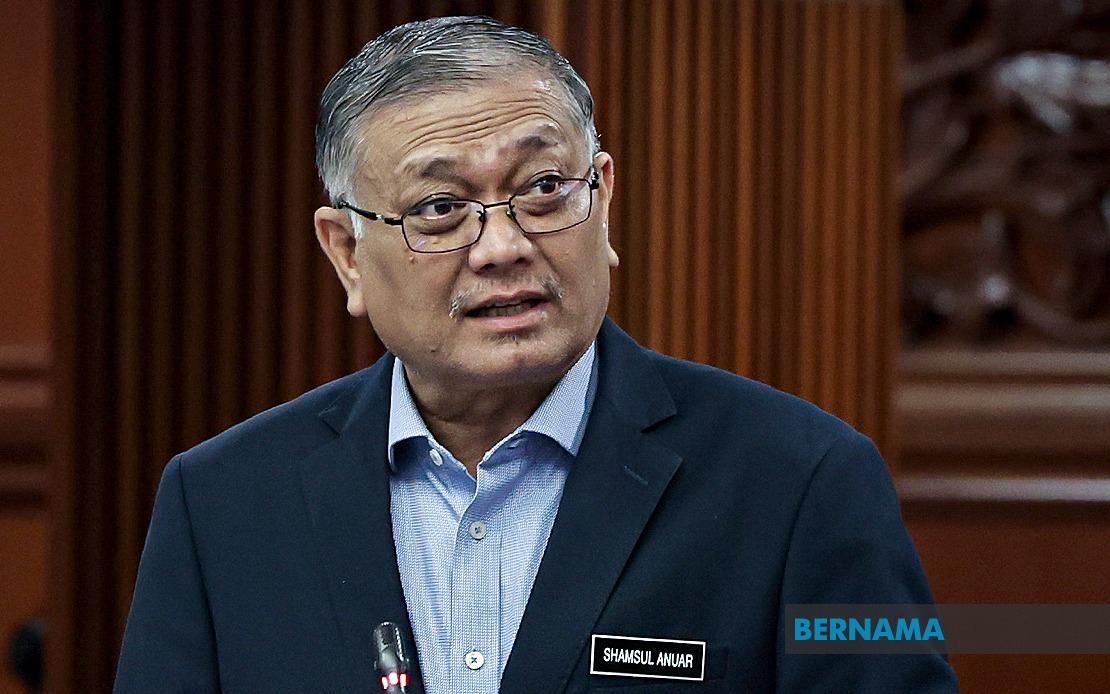
The Malaysian government has reiterated its commitment to evaluating citizenship applications on an individual basis, particularly for applicants facing documentation challenges and children born abroad to Malaysian mothers. Deputy Home Minister Datuk Seri Dr Shamsul Anuar Nasarah stressed during parliamentary proceedings that while each case receives careful consideration, the assessment framework remains grounded in constitutional provisions and rigorous security protocols designed to protect national interests.
Shamsul Anuar made the clarification while addressing concerns about citizenship eligibility, emphasising that the death of a Malaysian mother does not automatically bar an applicant from pursuing citizenship. This clarification addresses a critical gap in public understanding, as families navigating the citizenship process may have misinterpreted eligibility criteria or abandoned applications unnecessarily. The distinction carries particular weight in Malaysia's multicultural context, where cross-border family structures and heritage claims remain commonplace, especially within communities with historical ties across Southeast Asia.
The assessment methodology employed by the Home Ministry encompasses multiple verification layers designed to balance accessibility with security considerations. All applicants undergo comprehensive background checks, document authentication, and security screening procedures before eligibility determination. This multi-stage process reflects government concerns about national sovereignty and the integrity of citizenship records, though critics have occasionally questioned whether such protocols inadvertently create barriers for legitimate applicants with genuine historical claims to Malaysian nationality.
For adults seeking naturalisation, Article 19 of the Federal Constitution provides a pathway for individuals aged 21 and above who have never previously applied for citizenship. Importantly, this route remains available even to those with prior documentation deficiencies, provided they meet established prerequisites. These requirements include permanent resident status, compliance with minimum residency periods, demonstrated good character, and sufficient proficiency in Malay language. The language requirement particularly reflects Malaysia's nation-building framework and constitutional emphasis on Bahasa Melayu as a unifying national language.
Processing timelines have emerged as a central focus for administrative improvement. The Home Ministry has established a one-year target for completing applications that contain all required documentation, with compliance being actively monitored. This commitment responds to longstanding complaints about bureaucratic delays that have sometimes stretched citizenship processing across multiple years. Shamsul Anuar acknowledged the tension between efficiency and thoroughness, pledging that the ministry would continue refining operational procedures to reduce delays without compromising assessment quality or security standards.
To address persistent documentation challenges particularly affecting Sabah and Sarawak residents, the government established a Special Task Force comprising the National Registration Department and the Sarawak Premier's Department. This collaborative mechanism conducts field operations throughout the states to resolve documentation discrepancies, facilitate birth registrations, and enable identification document issuance for qualifying individuals. The initiative reflects recognition that eastern Malaysian states face unique administrative complexities stemming from historical governance transitions and diverse record-keeping practices.
Complementing federal-level efforts, a state-level Special Committee on Citizenship Status operates in Sarawak to expedite review of applications under Article 15E of the Federal Constitution. This committee specifically addresses special cases involving children requiring federal government consideration. The tiered approach demonstrates how Malaysia's federal system allows localised problem-solving while maintaining national standards, though coordination between state and federal authorities remains an ongoing operational challenge.
Beyond domestic citizenship matters, Malaysia's refugee and asylum policy continues evolving amid regional complexity. Deputy Foreign Minister Datuk Lukanisman Awang Sauni articulated the government's position on the ongoing Rohingya crisis, emphasising that Malaysia intends maintaining engagement through ASEAN mechanisms and cooperation with the United Nations High Commissioner for Refugees. The refugee situation carries implications extending beyond humanitarian concerns, encompassing irregular migration patterns, human trafficking networks, and border security dimensions affecting multiple Southeast Asian nations.
Malaysia's commitment to the ASEAN Five-Point Consensus remains central to its Myanmar policy framework, though officials acknowledge that sustainable solutions require broader international participation and burden-sharing. Lukanisman stressed that Malaysia will continue advocating for expanded refugee resettlement opportunities in third countries, reflecting frustration with unequal responsibility distribution within the international system. This position reflects Malaysia's perspective that wealthier nations should absorb greater refugee populations rather than concentrating responsibility in neighbouring developing countries.
The convergence of citizenship and refugee policy illuminates Malaysia's dual challenge: establishing clear pathways for deserving applicants while managing irregular migration and security concerns. For Malaysian readers, these policy directions suggest that citizenship pathways remain available for those with legitimate documentation and qualifications, though success requires patience and comprehensive preparation. The emphasis on case-by-case assessment acknowledges Malaysia's recognition of individual circumstances while maintaining systematic gatekeeping.
Looking forward, the government's operational improvements and taskforce initiatives suggest movement toward more efficient processing, though bureaucratic inertia and resource constraints may limit implementation speed. Applicants with claims to Malaysian citizenship, particularly those with documented maternal connections or long-term residency, now have clearer understanding that death of a sponsoring parent does not automatically terminate eligibility. Instead, each application receives independent evaluation based on constitutional provisions and individual factual circumstances, offering hope to families previously uncertain about their prospects.

