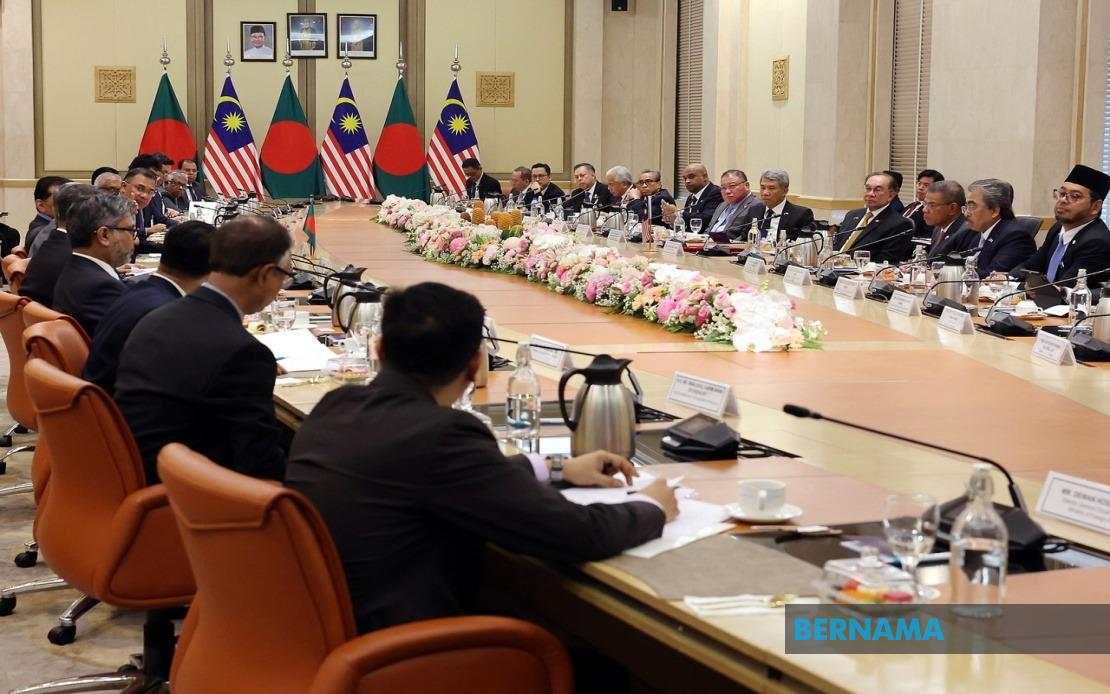
Prime Minister Datuk Seri Anwar Ibrahim has signalled a strategic pivot in Malaysia-Bangladesh relations, positioning both nations to collaborate on transformative technologies that will define economic competitiveness in the coming decades. Speaking at a joint press conference in Putrajaya with visiting Bangladesh Prime Minister Tarique Rahman, Anwar underscored the need to move beyond conventional trade partnerships and embrace innovation-driven sectors that represent the future of regional economic growth.
While traditional investment flows remain important to the bilateral relationship, Anwar made clear that the two countries must now venture into domains that have become critical differentiators in global markets. His emphasis on artificial intelligence reflects broader Southeast Asian recognition that AI capabilities will increasingly determine technological leadership and productivity gains across all economic sectors. This positioning aligns Malaysia's own ambitious digital transformation agenda with Bangladesh's emerging aspirations to become a technology hub within South Asia.
The semiconductor industry represents a particularly significant opportunity for deepened Malaysia-Bangladesh engagement. Malaysia has established itself as a global leader in semiconductor manufacturing and design, with a sophisticated supply chain and skilled workforce. Bangladesh, meanwhile, possesses a large pool of technical talent and growing manufacturing capabilities. Collaborative initiatives in this space could enhance Malaysia's position in regional semiconductor networks while accelerating Bangladesh's industrial upgrading.
Energy cooperation carries immediate relevance for both nations as they navigate the global transition toward sustainable power generation. Malaysia's experience with liquefied natural gas exports and renewable energy development could provide valuable lessons for Bangladesh, which faces mounting electricity demands alongside climate commitments. Joint research, technology transfer agreements, and investment partnerships in clean energy could position the two countries as leaders in Southeast Asian energy innovation.
The advanced manufacturing sector offers another avenue for synergy. Both nations recognize that reshoring and nearshoring trends are reshaping global production networks, creating opportunities for countries that can offer cost-effective, skilled manufacturing combined with proximity to major markets. Malaysian expertise in high-value manufacturing could complement Bangladesh's large labour force and growing industrial capabilities, potentially creating a more integrated regional production ecosystem.
Digital economy expansion was equally prominent in Anwar's remarks, acknowledging the reality that digital services now represent a significant portion of bilateral trade potential. E-commerce platforms, financial technology services, and digital infrastructure development are areas where both nations can benefit from shared learning and investment. Bangladesh's burgeoning startup ecosystem and Malaysia's established digital finance sector suggest considerable room for knowledge exchange and entrepreneurial collaboration.
Beyond sectoral expansion, the two nations have formalized their commitment through institutional mechanisms. The signing of a Memorandum of Understanding on Cultural Cooperation reflects recognition that soft power and people-to-people connections strengthen broader strategic partnerships. Cultural exchanges and educational initiatives help build the understanding and trust necessary for deeper commercial and technological collaboration, creating constituencies within both societies that support sustained bilateral engagement.
The Exchanges of Notes covering Counter-Terrorism Research and Investment Promotion and Facilitation address security and economic framework issues that underpin stable bilateral relations. Counter-terrorism cooperation is particularly relevant given both nations' geographic locations and their roles in regional security architecture. Enhanced research collaboration in this domain can benefit broader Southeast Asian counterterrorism efforts while demonstrating the countries' commitment to mutual security interests.
Rahman's two-day official visit serves as a tangible demonstration that Bangladesh views Malaysia as a crucial strategic partner for development. The high-level engagement signals that Dhaka is actively seeking partnerships with established regional economies that can assist in technological advancement and industrial diversification. For Malaysia, the visit reinforces its position as a technology and investment gateway for South Asian nations looking to engage with Southeast Asian economic networks.
The timing of this expanded cooperation framework is significant given broader regional dynamics. As tension persists in major power relationships and global supply chains undergo reorganization, Bangladesh and Malaysia both have incentives to strengthen regional partnerships that reduce dependence on distant suppliers and markets. Cooperation in AI and semiconductors, in particular, reflects shared recognition that technological sovereignty and indigenous capability development have become strategic imperatives.
Implementing these agreements will require substantial institutional effort. Malaysian universities and research institutions will need to coordinate with Bangladeshi counterparts on AI research initiatives. Private sector partnerships must be facilitated through investment promotion agencies and chambers of commerce. Energy cooperation will likely involve joint feasibility studies and regulatory harmonization. The success of these initiatives depends on follow-through mechanisms and dedicated funding rather than merely symbolic agreements.
For Malaysia specifically, deepened engagement with Bangladesh provides opportunity to diversify partnership beyond established ASEAN relationships while positioning itself as a gateway for South Asian technology integration into Southeast Asian networks. Bangladesh gains access to Malaysian technical expertise, manufacturing networks, and regional market connections. The expansion into emerging sectors represents maturation of the bilateral relationship from transactional trade into strategic partnership based on complementary capabilities and shared development aspirations.
%22%2F%3E%3C%2Fpattern%3E%3C%2Fdefs%3E%3Crect%20width%3D%22100%25%22%20height%3D%22100%25%22%20fill%3D%22url(%23ph4sj74g)%22%2F%3E%3Crect%20width%3D%22100%25%22%20height%3D%22100%25%22%20fill%3D%22url(%23ph4sj74p)%22%2F%3E%3Ctext%20x%3D%2250%25%22%20y%3D%2250%25%22%20text-anchor%3D%22middle%22%20dominant-baseline%3D%22central%22%20fill%3D%22rgba(255%2C255%2C255%2C0.95)%22%20font-family%3D%22Georgia%2C%20'Times%20New%20Roman'%2C%20serif%22%20font-weight%3D%22700%22%20font-size%3D%22170%22%20letter-spacing%3D%22-0.02em%22%3EMalaysia%3C%2Ftext%3E%3C%2Fsvg%3E)
%22%2F%3E%3C%2Fpattern%3E%3C%2Fdefs%3E%3Crect%20width%3D%22100%25%22%20height%3D%22100%25%22%20fill%3D%22url(%23ph2078wg)%22%2F%3E%3Crect%20width%3D%22100%25%22%20height%3D%22100%25%22%20fill%3D%22url(%23ph2078wp)%22%2F%3E%3Ctext%20x%3D%2250%25%22%20y%3D%2250%25%22%20text-anchor%3D%22middle%22%20dominant-baseline%3D%22central%22%20fill%3D%22rgba(255%2C255%2C255%2C0.95)%22%20font-family%3D%22Georgia%2C%20'Times%20New%20Roman'%2C%20serif%22%20font-weight%3D%22700%22%20font-size%3D%22170%22%20letter-spacing%3D%22-0.02em%22%3EMalaysia%3C%2Ftext%3E%3C%2Fsvg%3E)
%22%2F%3E%3C%2Fpattern%3E%3C%2Fdefs%3E%3Crect%20width%3D%22100%25%22%20height%3D%22100%25%22%20fill%3D%22url(%23ph40iosg)%22%2F%3E%3Crect%20width%3D%22100%25%22%20height%3D%22100%25%22%20fill%3D%22url(%23ph40iosp)%22%2F%3E%3Ctext%20x%3D%2250%25%22%20y%3D%2250%25%22%20text-anchor%3D%22middle%22%20dominant-baseline%3D%22central%22%20fill%3D%22rgba(255%2C255%2C255%2C0.95)%22%20font-family%3D%22Georgia%2C%20'Times%20New%20Roman'%2C%20serif%22%20font-weight%3D%22700%22%20font-size%3D%22320%22%20letter-spacing%3D%22-0.02em%22%3EMACC%3C%2Ftext%3E%3C%2Fsvg%3E)