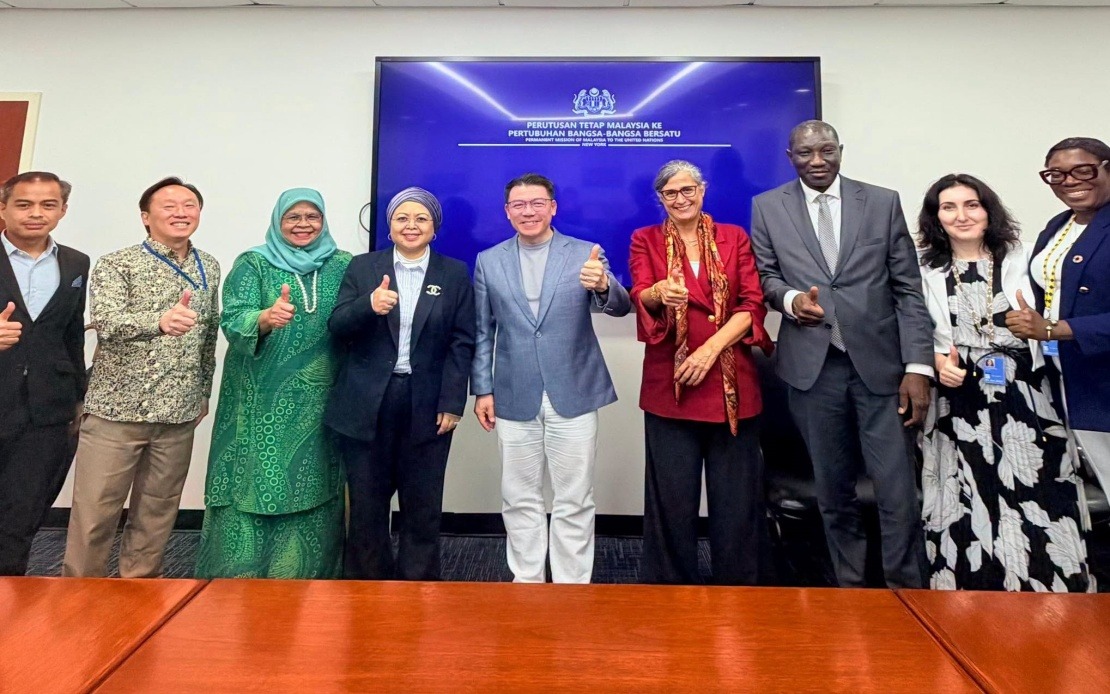
Malaysia has pressed the global community to shift from assessment to action on urban sustainability, arguing that the midterm review of the New Urban Agenda represents a critical juncture rather than a routine checkpoint. Speaking at the UN Headquarters in New York following the High-Level Meeting on the Midterm Review of the NUA, Housing and Local Government Minister Nga Kor Ming stressed that without decisive implementation, billions of urban residents will continue to face inadequate housing, digital disparities, and climate vulnerability. The intervention signals Malaysia's determination to move beyond rhetorical commitments and establish concrete mechanisms for delivering inclusive, resilient cities before 2030.
As President of the UN-Habitat Assembly, Nga emphasised that the window for meaningful action is closing rapidly. With merely four years separating the present from the 2030 deadline, the minister warned that member states cannot afford incremental progress or delayed decision-making. The framing reflects growing international frustration with slow-moving implementation of the Sustainable Development Goals, particularly in urban contexts where challenges compound rapidly as populations concentrate in cities. Nga's language—describing the midterm review as an "inflection point" rather than a documentation exercise—signals Malaysia's expectation that nations must fundamentally alter their approach to urban development planning and financing.
The minister identified three interconnected urban crises demanding immediate attention: the global housing shortage, the widening digital divide in metropolitan and peri-urban areas, and the imperative to build infrastructure capable of withstanding climate disruptions. These challenges disproportionately affect developing economies in Asia-Pacific, where rapid urbanisation often outpaces housing supply and infrastructure investment. Malaysia's emphasis on equity and inclusion reflects regional concerns that sustainable development frameworks frequently overlook marginalised communities living in informal settlements or underserved peripheral zones. By elevating these issues at the UN forum, Malaysia positions Southeast Asian perspectives alongside those of wealthier, industrialised nations.
Malaysia's role in championing the Asia-Pacific Urban Action Platform with regional partners represents a strategic approach to localising global sustainability frameworks. Rather than implementing top-down mandates from New York or Geneva, the AP-UAP facilitates knowledge exchange among countries facing similar urbanisation pressures and resource constraints. This mechanism enables Southeast Asian nations to adapt best practices from peer economies while maintaining fiscal and policy autonomy. The platform also strengthens regional capacity to mobilise green financing and coordinate cross-border infrastructure projects, addressing the chronic underfunding that hampers urban development in middle-income countries.
Nga highlighted Malaysia's achievement of over 500 million square feet of green-indexed buildings and commitments to expand this portfolio before 2030, providing a concrete example of how political will translates into measurable environmental outcomes. Green buildings reduce operational carbon emissions, lower utility costs for occupants, and contribute to urban cooling in tropical climates—factors particularly relevant for Malaysia and neighbouring countries experiencing intensified heat stress. The minister's invocation of this achievement serves dual purposes: demonstrating Malaysia's credibility as an advocate for sustainable practices, and encouraging other member states to establish similarly ambitious targets. This competitive framing within the sustainability space reflects how nations now position themselves as leaders in climate adaptation and mitigation.
The call to ensure no community is left behind resonates with Malaysia's MADANI Economy framework, which prioritises inclusive growth alongside sustainability. By explicitly linking urbanisation to equity considerations, Nga articulates a development philosophy that resists the pitfall of green gentrification—where environmental upgrades price out lower-income residents. This perspective aligns with concerns raised by civil society and grassroots organisations across Asia-Pacific, where rapid urban transformation frequently displaces vulnerable populations. Malaysia's emphasis on inclusive urbanisation signals recognition that sustainable cities cannot succeed if they exacerbate inequality or concentrate benefits among affluent segments.
The gathering at UN Headquarters brought together an unusually broad coalition of stakeholders, including national governments, local and regional authorities, civil society, and grassroots movements. This multifaceted participation acknowledges that urban transformation cannot be mandated from central governments alone but requires coordination across governmental levels and engagement with communities directly affected by urbanisation. Malaysia's advocacy for strengthened collaboration reflects the minister's understanding that implementation barriers often stem not from policy incoherence but from coordination failures and insufficient resource allocation to local actors who understand contextual constraints.
Nga's appreciation for leadership from UN General Assembly President Annalena Baerbock, Secretary-General António Guterres, and UN-Habitat Executive Director Anacláudia Rossbach underscores Malaysia's commitment to working through established multilateral channels while advocating for reform in how these institutions prioritise urban development. By publicly acknowledging these figures, Nga maintains diplomatic relationships essential for advancing subsequent policy initiatives and accessing technical support and financing mechanisms controlled by UN agencies. This approach reflects Southeast Asian diplomatic practice of combining advocacy with relationship cultivation.
The thematic framing of the two-day meeting—"Delivering Sustainable Urbanisation for All: Accelerating and Scaling Implementation of the New Urban Agenda to 2036 Together"—reveals a deliberate linguistic shift from 2030 to 2036, potentially signalling realistic acknowledgment that many targets will not be achieved within the original timeline. Malaysia's positioning within this conversation positions the country as both a pragmatic voice recognising implementation constraints and a committed advocate refusing to lower ambitions. For Southeast Asian readers, Malaysia's interventions carry particular relevance given the region's rapid urbanisation, vulnerability to climate impacts, and limited fiscal space for major infrastructure investments. The outcomes of these global negotiations will shape financing mechanisms, technology transfer, and capacity-building support available to countries like Malaysia as they pursue sustainable urban development.

