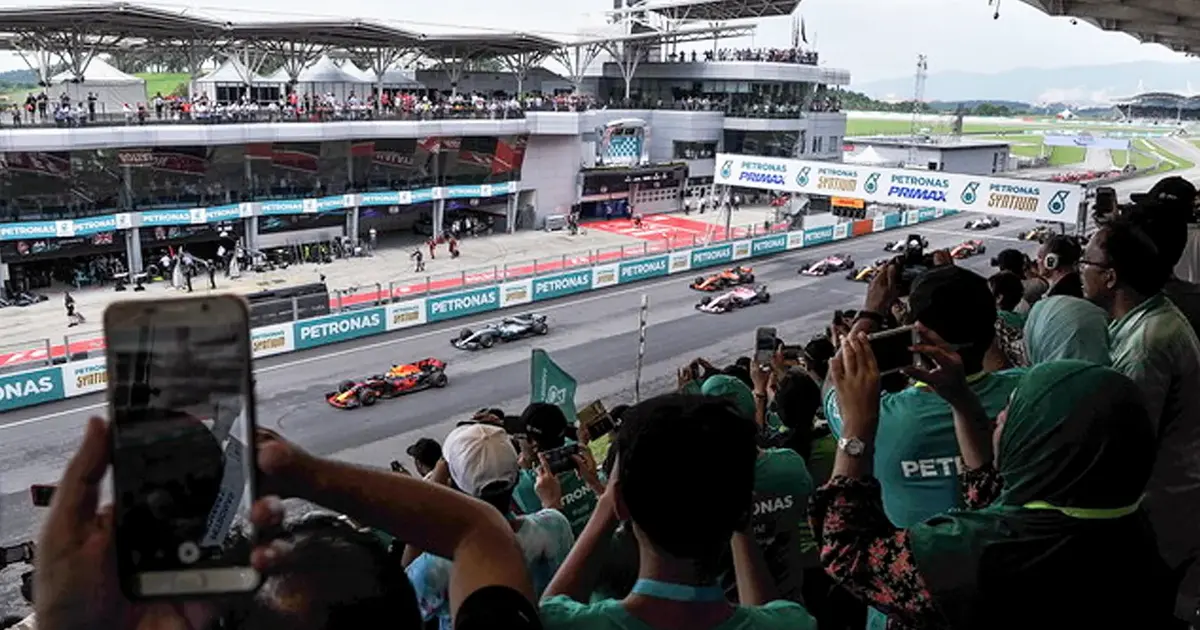
Prime Minister Anwar Ibrahim has sought to allay concerns about the financial burden of continuing Malaysia's Formula 1 hosting obligations, stating that the government need not commit substantial additional resources beyond its existing annual maintenance allocation for Sepang International Circuit. Speaking on the matter, Anwar indicated that the RM16 million the government already dedicates each year to preserve and enhance the facility represents a sufficient financial foundation for sustaining the prestigious motorsport event on Malaysian soil.
The clarification comes amid broader discussions about Malaysia's commitment to the Formula 1 calendar and the associated costs of remaining a host nation. International motorsport hosting has become an increasingly expensive endeavour, with numerous countries facing substantial bills related to infrastructure improvements, security arrangements, and event organisation. By emphasizing that Malaysia would rely on its existing maintenance budget rather than seeking new or supplementary funding, Anwar appears to be signalling fiscal prudence and assuring taxpayers that the nation's F1 ambitions will not drain the public purse.
Sepang International Circuit, located in the Klang Valley, has served as Malaysia's premier racing venue since its inauguration in 1999. The facility has undergone multiple phases of development and modernisation over its operational history, positioning it as a world-class motorsport destination capable of accommodating the technical demands of Formula 1 competition. The track's strategic location within Malaysia's industrial and commercial heartland, coupled with its existing infrastructure and accumulated expertise in race management, provides a foundation upon which to build further enhancements without necessarily incurring prohibitive costs.
The Prime Minister's statement reflects a practical approach to motorsport governance that balances Malaysia's aspirations to maintain international sporting prestige with the need for responsible fiscal management. Rather than pursuing expensive, sporadic upgrades triggered by hosting requirements, the government's consistent annual investment in the circuit's upkeep and modernisation creates continuity that serves both routine maintenance needs and incremental enhancements aligned with evolving Formula 1 standards.
Malaysia's relationship with Formula 1 carries significant symbolic and economic dimensions for the nation. The Malaysian Grand Prix has historically provided opportunities for domestic companies to develop motorsport-related industries, promoted technological innovation, and generated international media coverage that enhances the country's global profile. For a Southeast Asian nation still building its reputation as an advanced manufacturing and innovation hub, maintaining a presence on the Formula 1 calendar carries value extending beyond the immediate spectacle of race day.
However, the sustainability of hosting arrangements depends partly on neighbouring and competitor nations' capacity to absorb costs. Neighbouring Singapore's Formula 1 race, the Marina Bay Grand Prix, commands significantly higher operational expenditures due to its urban setting and the extensive street infrastructure modifications required annually. In contrast, Malaysia's permanent racing facility reduces some categories of recurring expense that temporary street circuits must bear year after year, offering comparative financial advantages.
The RM16 million annual allocation provides resources for track resurfacing, safety system upgrades, facility maintenance, and incremental improvements to spectator amenities and operational systems. These investments, distributed across the year rather than concentrated in race months, create operational efficiencies and allow the circuit management to respond to Formula 1's evolving technical specifications without requiring emergency funding requests or supplementary appropriations.
From a regional perspective, Malaysia's ability to host Formula 1 affordably strengthens its competitive position within Southeast Asia's sporting landscape. The nation competes with other regional economies for international event hosting rights and the associated tourism, sponsorship, and broadcasting revenues these events generate. Demonstrating cost-effective hosting capabilities signals to Formula 1 governance structures and international stakeholders that Malaysia represents a reliable, efficient venue option worthy of maintaining on the global racing calendar.
Anwar's emphasis on financial sustainability also carries political implications domestically. Public support for expensive sporting venues sometimes wanes when taxpayers perceive disproportionate government investment relative to visible benefits. By framing F1 hosting as an extension of routine infrastructure maintenance rather than an exceptional budgetary commitment, the Prime Minister addresses potential criticisms regarding public resource allocation while reinforcing the government's commitment to the sport.
Looking forward, the viability of Malaysia's F1 involvement increasingly depends on optimising existing assets rather than pursuing ambitious new construction projects. This approach proves particularly prudent in Malaysia's post-pandemic economic environment, where fiscal discipline and targeted infrastructure investment have become heightened priorities. The Sepang circuit's maturity as a facility, combined with its accumulated expertise and established relationships within international motorsport governance, provides a foundation for sustainable, cost-effective continuation of Malaysia's Grand Prix traditions.
The government's confidence in proceeding with existing budgetary frameworks also reflects confidence in the circuit's management capabilities and the operational systems developed over more than two decades of continuous Formula 1 hosting. This institutional knowledge and operational sophistication represent significant assets that reduce the necessity for major capital expenditures or external consultancy fees typically required when less experienced venues prepare for F1 events. For Malaysia, sustaining Formula 1 without proportional spending increases depends fundamentally on leveraging these accumulated advantages effectively.

