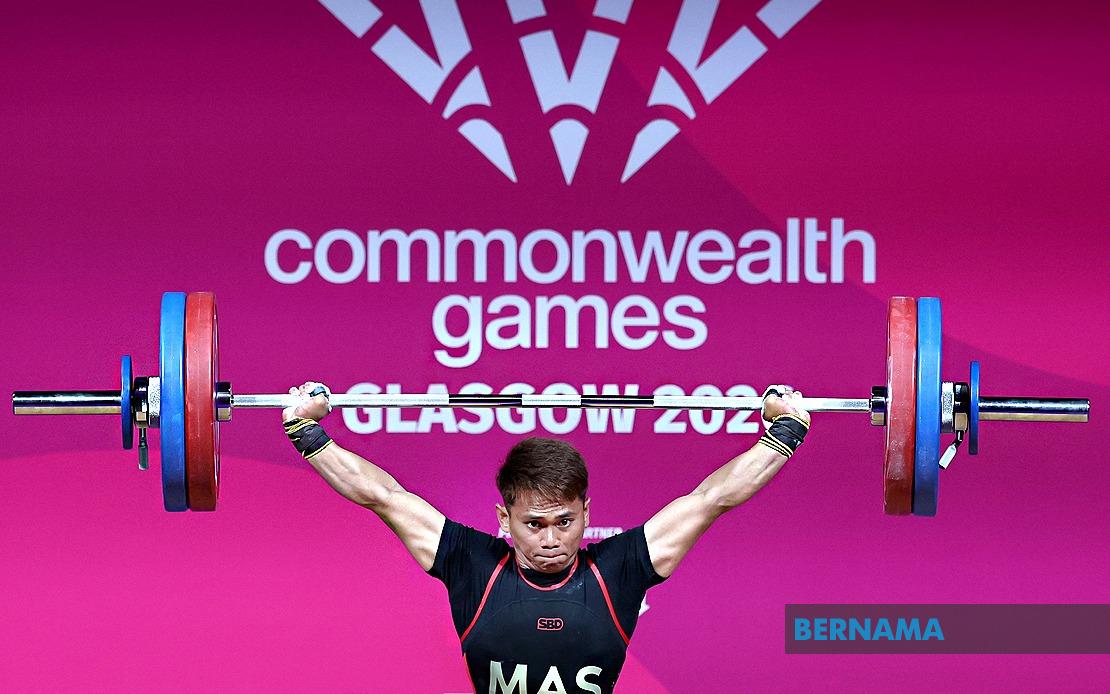
Malaysia has secured its maiden gold medal at the 2026 Commonwealth Games, with 24-year-old weightlifter Mohamad Aniq Kasdan delivering a commanding performance in Glasgow. Prime Minister Datuk Seri Anwar Ibrahim has lauded the achievement as a source of national pride, recognising the significance of being first across the line in what promises to be a competitive international arena.
Competing at the Scottish Event Campus Armadillo venue in Glasgow, Scotland, Mohamad Aniq captured the men's 60 kilogramme weightlifting title with a combined lift totalling 273 kilograms. His performance comprised 121 kilograms in the snatch discipline and 152 kilograms in the clean and jerk, a technical display that not only secured the top podium position but also established a new Games record for the competition.
The weightlifter's victory margin proved decisive against his nearest rivals. Silver medallist Rishikanta Singh Chanambam of India managed a combined total of 264 kilograms, leaving a nine-kilogramme gap between the gold and silver positions. Joshua Amunga Mboya of Kenya rounded out the podium with a bronze-medal lift of 260 kilograms, demonstrating the calibre of competition Malaysia faced in the 60kg category.
Prime Minister Anwar's public commendation underscores the weight placed on such international sporting achievements as markers of national development and soft power. Through his social media commentary, he extended congratulations to Mohamad Aniq while simultaneously rallying support for the broader Malaysian contingent competing at the Glasgow Games. His message framed the achievement not merely as an individual accomplishment but as a collective source of inspiration for the nation's sporting ambitions.
The timing of Malaysia's first gold medal carries particular resonance in the Commonwealth Games context. Early medals in multi-sport events often generate momentum and elevate morale within delegations, potentially influencing subsequent performances across various disciplines. By securing this opening gold in a technically demanding sport such as weightlifting, Malaysia establishes credibility and demonstrates competitive readiness from the outset of the Games programme.
Weightlifting has historically represented a strong discipline for Malaysia at Commonwealth competitions, reflecting both technical expertise and the sport's popularity within the nation's athletic culture. Mohamad Aniq's record-breaking performance in Glasgow adds another chapter to this legacy, marking him as a rising force in an international sport increasingly dominated by athletes from Asia and the Pacific regions.
The Prime Minister's invocation of national prayers and collective support reflects a broader Malaysian tradition of mobilising public sentiment behind sporting representatives. This psychological dimension—where domestic recognition translates into enhanced athlete confidence—often proves as valuable as training infrastructure or financial investment. By positioning Mohamad Aniq's triumph as emblematic of Malaysia's competitive potential, Anwar has effectively linked individual athletic success to national identity and collective optimism.
For Malaysian sports stakeholders, Mohamad Aniq's Glasgow performance presents multiple benefits extending beyond the immediate medal count. The establishment of a Games record signals that Malaysian athletes possess not merely competitive competence but the capacity to exceed existing international benchmarks. Such breakthroughs can attract greater sponsorship interest, media attention, and grassroots participation in weightlifting and allied sports disciplines throughout the country.
The Commonwealth Games remain significant for nations such as Malaysia seeking to build Olympic pipeline programmes and test emerging talent against quality international opposition. Unlike continental championships that may feature more homogeneous athlete profiles, the Commonwealth brings together competitors from diverse geographic regions, climatic conditions, and training methodologies, providing rigorous benchmarking opportunities. Mohamad Aniq's success in this context suggests the Malaysian weightlifting programme possesses developmental pathways capable of producing medallists at major international forums.
Looking forward, the Prime Minister's encouragement to Malaysian athletes at Glasgow serves multiple strategic purposes. It acknowledges current achievement while maintaining focus on remaining competition days, implicitly challenging other team members to emulate Mohamad Aniq's medal-winning standard. This narrative framing transforms a single gold into a broader challenge statement, potentially sharpening competitive focus across Malaysia's sporting contingent.
The psychological trajectory initiated by this early gold extends beyond Glasgow's immediate timeframe. Successful performances at the Commonwealth Games typically enhance athlete visibility domestically and internationally, creating conditions for improved funding, commercial endorsements, and training opportunities. For Mohamad Aniq specifically, this platform could facilitate advancement toward Olympic qualification cycles, World Championships participation, and establishment as a flagship Malaysian sporting figure.
While Malaysia has competed successfully across numerous Commonwealth Games editions, opening medals carry outsized symbolic weight in contemporary sports communications. Mohamad Aniq's achievement has effectively set a benchmark for Malaysian ambitions at Glasgow, creating both celebratory momentum and escalating expectations for the broader delegation's performance throughout the Games' remaining days.

