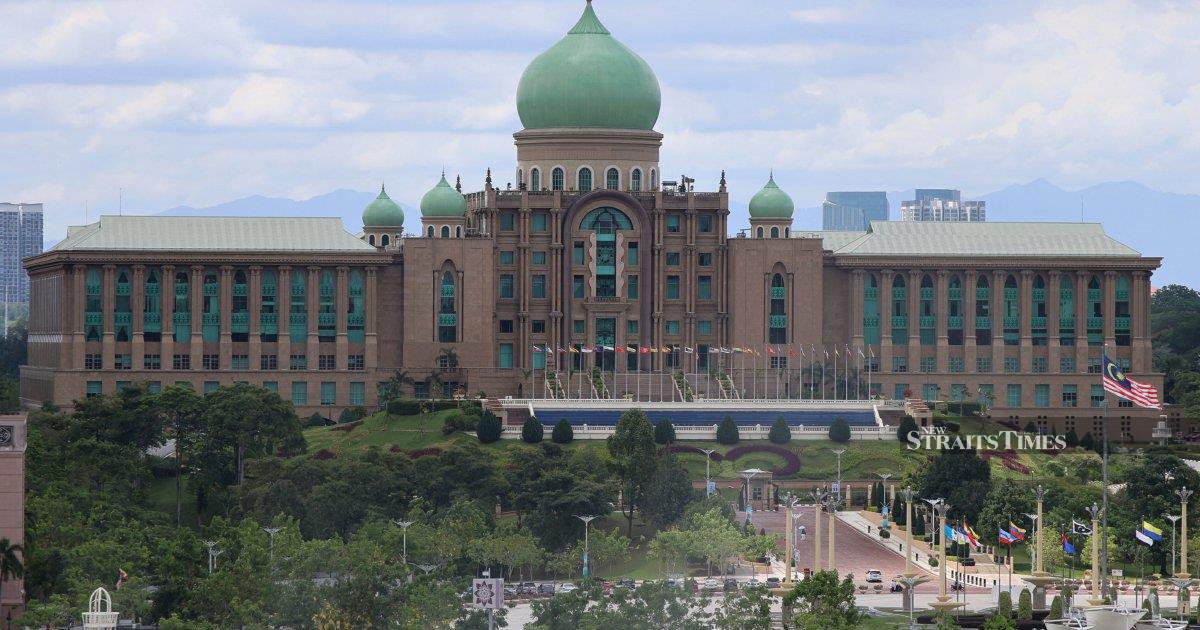
Prime Minister Datuk Seri Anwar Ibrahim used his presentation of Malaysia's 13th Plan to parliament on July 31st to underscore a fundamental reality: national prosperity in the years ahead cannot be pursued in isolation from the broader security landscape that defines Southeast Asia. The five-year development roadmap, spanning 2026 to 2030, reflects a strategic recalibration that acknowledges how turbulent regional conditions can derail even the most carefully laid economic blueprints.
Malaysia's positioning in one of the world's most strategically contested regions presents unique vulnerabilities. The nation sits astride critical maritime trade routes, borders multiple geopolitical flashpoints, and maintains intricate relationships with powers that are themselves increasingly at odds. The Strait of Malacca remains a chokepoint through which roughly a quarter of global maritime trade passes annually, making regional stability not merely a Malaysian concern but a matter affecting worldwide commerce. Any escalation in tensions—whether involving Taiwan, the South China Sea disputes, or great power rivalry—could swiftly ripple through Malaysian supply chains, investor confidence, and currency valuations.
The framing of security within the development plan represents a departure from treating economic planning and geopolitical management as separate domains. Instead, the approach recognizes that sustainable growth requires a stable operating environment where businesses can invest with confidence, foreign direct investment flows predictably, and workforce productivity remains uninterrupted by conflicts or crisis-induced disruptions. This integration reflects lessons learned from past episodes when regional turbulence—from the 1997 Asian financial crisis amplified by geopolitical tensions to more recent trade disputes—disrupted Malaysia's development trajectory.
For Malaysian policymakers, the balancing act involves managing relationships with multiple powers without becoming overly dependent on any single strategic partner. This equilibrium is more precarious than ever, given the intensifying competition between established and rising powers across the region. ASEAN unity, while often tested, remains central to Malaysia's diplomatic strategy as a mechanism for maintaining space to pursue national interests without being forced into uncomfortable alignments. The 13th Plan's emphasis on security implicitly affirms Malaysia's commitment to the ASEAN way of consensus-based decision-making and non-interference, even as external pressures mount.
Economic diversification emerges as both a development objective and a geopolitical strategy within this framework. By reducing overreliance on any single market or supply source, Malaysia can navigate great power competition more deftly. The plan likely encompasses efforts to deepen ties with countries across the Indo-Pacific region—from India to Australia to Japan—while maintaining pragmatic engagement with China, Malaysia's largest trading partner. This multidirectional engagement, sometimes called hedging, allows Malaysia to benefit from competition among powers without becoming hostage to any one relationship.
Infrastructure projects take on added significance in this context. Strategic investments in ports, telecommunications networks, and digital infrastructure serve dual purposes: driving economic growth while potentially positioning Malaysia as a more resilient node in regional and global supply chains. The resilience agenda, which gained prominence during the pandemic, remains relevant as companies and countries seek to diversify away from concentration risks exposed by recent crises. Malaysia's role as a technology hub, semiconductor producer, and logistics gateway could expand if security conditions permit consistent investment flows.
The emphasis on regional security also reflects awareness of non-traditional threats. Transnational challenges including maritime piracy, human trafficking, terrorism financing, and cybercrime all pose risks to Malaysia's development ambitions and require coordinated regional responses. The 13th Plan likely incorporates provisions for strengthening law enforcement cooperation, intelligence sharing, and capacity-building across Southeast Asia, recognizing that these issues transcend borders and cannot be solved unilaterally.
Foreign investor confidence, crucial for the 2026-2030 period, remains sensitive to perceptions of regional instability. Multinational corporations considering Malaysia as a base for operations or investment will weigh security assessments alongside labor costs, infrastructure quality, and regulatory environment. By publicly anchoring security within the development roadmap, the Prime Minister sends a signal that the government actively manages geopolitical risks rather than hoping they dissipate organically. This messaging matters for capital allocation decisions made in boardrooms from Singapore to Tokyo to New York.
The structural challenge Malaysia faces is that some regional security issues lie largely beyond national control. Taiwan tensions, great power naval activities in the South China Sea, and even energy security concerns tied to global supply disruptions depend on decisions made in capitals far from Kuala Lumpur. This reality underscores why diversification—economic, diplomatic, and strategic—features so prominently in contemporary Malaysian planning. The nation cannot prevent external crises but can build resilience to weather them.
Looking forward, the successful execution of the 13th Plan hinges not only on domestic implementation capacity but also on maintaining the diplomatic dexterity that has historically served Malaysia well. The coming years will test whether the region can avoid major conflicts that would disrupt the investment, trade, and talent flows that development plans assume. For Malaysia, striking the right balance between ambition and realism in economic targets while carefully managing multiple geopolitical relationships simultaneously represents the essence of contemporary statecraft in Southeast Asia.

