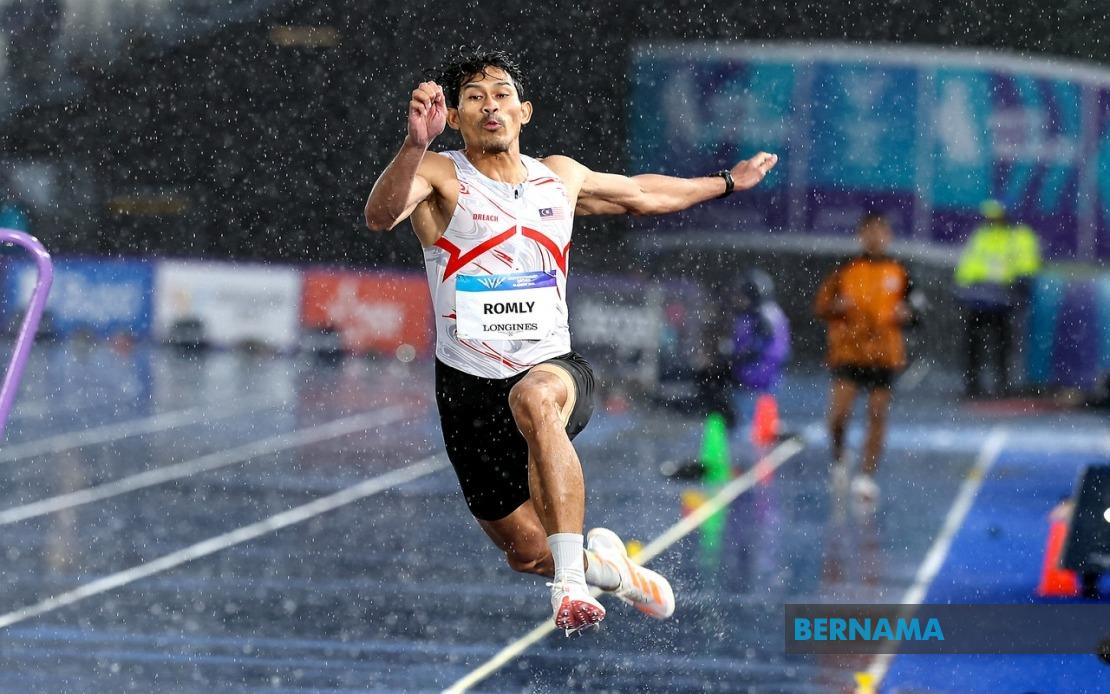
Malaysia's ambitious five-gold medal target for the 2026 Commonwealth Games in Glasgow has been successfully attained, with para long jump specialist Datuk Abdul Latif Romly delivering the breakthrough performance on July 28 in challenging Scottish weather conditions. The world record holder in the T20 category secured Malaysia's fifth gold medal at Scotstoun Stadium with a jump of 7.17 metres during his third attempt, competing against rain and cold that characterised the evening session. The achievement represents a significant milestone for the Malaysian contingent and signals strong momentum as the Games progress.
Alongside Abdul Latif's triumph came a complementary bronze medal performance from his compatriot Eljoe Gotuoh, who recorded a distance of 6.51 metres in the same event. The dual medal haul in para long jump underscores Malaysia's depth in Paralympic sports and demonstrates the country's capacity to field multiple competitive athletes across discipline categories. This pairing of gold and bronze adds dimensionality to Malaysia's overall medal portfolio and reflects the calibre of training and support systems developed for disabled athletes competing at international level.
The fifth gold medal followed weightlifter Muhammad Hafizuddin Roslin's earlier achievement in the men's 88 kilogramme category, which delivered Malaysia's fourth gold of the Games. At just 22 years old and competing in his Commonwealth Games debut, Hafizuddin executed a combined lift totalling 345 kilograms, comprising 162 kilograms in the snatch phase and 183 kilograms in the clean and jerk. Both component lifts established new Commonwealth Games records, indicating that the young lifter not only secured the medal but also reset the benchmarks against which future competitors will be measured. His dual record-breaking performance suggests Malaysia possesses emerging talent capable of sustaining competitive excellence in weightlifting internationally.
Malaysia's medal haul expanded further with two silver medals claimed through lawn bowls competitors across different events. The women's pairs combination of Aleena Ahmad Nawawi and Syafiqa Haidar Afif Abdul Rahman finished runner-up to England's Amy Pharaoh and Sian Honnor, while Izzat Shameer Dzulkeple secured Malaysia's second silver medal in the men's singles event after losing to England's Sam Tolchard. Izzat's achievement holds particular significance as he became the first Malaysian competitor to win a medal in men's singles lawn bowls at the Commonwealth Games, broadening Malaysia's medal-winning footprint across traditional Games sports.
Syafiqa's silver medal carried profound personal significance, as the athlete competed while five months pregnant and later described the outcome as the most meaningful gift she could receive for both her unborn child and herself. Her performance exemplifies the resilience and determination Malaysian athletes bring to international competition, transcending conventional assumptions about athletic participation during pregnancy. The symbolic weight of her achievement extends beyond the sport itself, offering representation and inspiration to female athletes navigating the complexities of motherhood and professional sporting aspirations.
Beyond medal-securing events, Malaysian lawn bowls athletes demonstrated competitive capability in earlier rounds of ongoing tournaments. Emma Firyana Saroji, ranked world number one in her discipline, advanced from her opening match in the women's singles competition, while the men's pairs team of Amirul Danial Abdul Rahim and Mohammad Soufi Rusli progressed in their respective event. These performances suggest Malaysia could expand its lawn bowls medal tally during the remaining competition days, potentially strengthening the overall Games performance.
Not all Malaysian competitors experienced fortune during the day's competition. Artistic gymnast Muhammad Sharul Aimy Kamaru Hisam narrowly missed the podium in men's vault, finishing fourth overall after a tie-break decision determined his placement relative to Cyprus's Neofytos Kyriakou. Both athletes recorded identical overall points, yet the tiebreaker mechanism favoured the Cypriot competitor, denying Sharul Aimy a bronze medal opportunity. His near-miss exemplifies the razor-thin margins separating medal success from tournament elimination in elite gymnastics competition, where hundredths of points often prove decisive.
Following this day's results, Malaysia occupied sixth position in the overall Commonwealth Games medal standings with five gold, two silver, and three bronze medals accumulated. This ranking reflects solid progress through the Games schedule and positions Malaysia competitively within the traditional top-performing nations. Australia continued to lead the medal table with commanding totals of 35 gold, 18 silver, and 27 bronze medals, substantially ahead of second-placed Canada with 13 gold, 10 silver, and 12 bronze. England ranked third with 10 gold, 18 silver, and 15 bronze medals, demonstrating the continued strength of traditional Commonwealth sporting powers.
Malaysia's performance trajectory carries implications for the nation's sporting development strategy and international competitiveness. The achievement of the gold medal target ahead of schedule provides psychological momentum for remaining competition phases and validates investment in athlete preparation programmes across both Olympic and Paralympic disciplines. The distribution of medals across weightlifting, para athletics, and lawn bowls demonstrates portfolio diversification rather than reliance on single-sport excellence, a resilient approach to international Games participation.

