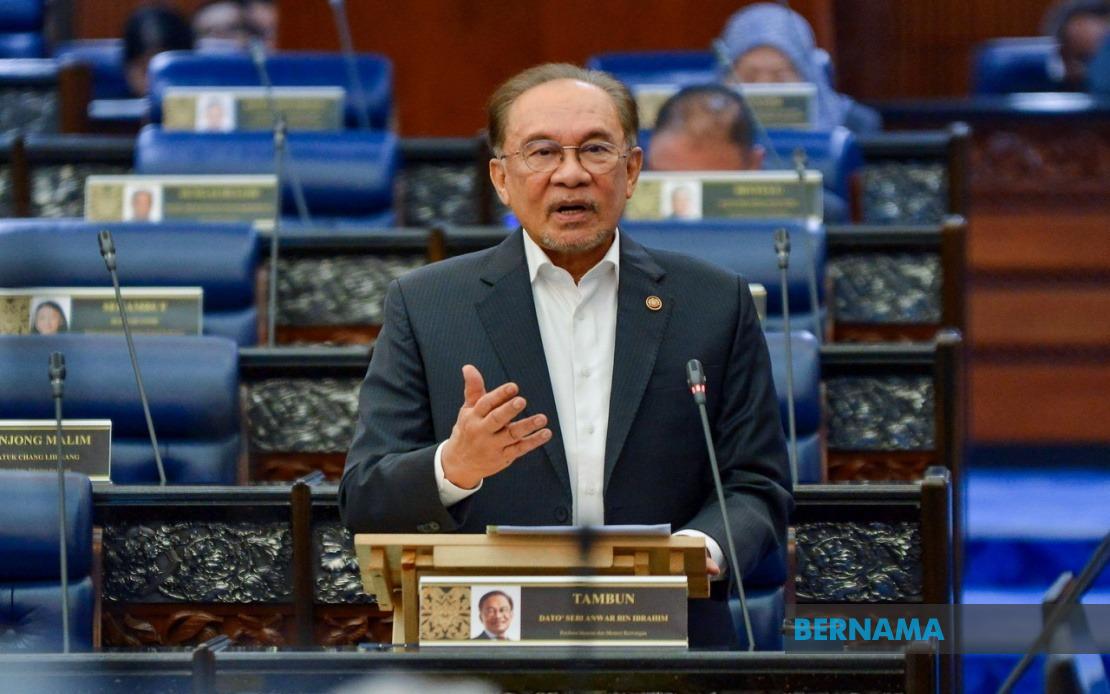
Malaysia will persist in employing diplomatic negotiations and the 1982 United Nations Convention on the Law of the Sea as its primary mechanism for settling maritime boundary disagreements with adjoining nations, Prime Minister Datuk Seri Anwar Ibrahim declared in parliament on July 14. While recognising the International Maritime Organization's contributions to maritime governance, Anwar stressed that the IMO's authority itself derives from and remains constrained by UNCLOS 1982 provisions, which establish the legal scaffolding underpinning international maritime relations. The government's position reflects a deliberate choice to favour peaceful resolution over confrontational posturing, a stance with profound implications for regional stability in Southeast Asia's crowded maritime space.
The Prime Minister acknowledged that UNCLOS interpretations diverge considerably across nations, meaning the convention's text alone cannot resolve every contentious boundary claim. This nuance is crucial for understanding Malaysia's pragmatic approach to maritime disputes. Rather than treating the convention as a complete panacea, Kuala Lumpur views it as an agreed foundation from which parties can negotiate toward mutually acceptable outcomes. This framework allows flexibility while maintaining adherence to international law, avoiding the trap of rigid legalism that could harden positions and entrench conflicts. The distinction between the convention as a starting point rather than an endpoint demonstrates sophisticated diplomatic thinking that distinguishes Malaysia's approach from more absolutist regional actors.
Regarding the South China Sea, Anwar highlighted ASEAN's collective strategy of anchoring negotiations with China to UNCLOS principles whilst collaborating to produce a finalised Code of Conduct intended to stabilise the region and forestall military escalation. The ongoing COC negotiations represent perhaps Southeast Asia's most delicate diplomatic endeavour, balancing the legal claims of smaller claimant states against the strategic weight of China. Malaysia's involvement emphasises the need for consensus-building across ASEAN, though Anwar acknowledged that discussions involving the Philippines prove substantially more complicated because of unresolved sovereignty complications over Sabah. This candid admission reflects the political and historical entanglement of maritime boundary questions with territorial disputes, a reality that cannot be wished away through legal frameworks alone.
Anwar explained Malaysia's negotiating methodology by noting that ASEAN states have collectively chosen repeated rounds of talks over confrontation, with discussions occasionally adjourned but deliberately reopened rather than abandoned permanently. This patience-based diplomacy contrasts sharply with military posturing or unilateral actions that could trigger escalatory cycles. The government's willingness to endure protracted, sometimes frustrating negotiations signals confidence in the eventual utility of dialogue and reflects the conviction that regional prosperity depends more on stability than on maximising individual claims. For Malaysian audiences, this patient diplomacy may seem slow, but it reflects a calculation that long-term regional peace generates far greater dividends than short-term assertion of maximum sovereignty claims.
Prime Minister Anwar drew attention to Malaysia's successful experience with Joint Development Authorities established with Thailand and Vietnam, demonstrating that economic cooperation can flourish simultaneously with outstanding boundary disagreements. These arrangements exemplify pragmatic statecraft: rather than waiting for complete settlement of sovereignty questions that might take decades, participating countries activate economic mechanisms permitting mutual benefit without prejudicing either nation's legal position. The Vietnam model is particularly instructive, with the disputed zone remaining formally undetermined regarding sovereignty yet productively developed through joint administration. This template offers valuable lessons for other Southeast Asian disputes and illustrates how states can decouple economic cooperation from political recognition of contested claims.
The scope of Malaysia's maritime boundary complications spans a substantial portion of Southeast Asia. Anwar catalogued maritime boundary matters involving Brunei, Thailand, Indonesia, Singapore, the Philippines, and China, underscoring the complexity facing Kuala Lumpur as a nation surrounded by maritime claims and counter-claims. This multipolar setting requires careful calibration to avoid alienating any neighbour whilst protecting Malaysia's perceived interests. The government's consistent prioritisation of diplomatic channels over legal confrontation or military demonstration reflects both practical limitations and strategic preference. A smaller power in a region of larger neighbours, Malaysia necessarily emphasises inclusivity and negotiation over unilateral assertion, making virtue of necessity whilst advancing national interests.
Progress with Brunei represents one diplomatic success story, with negotiations having achieved substantial headway despite lingering complications affecting Sarawak's territorial jurisdiction. The resolution of smaller bilateral boundary questions can create momentum and goodwill applicable to more complex disputes. Conversely, stalled negotiations with Indonesia concerning Sabah-related maritime matters illustrate the challenge when boundary questions entangle state-level interests within Malaysian federalism. Anwar noted these discussions occur in consultation with Sabah's leadership, acknowledging the political sensitivities and jurisdictional complications inherent in federal systems where constituent states possess significant autonomy over territorial affairs. This federal dimension adds layers of complexity absent in unitary neighbouring states.
The Prime Minister's parliamentary explanation reflects the government's conviction that diplomacy, however slow and occasionally frustrating, remains superior to alternatives. This philosophy carries particular resonance for Malaysia, which lacks the military capacity to impose solutions unilaterally and depends substantially on international law and regional consensus for protection of its interests. The emphasis on UNCLOS and negotiation represents not weakness but strategic alignment with Malaysia's actual capabilities and long-term interests in stable, prosperous regional relations. For Southeast Asia more broadly, Malaysia's commitment to this approach influences regional norms, making alternatives involving military adventurism or unilateral actions more costly and less acceptable.
The government's position also reflects awareness that maritime boundary disputes, whilst serious, need not paralyse broader regional cooperation. ASEAN's institutional framework provides mechanisms for compartmentalising disagreements whilst advancing shared interests in trade, investment, and security. Malaysia's adherence to negotiated settlement enables participation in these integrative structures without requiring surrender of legal claims. This allows the nation to benefit from regionalisation whilst preserving future options should circumstances change or new evidence emerge. The balance between commitment to current frameworks and preservation of future flexibility characterises mature statecraft responsive to an uncertain strategic environment.

