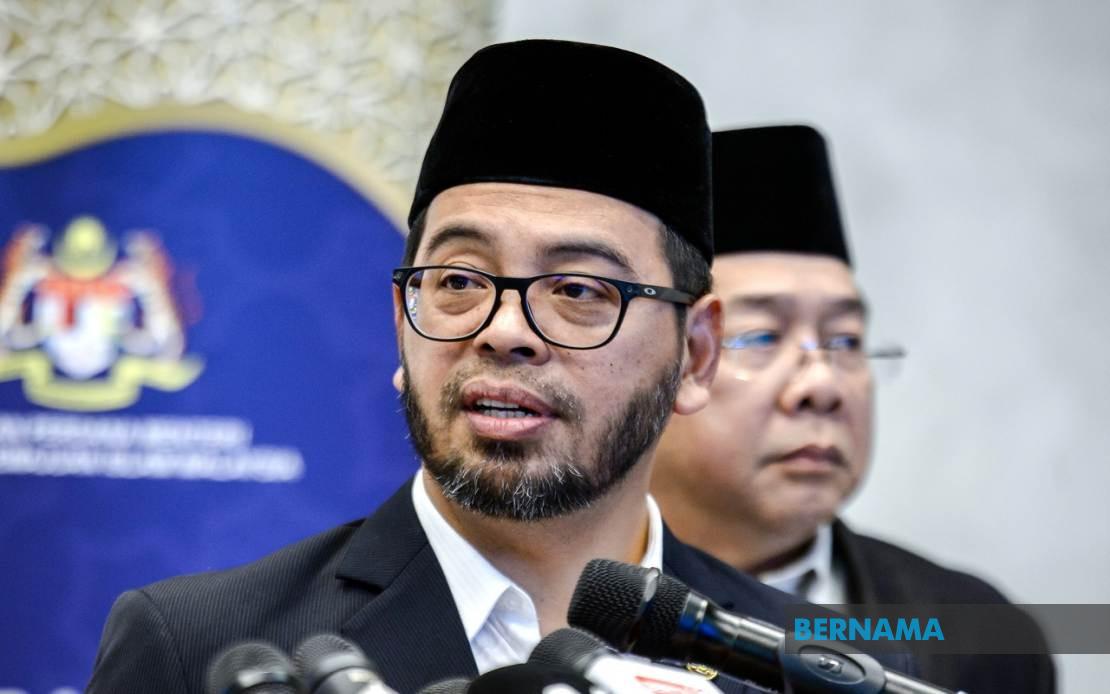
Malaysia has joined the chorus of international criticism following the detention of Sheikh Muhammad Hussein, Grand Mufti of Jerusalem and custodian of Al-Aqsa Mosque, after leading prayers at the holy site last Friday. Minister in the Prime Minister's Department (Religious Affairs) Senator Dr Zulkifli Hasan issued a formal statement expressing strong disapproval of the action, arguing that such conduct represents a fundamental breach of the principle of religious freedom and degrades the standing of Islam's third-holiest sanctuary. Although the religious leader was eventually released, the incident itself has drawn sharp rebukes from Malaysian authorities and underscores mounting tensions surrounding access to and governance of contested sacred spaces in the Middle East.
The detention of a senior religious figure performing his ecclesiastical duties at one of Islam's most revered locations carries symbolic and practical weight that extends far beyond a routine police action. For Malaysia, a multi-faith nation where religious harmony remains a cornerstone of national identity, such incidents raise alarm about the vulnerability of Muslim religious institutions and leaders to political pressure. Dr Zulkifli's statement reflects a broader Malaysian position that places the protection of religious minorities and sacred sites at the centre of international relations discourse, particularly when those sites face restrictions or are subject to what Kuala Lumpur views as discriminatory treatment.
The statement explicitly invokes Malaysia's expectations that major multilateral bodies—notably the United Nations and the Organisation of Islamic Cooperation—should intervene with concrete measures to guarantee the inviolability of places of worship, ensure the personal safety of religious leaders, and reinforce legal protections for Al-Aqsa's status under international law. This appeal reflects Malaysia's consistent diplomatic strategy of leveraging bloc voting and institutional advocacy within the OIC and United Nations bodies to advance what it frames as Muslim interests globally. The call for "firm action" signals frustration with the pace and effectiveness of existing international mechanisms in preventing what Malaysia characterises as violations at sensitive religious sites.
Dr Zulkifli reiterated Malaysia's steadfast backing for the Palestinian cause and pledged continued support for Palestinian rights and efforts to achieve a just settlement of the broader Israeli-Palestinian conflict. This reaffirmation of solidarity sits within Malaysia's long-standing foreign policy framework, which has historically positioned support for Palestinian self-determination as a moral and political imperative. For domestic consumption, such statements also serve to reinforce Malaysia's identity as a defender of Muslim causes on the world stage, a posture that enjoys significant resonance among the country's Muslim-majority population and across Southeast Asian Muslim communities.
In a related expression of Muslim solidarity, Dr Zulkifli also issued a call for Malaysians to mark the 31st anniversary of the Srebrenica massacre in Bosnia and Herzegovina. The 1995 atrocity, in which Bosnian Serb forces executed more than 8,000 Bosniak Muslim men and boys over multiple days in July following the collapse of the UN-designated safe area, remains a defining tragedy in late 20th-century European history. The fact that over 1,000 victims remain unidentified even three decades later underscores the scale of the catastrophe and the ongoing burden carried by survivors and families seeking closure through proper identification and burial.
Malaysia's engagement with the Srebrenica tragedy reflects a deliberate policy of maintaining institutional memory around episodes of communal violence targeting Muslims. Dr Zulkifli highlighted Malaysia's historical contributions to addressing the Bosnian crisis, crediting former Prime Minister Tun Dr Mahathir Mohamad and current Prime Minister Datuk Seri Anwar Ibrahim for championing Bosnian Muslim causes. He also noted the early humanitarian work undertaken by the Muslim Youth Movement of Malaysia (ABIM), positioning that organisation as a pioneer in Islamic civil society responses to international crises affecting Muslim populations.
On the practical level, Dr Zulkifli enumerated Malaysia's military and educational contributions to supporting Bosnia and Herzegovina during and after the war. The Malaysian Armed Forces deployed 10,514 military personnel across two distinct mandates—the Malaysian Battalion (MALBAT) and the Implementation Force (IFOR)—between 1993 and 1998, making Malaysia a meaningful participant in UN peacekeeping efforts at a critical juncture in European security history. Additionally, Malaysia opened its educational institutions, particularly the International Islamic University Malaysia (IIUM), to Bosnian refugees seeking rehabilitation and skills development, positioning education as a tool of post-conflict rehabilitation and social healing.
The juxtaposition of these two statements—one concerning Jerusalem and the other commemorating Srebrenica—reveals Malaysia's consistent thematic emphasis on protecting Muslim religious identity and communities from what officials characterise as existential threats. Both instances involve what Malaysian policymakers frame as violations of Muslim rights and dignity, whether through restrictions on religious practice or through mass atrocity. This framing allows Malaysia to present itself as a principled defender of Muslim interests globally, a narrative that carries electoral and diplomatic dividends domestically and within the wider Muslim world.
Dr Zulkifli's appeal to Malaysian youth to extract moral lessons from the Srebrenica tragedy emphasises the imperative of rejecting hatred, division, and oppression in all their forms. This pedagogical approach attempts to transform a historical tragedy into a contemporary moral teaching moment, encouraging younger generations to embrace pluralism and stand against sectarian violence. By anchoring this message in Islamic theological language—invoking prayers for the fallen and their families—the minister seeks to ground political messaging in religious values and demonstrate that Malaysia's foreign policy positions reflect spiritual as well as diplomatic commitments.
The invocation of "Allahimanet Bosna" (May Allah protect Bosnia) at the statement's conclusion carries symbolic resonance beyond mere piety, signalling Malaysia's enduring spiritual and political bond with Muslim-majority or Muslim-significant territories facing external pressure or internal fragmentation. For Malaysian audiences and the broader Southeast Asian Muslim community, such statements affirm that Islamic solidarity transcends geographical boundaries and that Malaysia views itself as custodian of Islamic values on the international stage. This positioning, while serving legitimate advocacy for religious freedom and minority protection, also functions as a form of soft power projection that distinguishes Malaysia's diplomatic profile within regional and global governance structures.

