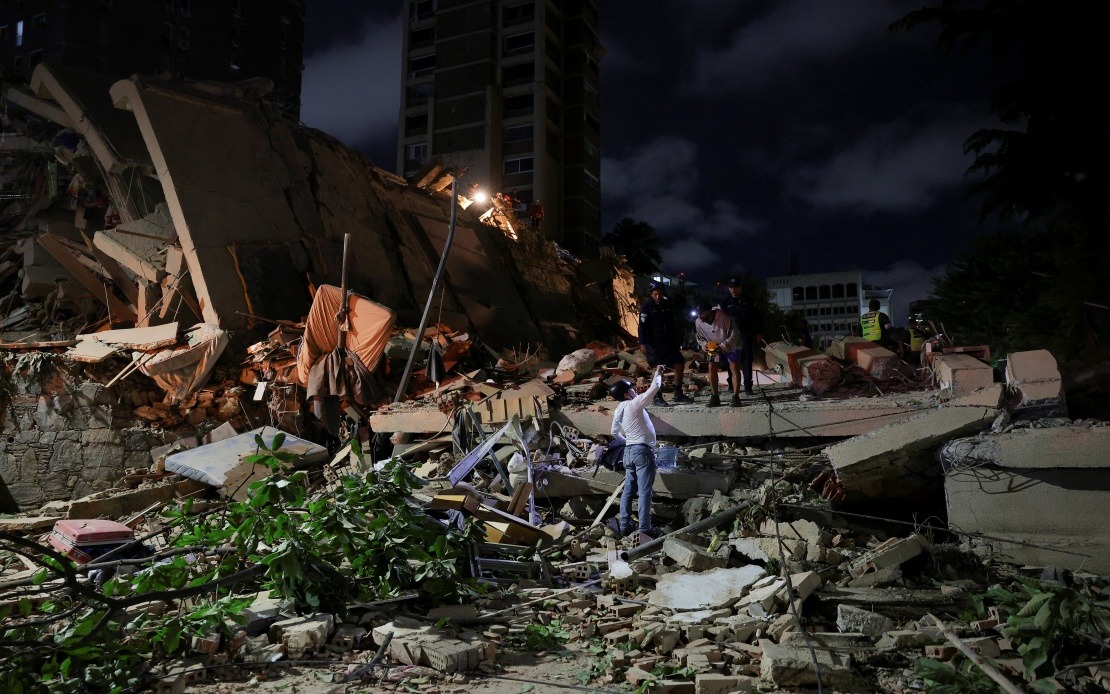
The Malaysian government moved quickly to confirm the wellbeing of its nationals in Venezuela after two significant seismic events struck the South American nation on Wednesday. Wisma Putra, Malaysia's Foreign Ministry, released a statement through its Putrajaya office on Thursday declaring that all registered Malaysian citizens within Venezuela had been accounted for and were safe in the aftermath of the disasters.
The twin earthquakes, registering 7.2 and 7.5 magnitude on the Richter scale, were centred in central Venezuela, with the epicentres positioned approximately 21 kilometres from Moron and roughly 168 kilometres west of the capital Caracas. The tremors rippled across a significant portion of the country, with residents in Caracas and the surrounding states of Trujillo, Carabobo, Miranda, and La Guaira all reporting intense shaking. Early assessments indicated that the seismic activity had caused considerable structural damage, with multiple buildings collapsing across affected regions.
Wisma Putra emphasised that Venezuelan authorities were still in the early stages of evaluating the full scope of the disaster. At the time of the ministry's statement, local officials had not yet released comprehensive casualty figures or completed damage assessments. The complexity of coordinating emergency response across such a geographically dispersed impact zone, combined with the magnitude of the earthquakes, meant that complete information would take considerable time to compile.
The Malaysian embassy in Caracas established itself as the primary point of contact for official communication, maintaining active dialogue with Venezuelan emergency services and government bodies. This coordination allowed Wisma Putra to track the situation in real time and respond to the needs of Malaysian citizens trapped in or near the affected zones. The diplomatic mission's ability to maintain communication channels proved crucial in verifying the safety status of the Malaysian community.
For Malaysians in Venezuela, the ministry issued comprehensive safety guidance. Nationals in or travelling through areas impacted by the earthquakes were instructed to exercise maximum caution and remain alert to aftershock risks and any hazards created by structural damage. The government strongly emphasised strict adherence to all safety instructions and emergency updates distributed by Venezuelan local authorities, recognising that these would provide the most accurate and timely information for navigating dangerous conditions.
Wisma Putra highlighted a critical gap in its ability to assist citizens: many Malaysians living abroad do not maintain current registration with the ministry's consular system. The government urged any Malaysian national in Venezuela who had not yet registered their presence to do so immediately through the e-Konsular online platform, accessible at https://ekonsular.kln.gov.my. This registration allows the government to maintain accurate records of citizens abroad and contact them during emergencies, ultimately saving lives by ensuring no one falls through administrative cracks during disaster response operations.
For those needing immediate help, Wisma Putra provided two emergency telephone lines for the Embassy of Malaysia in Caracas: (+58-212) 720 4257 and (+58-424) 222 1338. The ministry also established an email contact point at [email protected] for Malaysians unable to reach the embassy by phone. The dual communication channels acknowledged the likelihood that telephone networks would be congested or damaged in affected areas, requiring multiple means of reaching consular staff.
The situation underscores the vulnerability of Malaysians scattered across the globe to natural disasters beyond their government's control. Venezuela, sitting atop the Caribbean plate boundary, experiences periodic seismic activity, though earthquakes of this magnitude remain uncommon. For Malaysians working or living in Caracas and other major Venezuelan cities, often drawn by employment in oil, petrochemicals, and other industries, such natural hazards represent an unpredictable occupational risk.
The Malaysian government's swift response in verifying citizen safety reflects lessons learned from previous international crises. By activating the e-Konsular registration system and mobilising embassy resources immediately, Wisma Putra demonstrated institutional readiness for consular emergencies. However, the incident also highlights the ongoing challenge of maintaining comprehensive records of citizens abroad, particularly those in remote regions or who frequently change their status between resident and visitor.
For the broader Malaysian diaspora watching from other countries, the Venezuela situation serves as a reminder of the importance of maintaining current registration with their embassy or consulate. During natural disasters, terrorism, conflict, or public health crises, this simple administrative step can determine whether the government can locate and assist citizens effectively. The ministry indicated it would release further updates as Venezuelan authorities compiled more complete information about casualties and damage assessment.
The earthquakes also raise questions about the structural resilience of buildings in developing nations and the adequacy of emergency preparedness systems. For Malaysians in Venezuela and the region, understanding local emergency protocols and building safety standards becomes part of responsible overseas living. The incident demonstrates that while Wisma Putra can coordinate assistance and verify safety, ultimate protection depends partly on individual preparedness and familiarity with local emergency response mechanisms.

