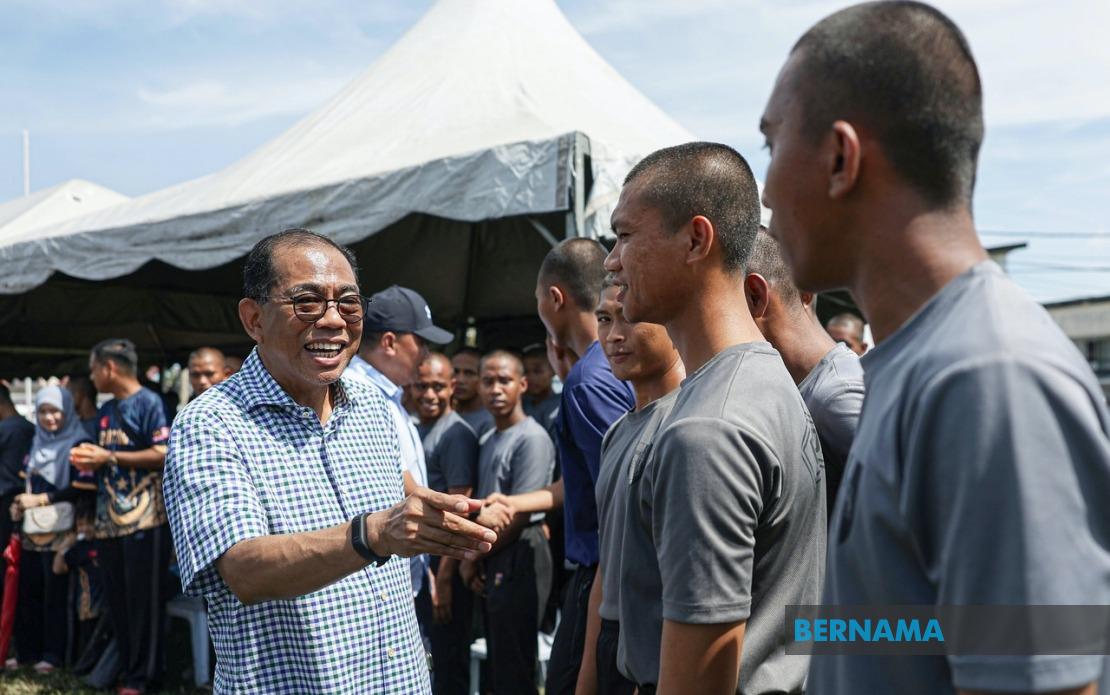
Malaysia is reshaping its approach to acquiring military hardware by moving towards direct government-to-government transactions rather than relying on traditional open-tender mechanisms and private intermediaries. Defence Minister Datuk Seri Mohamed Khaled Nordin announced that the country has signed memoranda of understanding with both Turkiye and South Korea to facilitate such arrangements, fundamentally altering how selected defence projects will be procured. Speaking at the close of the Malaysian Armed Forces Southern Zone Welfare Programme in Port Dickson, he revealed that Italy and France have similarly expressed interest in conducting defence business through this streamlined channel.
The strategic pivot reflects a broader recognition within Malaysia's defence establishment that conventional procurement pathways have inflated costs and introduced unnecessary delays. Prime Minister Datuk Seri Anwar Ibrahim recently highlighted a tangible success of this model, citing a 15 per cent reduction in the acquisition cost of Littoral Mission Ships achieved through direct negotiations with the Turkish government. By eliminating agents and other commercial intermediaries who traditionally extracted margins in defence transactions, Malaysia aims to redirect savings toward expanding its military capabilities and modernising its platforms.
Mohamed Khaled emphasised that the government-to-government mechanism serves multiple strategic objectives beyond mere cost reduction. Transparency emerges as a critical advantage, as direct state-to-state dealings create clearer accountability frameworks and reduce opportunities for corrupt practices that have historically plagued defence procurement across the region. Furthermore, securing commitments from supplier nations themselves guarantees more reliable supply chains and long-term support obligations, contrasting sharply with arrangements where private contractors may abandon projects if circumstances change.
Technology transfer represents another cornerstone of Malaysia's calculus in selecting partner nations for these procurement arrangements. The Defence Minister stressed that the government specifically targets countries willing to build domestic Malaysian capabilities rather than merely selling finished products. This aspiration aligns with broader national policies aimed at developing indigenous defence manufacturing and reducing long-term dependency on foreign suppliers. By negotiating directly with governments like Turkiye and South Korea, which possess established defence sectors, Malaysia creates space for knowledge-sharing and joint development initiatives.
The shift does not represent a wholesale abandonment of open competition or military specifications determined by Malaysia's armed forces. Rather, Mohamed Khaled clarified that the Army, Navy and Air Force maintain central roles in defining precise requirements for any acquisitions. Military personnel, not civilian bureaucrats disconnected from operational realities, will continue determining what equipment suits Malaysia's strategic needs. This ensures that procurement decisions remain grounded in genuine defence requirements rather than becoming vehicles for political patronage or cost-cutting measures that compromise capability.
Beyond the mechanics of defence acquisition, Mohamed Khaled articulated a broader reconceptualisation of Malaysia's security environment. Traditional threats from conventional armed conflict increasingly share the stage with hybrid dangers ranging from social media-orchestrated campaigns to coordinated attacks on critical infrastructure. Disruptions to essential services such as electricity and water supplies now constitute direct security threats capable of generating public panic and eroding confidence in state institutions. These asymmetrical challenges demand comprehensive national responses extending far beyond the purview of uniformed military personnel.
In response to this diversified threat landscape, the Malaysian government has advanced the Whole-of-Nation Defence concept, abbreviated as HANRUH, to cultivate shared responsibility for national security across society. Rather than concentrating defence burdens exclusively on the Malaysian Armed Forces, this framework seeks to mobilise broader public engagement and awareness. Citizens, civil servants, infrastructure operators and private sector entities all assume roles in identifying vulnerabilities and strengthening societal resilience against emerging threats. Mohamed Khaled stressed that fostering this consciousness represents an essential complement to conventional military preparedness.
The government-to-government procurement approach thus operates within a larger strategic context where Malaysia is attempting simultaneous reforms across multiple defence domains. Modernising acquisition mechanisms addresses historical inefficiencies, while the HANRUH concept reframes defence as a collective endeavour rather than an exclusively military responsibility. Together, these initiatives reflect a recognition that twenty-first century security challenges require both updated institutional procedures and transformed public attitudes toward national defence.
For regional observers, Malaysia's pivot toward direct government negotiations with Turkiye and South Korea signals confidence in building sustained partnerships with nations outside traditional Western security orbits. Turkiye's sophisticated defence sector and South Korea's advanced military-industrial capabilities offer complementary strengths, though their selection also demonstrates Malaysia's willingness to diversify supplier relationships. This pluralistic approach to security partnerships provides Malaysia greater flexibility in responding to evolving geopolitical dynamics while reducing vulnerability to sanctions or supply disruptions that might flow from over-concentration with any single supplier nation.
The timing of these procurement reforms coincides with broader Southeast Asian trends toward indigenous capability development and reduced dependency on distant powers. As regional nations increasingly invest in modern defence systems appropriate to their maritime and terrestrial security challenges, procurement mechanisms that lower costs and enable technology transfer become especially valuable. Malaysia's experience may thus offer instructive lessons for neighbouring countries contemplating similar institutional reforms in their own defence acquisition frameworks.

