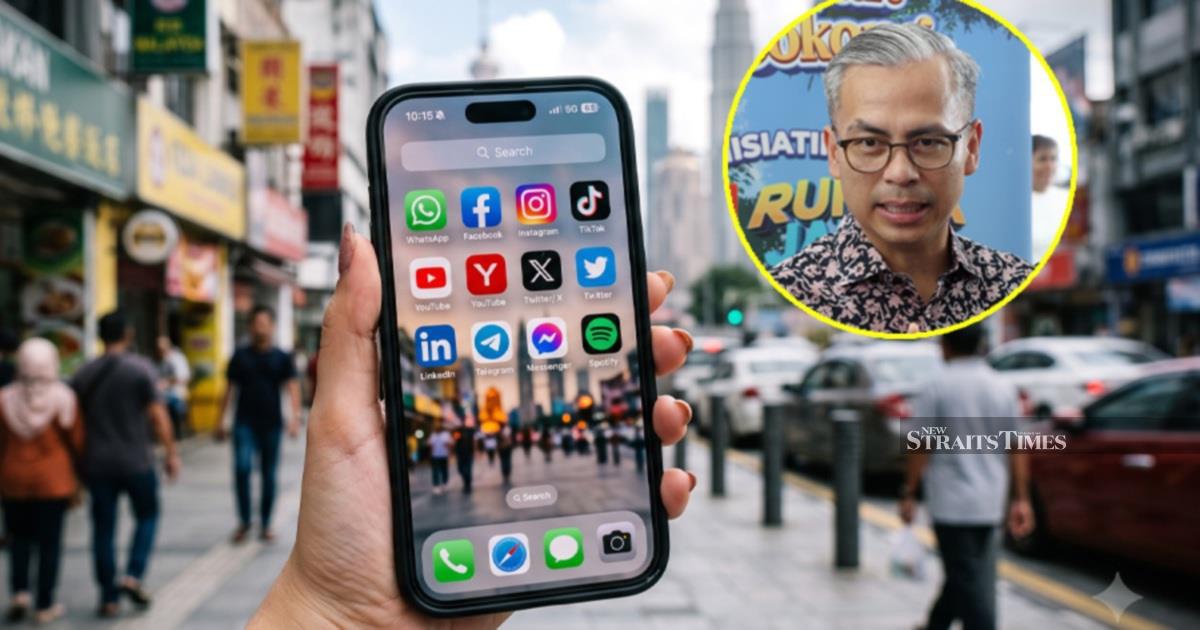
Malaysia's Communications Ministry has identified more than 1,800 fraudulent social media accounts operating across major platforms, with a notable portion deliberately designed to spread sensitive content touching on race, religion, and royalty issues. Communications Minister Datuk Seri Fahmi Fadzil revealed the discovery during recent official statements, underscoring the ministry's intensified surveillance of digital spaces as fake account networks become increasingly sophisticated and organised.
The detection of such a large coordinated network points to a deliberate strategy to amplify divisive messaging in Malaysia's multi-ethnic and multi-religious society. Rather than organic conversations, these accounts operate in coordinated clusters, often designed to make fringe or inflammatory positions appear more widespread than they actually are. The concentration on 3R content—particularly sensitive in a nation where communal harmony remains a cornerstone of national stability—suggests these accounts target Malaysia's fault lines deliberately, aiming to polarise public discourse and potentially incite offline tensions.
The 3R categories encompass some of the most legally and socially sensitive topics in Malaysian public discourse. Race-related provocations can inflame ethnic tensions, particularly between the Malay-Muslim majority and significant Chinese and Indian communities. Religious sensitivities extend beyond Islam to encompass all faiths practised in Malaysia, while royalty matters touch on constitutional foundations and institutional respect. Any coordinated campaign amplifying such content carries real potential to destabilise social cohesion and strain intercommunal relations that have been carefully managed for decades.
The discovery reflects broader regional patterns across Southeast Asia, where disinformation networks increasingly target identity-based divisions as a method to amplify societal fractures. Countries like Indonesia, Thailand, and the Philippines have documented similar campaigns, often linked to political agendas or foreign actors seeking to sow discord. Malaysia's detection suggests the country is not insulated from these transnational manipulation strategies, and that coordinated fake account networks have identified Malaysians as a target audience vulnerable to identity-based messaging.
Ministry officials have not yet detailed the geographic origin of these accounts, though tracing coordinated networks often proves technically challenging and diplomatically sensitive. The accounts operate across multiple platforms, likely including Facebook, Instagram, Twitter, and TikTok, suggesting perpetrators understand the importance of multi-platform distribution to maximise reach and credibility. By establishing presences across ecosystems, fake account operators ensure content reaches diverse demographic segments, from older voters on Facebook to younger audiences on TikTok.
The detection mechanism itself raises questions about Malaysia's digital governance infrastructure. The Communications Ministry's ability to identify 1,800 accounts suggests either enhanced monitoring capabilities or reports from platform providers who increasingly collaborate with governments on content moderation. Meta, Google, and Twitter have established regional teams dedicated to detecting coordinated inauthentic behaviour, and their cooperation with Malaysian authorities may have contributed to uncovering this network. However, experts note that detected accounts represent only a fraction of potentially inauthentic activity; many fake networks operate below detection thresholds.
The amplification of 3R content through fake accounts carries implications for Malaysia's electoral landscape. As general elections approach, such networks could be weaponised to spread inflammatory content designed to mobilise specific communities or suppress voter turnout among others. The timing and scale of account creation often correlates with political moments—major election cycles, parliamentary sessions, or constitutional debates—when polarisation serves particular interests. Malaysian authorities appear alive to this risk, though preventive measures remain limited without cooperation from tech platforms.
Responding to disinformation requires a multifaceted approach beyond account suspension. Media literacy campaigns help citizens identify inauthentic content and question sensational claims. Platform transparency, through algorithmic audits and disclosure of coordination patterns, enables researchers and authorities to understand how false narratives propagate. Legal frameworks must balance content restriction with free speech protections, a particularly delicate balance in Malaysia's constitutional context. The Communications Ministry faces pressure to act decisively against divisive content while avoiding accusations of heavy-handed censorship.
International precedent suggests that public disclosure of detected fake networks, as the ministry has done, serves multiple purposes. It alerts citizens to disinformation risks, demonstrates authorities' monitoring capacity, and potentially deters future operations by raising costs for actors planning coordinated campaigns. However, disclosure also provides operational intelligence to sophisticated actors who adjust tactics accordingly, suggesting a constant escalation dynamic between platform manipulators and defenders of digital integrity.
For Malaysian technology users and businesses, the detection underscores the importance of digital hygiene. Users should verify account authenticity before engaging with content, particularly around sensitive topics, and consider multiple information sources rather than relying on single accounts. Businesses risk reputational damage if their marketing inadvertently amplifies fake accounts or engages with inauthentic audiences, while advertisers must ensure campaigns do not inadvertently support disinformation ecosystems through algorithm-driven ad placement.
The ministry's findings arrive amid growing regional and global focus on digital platform accountability. Southeast Asian governments increasingly demand that Facebook, Google, Twitter, and emerging platforms enforce community standards more rigorously and provide greater transparency regarding coordinated inauthentic behaviour. Malaysia's approach sits within this broader push for platform responsibility, though tensions persist between government regulation and platform autonomy. Striking the right balance remains an evolving challenge across the region.
Longer-term, these discoveries highlight structural vulnerabilities in how modern information systems operate. Fake accounts exploit platforms' reliance on user-generated trust signals and algorithmic amplification mechanisms designed to maximise engagement. Without fundamental reforms to how platforms handle identity verification, content moderation, and algorithmic distribution, fake account networks will likely persist and evolve. Malaysia's Communications Ministry will need to maintain sustained vigilance while advocating for platform-level changes that reduce the feasibility of large-scale coordinated inauthentic behaviour.

