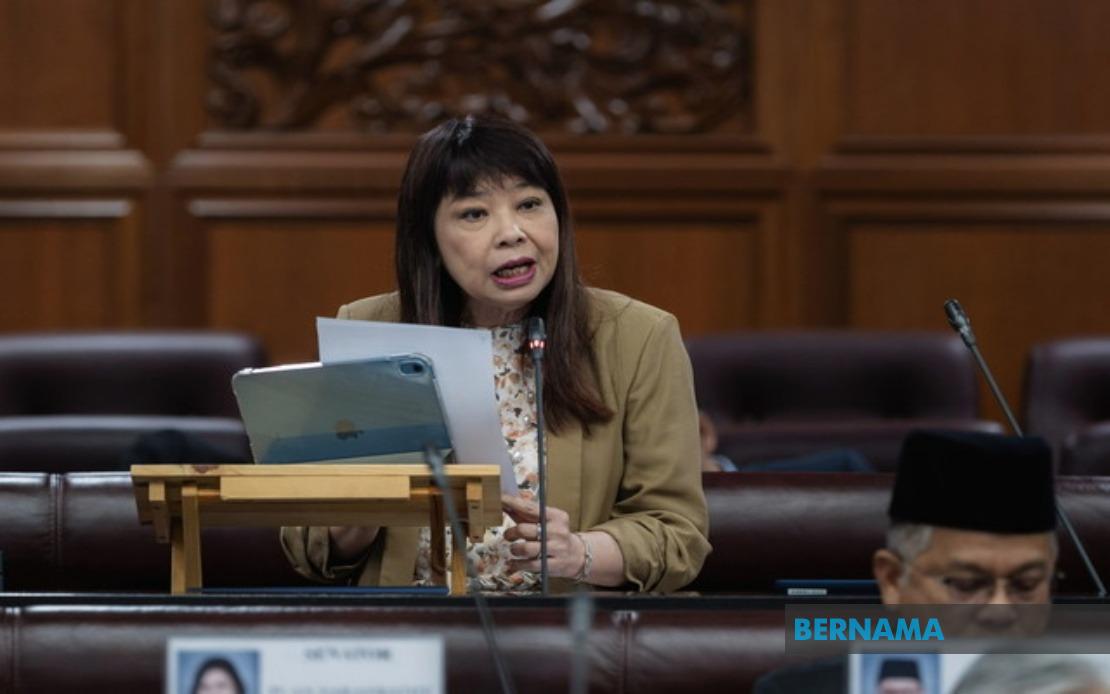
Malaysia is moving toward establishing a formal registry system to identify and monitor individuals convicted of domestic violence offences, marking a significant shift in the government's approach to tackling repeated abuse. Deputy Women, Family and Community Development Minister Lim Hui Ying announced that the Women, Family and Community Development Ministry (KPWKM), Royal Malaysia Police (PDRM), and the judiciary are jointly developing mechanisms to record and track domestic violence offenders in an effort to prevent cycles of repeated victimization.
The initiative addresses a critical gap in Malaysia's current data infrastructure surrounding domestic violence crime patterns. According to Lim, who spoke during parliamentary Question Time in the Dewan Negara, the country currently lacks comprehensive records that would enable law enforcement and social welfare agencies to identify individuals with histories of abusing intimate partners. This absence of systematic data has hampered efforts to intervene proactively when offenders with prior convictions come into contact with new victims or return to established victims after release from custody.
The proposed registry mechanism, still under development, will operate through existing criminal records systems or through a dedicated offenders registry comparable to those maintained for sexual offenders in other jurisdictions. Establishing such a system requires careful coordination between multiple government agencies to ensure compatibility with existing legal frameworks, particularly the Domestic Violence Act 1994 (Act 521), while protecting individuals' privacy rights and ensuring the information is used appropriately by authorized personnel such as police officers, prosecutors, and family court judges.
The impetus for developing this registry comes partly from the documented problem of repeat offences within domestic violence cases. Without reliable tracking mechanisms, victims who have previously sought legal protection may find themselves vulnerable if their abuser is not flagged as a high-risk offender when they encounter the justice system again. The registry is intended to alert relevant agencies to patterns of behaviour and enable more informed decision-making when issuing protective orders or determining bail conditions.
Concurrently, the government is investing substantially in victim support infrastructure. KPWKM has allocated RM2.1 million during the current financial year specifically to upgrade and enhance more than 20 government-operated shelters for domestic violence victims distributed across Malaysia. These facilities serve as critical safe havens for individuals fleeing abusive situations, particularly those in immediate danger who require emergency accommodation while legal remedies are pursued.
The shelter system has expanded considerably under government oversight. According to Social Welfare Department (JKM) records as of July 2026, Malaysia now operates 43 shelters approved under domestic violence legislation, comprising 39 government-managed facilities and four operated by non-governmental organizations. The upgrade programme aims to ensure these shelters maintain adequate safety standards, functional infrastructure, and capacity to accommodate victims requiring temporary refuge during legal proceedings or while making longer-term arrangements.
Beyond residential shelter provision, the government has implemented multiple layers of legal protection designed to offer rapid relief to domestic violence victims. The Emergency Protection Order (EPO) mechanism allows family courts to issue protective orders within two hours in cases where victims face imminent danger, providing immediate legal recourse without requiring lengthy court procedures. This streamlined process represents a recognition of the time-sensitive nature of domestic violence situations.
Following the initial emergency intervention stage, victims can transition to more durable legal protections through the courts. The Social Welfare Department assists victims in obtaining Interim Protection Orders (IPOs), which provide temporary restraining measures while cases proceed, as well as Protection Orders (POs), which represent final court judgments prohibiting contact or proximity. This tiered system of legal remedies reflects growing international best practice in domestic violence response, moving away from reactive criminal prosecution toward proactive protective measures.
The comprehensive approach articulated by KPWKM represents a whole-of-government strategy that coordinates law enforcement, judicial, and social welfare agencies rather than treating domestic violence as primarily a criminal matter. This integration recognizes that effective victim protection requires simultaneous intervention across multiple systems: police response to emergencies, expedited court proceedings, secure shelter, counselling services, and sustained monitoring of offenders.
For Malaysian citizens, the development of a domestic violence offenders registry carries significant implications. From a victim protection standpoint, such a system could enable police to provide more informed protective services and help courts make better-informed decisions regarding restraining orders and bail conditions. From an offender accountability perspective, the registry would create institutional memory that persists across different police jurisdictions and over time, preventing individuals from evading consequences by moving to different states or waiting for records to be archived.
The registry proposal also reflects Malaysia's evolving legal framework surrounding gender-based violence and family protection. Regional jurisdictions including Singapore and Australia have operated offender registries for decades, and Malaysia's consideration of similar mechanisms suggests gradual policy convergence toward international standards for victim protection. However, implementation will require balancing victim safety benefits against legitimate privacy concerns and ensuring the registry is deployed consistently across all jurisdictions.
The government's stated commitment to a "comprehensive whole-of-government and whole-of-society approach" signals recognition that statutory protections must be coupled with community awareness, workplace policies, and social support systems. As the registry and enhanced shelter infrastructure move from planning into operational phases, their effectiveness will depend substantially on proper training of police and judicial personnel, adequate funding for sustained operations, and robust coordination mechanisms between agencies that have historically operated with limited cross-referencing.

