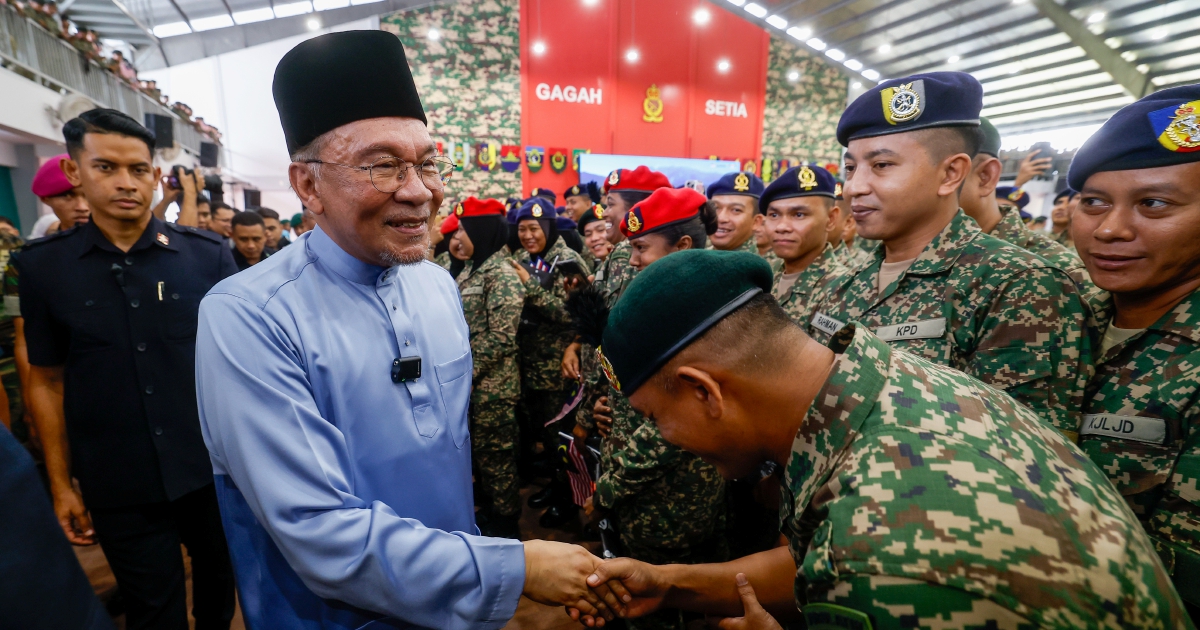
Prime Minister Datuk Seri Anwar Ibrahim has sought to clarify Malaysia's long-standing position on Middle Eastern geopolitics, drawing a careful distinction between opposing Israeli government policies and harbouring prejudice against Jewish communities worldwide. Speaking in Port Dickson, Anwar underscored that Malaysia's vocal criticism of Israel centres on specific political and military actions rather than religious or ethnic animus, a nuance that remains important as the region grapples with heightened tensions and polarisation.
The prime minister's remarks reflect an attempt to communicate Malaysia's principled stance internationally whilst navigating the complex sensitivities surrounding discourse on the Israeli-Palestinian conflict. By explicitly stating that Malaysia does not harbour antipathy towards Jewish people as a religious or ethnic group, Anwar appears to be addressing potential mischaracterisations of Malaysian foreign policy positions that could blur the line between legitimate political opposition and prejudice. This distinction has become increasingly relevant in global diplomatic circles, where such clarity helps prevent conflation of criticism of state actions with bigotry.
Anwar's framing aligns with how many developing nations and non-aligned countries present their Middle Eastern positions—rooted in opposition to what they characterise as occupation and territorial disputes rather than religious hostility. Malaysia's historical support for Palestinian causes has been consistent across multiple administrations, reflecting both domestic constituency expectations and the country's broader commitment to principles of national self-determination and territorial sovereignty that resonate with many postcolonial societies. However, the prime minister's recent emphasis on distinguishing between political disagreement and ethnic or religious prejudice suggests a recalibration of how Malaysia articulates these positions to international audiences.
The clarification carries implications for Malaysia's diplomatic relationships and international standing. As a Muslim-majority nation with significant economic and strategic interests globally, Malaysia benefits from being perceived as principled without being characterised as intolerant. This balance becomes particularly important in multilateral forums, trade negotiations, and cultural exchanges where perceptions of a country's values shape its engagement with diverse partners. Anwar's statement suggests awareness that Malaysia's credibility in international affairs requires maintaining clear ethical distinctions even when addressing deeply contested geopolitical issues.
Domestically, the statement also reflects the need to manage Malaysia's multicultural society, which includes small but established Jewish communities alongside overwhelming Muslim and diverse other populations. By emphasising respect for all religious groups, Anwar reinforces the constitutional principles of religious freedom and coexistence that underpin Malaysia's multiethnic and multireligious framework. This becomes particularly significant given occasional episodes of religious tensions or misunderstandings that have surfaced in Malaysian public discourse regarding Middle Eastern conflicts.
The prime minister's remarks come amid sustained international scrutiny of how nations discuss the Israeli-Palestinian conflict. Western democracies and international bodies have increasingly sought to distinguish between legitimate political criticism of Israeli government policies and antisemitic rhetoric, establishing definitional frameworks that can sometimes prove contentious. By voluntarily making this distinction explicit, Anwar positions Malaysia as a responsible global actor capable of holding political positions whilst adhering to universal standards against discrimination and bigotry.
Malaysia's opposition to Israeli policies, as Anwar characterised it through reference to "Zionist Israel," encompasses long-standing positions regarding territorial disputes, settlement expansion, and Palestinian statehood aspirations. These positions are shared across much of the Non-Aligned Movement and reflect Malaysia's consistent voting patterns in international bodies on related resolutions. Yet the linguistic choices Anwar employs—distinguishing between opposing a political project and opposing a people—represent a more sophisticated diplomatic language than Malaysia has sometimes deployed historically.
The international context for such statements has shifted considerably in recent years. Global awareness campaigns, academic research on antisemitism and Islamophobia, and heightened attention to how conflicts affect diaspora communities have all contributed to greater scrutiny of political discourse surrounding the Middle East. By proactively clarifying Malaysia's position, Anwar may be seeking to preempt potential international criticism whilst simultaneously strengthening Malaysia's moral standing on broader principles of human rights and religious tolerance.
Southeast Asian nations generally maintain cautious positions on Middle Eastern conflicts, balancing multiple considerations including ties to regional powers, relationships with Western countries, domestic religious demographics, and commercial interests. Malaysia's explicit articulation of opposition to policies rather than peoples aligns with how many regional governments wish to be perceived—as guided by strategic and ethical principles rather than sectarian or religious animosity. This rhetorical positioning helps preserve Malaysia's ability to engage constructively with diverse international partners.
Looking forward, Anwar's emphasis on this distinction may establish a framework for how Malaysian officials communicate on related issues, potentially influencing parliamentary debates, ministerial statements, and institutional positions on Middle Eastern matters. The prime minister's intervention suggests that Malaysia's foreign policy establishment recognises the importance of precision in language when discussing geopolitically sensitive topics, particularly for a nation that values its multicultural identity and international reputation. Such clarity, when consistently reinforced, can help prevent misinterpretation of national positions and contribute to more constructive international discourse on deeply divisive issues.

