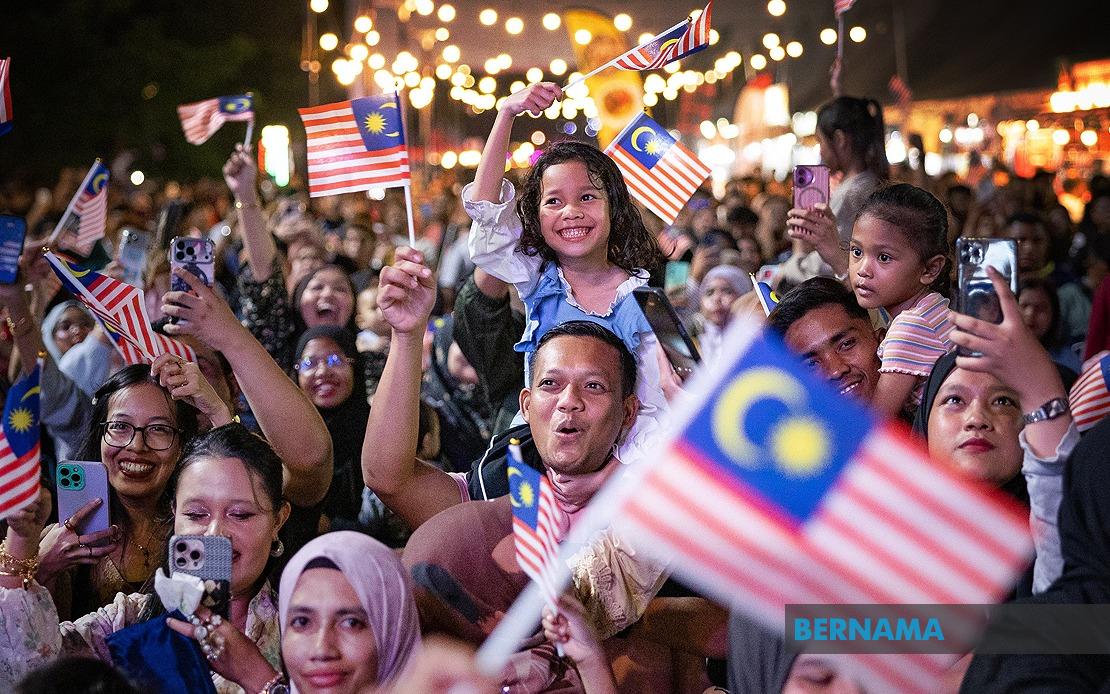
Malaysia's National Day Eve unfolded with remarkable patriotic intensity across the nation, as hundreds of thousands of citizens converged on key venues to mark the 69th anniversary of independence. The celebrations, which reached their crescendo at midnight, represented a powerful display of national pride and unity that transcended age, ethnicity and geography, reflecting the enduring emotional connection Malaysians maintain with their independence.
Kuala Lumpur's historic Dataran Merdeka became the epicentre of the festivities, drawing a staggering crowd exceeding 100,000 visitors who began gathering well before the official countdown. The venue transformed into a sea of Jalur Gemilang flags as spectators arrived from early evening, filling the expansive square beneath the illuminated silhouette of the iconic Sultan Abdul Samad Building. This century-old architectural landmark, witness to Malaysia's own journey from colonialism to nationhood, provided a poignant backdrop for the evening's proceedings.
The centrepiece of the Kuala Lumpur celebration was a 90-minute concert titled 'Kita Bagi Jadi @ Ambang Merdeka 2026', performed by a substantial roster of Malaysian entertainers including Aina Abdul, Aman RA, Nadia Aqilah, Asmidar, Haziq Rosebi, Mimifly, Izen Kong and Pasya. The production showcased considerably more than conventional pop performances, with approximately 350 backing performers orchestrating an elaborate multimedia narrative of Malaysia's historical achievements and rich cultural tapestry. Through music, choreography and dramatic storytelling, the concert presented the nation's diversity and shared heritage as a unifying force rather than a dividing one.
Government representation underscored the occasion's official significance. Minister in the Prime Minister's Department (Federal Territories) Hannah Yeoh and Kuala Lumpur Mayor Datuk Seri Fadlun Mak Ujud attended the celebration, reflecting the importance accorded to the event by federal leadership. Their presence, alongside Selangor's Menteri Besar Datuk Seri Amirudin Shari who arrived at 9.20 pm, demonstrated the cross-party and multi-level governmental commitment to commemorate the nation's independence milestone.
The evening's programme featured a carefully choreographed sequence of ceremonial and entertainment elements designed to emphasise military strength, patriotic values and national harmony. A dramatic skydiving display by the elite VAT 69 Commando unit opened the proceedings, followed by the national anthem Negaraku and a parade of uniformed contingents interspersed with decorated vehicles. The Fire and Rescue Department, Royal Malaysia Police and Malaysian Armed Forces contributed special performances that highlighted the institutions underpinning national security and public welfare, subtly reinforcing the infrastructure supporting the freedoms independence had secured.
As midnight approached, the gathering built to an intense climax. Menteri Besar Amirudin Shari led the crowd in the traditional three-part shout of 'Merdeka'—a ritual deeply embedded in Malaysian independence commemoration—as the night sky erupted with fireworks and elaborate light displays illuminated Dataran Merdeka's perimeter. The midnight finale featured performances by established Malaysian music personalities Datuk Ramli Sarip, Datuk Awie, Gerhana Skacinta, Merrah and Wani Kyrie, extending the celebratory atmosphere into the early hours.
Beyond the capital, celebrations demonstrated the genuinely nationwide character of independence observance. Perlis, Malaysia's smallest state, drew over 46,000 attendees to its sports complex, a proportionally substantial gathering that underscored how National Day resonates across even more modest population centres. The Perlis programme opened with both Negaraku and the state anthem, followed by martial arts demonstrations that added cultural specificity to the national commemorative framework. Muhammad Sanusi, addressing the assembled crowd, emphasised the imperative to actively safeguard and appreciate the independence previous generations had secured through considerable struggle.
The commemorations carried particular resonance given remarks delivered in a royal address by Tuanku Syed Sirajuddin, who articulated a sophisticated understanding of independence's historical foundations. The Sultan reminded Malaysians that the freedom they currently enjoyed emerged from extended and costly struggles, substantial sacrifices made by multiple generations, and critically, the unified cooperation of the nation's diverse racial and religious communities. He underscored that this inheritance demanded contemporary stewardship characterised by knowledge, personal integrity, communal unity and a profound sense of responsibility to the nation's continued wellbeing and development.
The celebration's breadth extended beyond ceremonial performances and speeches. Dataran Merdeka hosted the Bulatan Sultan Azlan Shah Run, Jualan Rahmah stalls providing affordable goods, second-hand markets, extensive food vendor zones, complimentary health screening services, karaoke competitions, the Tantirana Haunted House attraction and multiple concert performances. This multifaceted approach ensured the festivities functioned not merely as top-down patriotic messaging but as participatory community experiences accessible to citizens across socioeconomic circumstances.
For Malaysia's regional position, such demonstrations of sustained domestic patriotic sentiment carry geopolitical implications. As Southeast Asia navigates increasingly complex great-power dynamics and regional challenges, a population demonstrating cohesion around foundational national narratives provides valuable stability. The visible emphasis on racial and religious unity in public discourse—particularly evident in Tuanku Syed Sirajuddin's address and the concert's multicultural artistic contributions—offers a counternarrative to divisive identity politics that occasionally threaten regional harmony.
The 2025 National Day celebrations also merit consideration as Malaysia approaches 2026, the year referenced in Kuala Lumpur's concert title. As the nation enters a new decade following independence, how Malaysians continue conceptualising their national identity, their relationship to the sacrifices that secured independence, and their commitment to the plural society their founders envisioned will substantially influence the country's trajectory. The evident enthusiasm displayed at Dataran Merdeka and comparable venues nationwide suggests this foundational consensus remains resilient.

