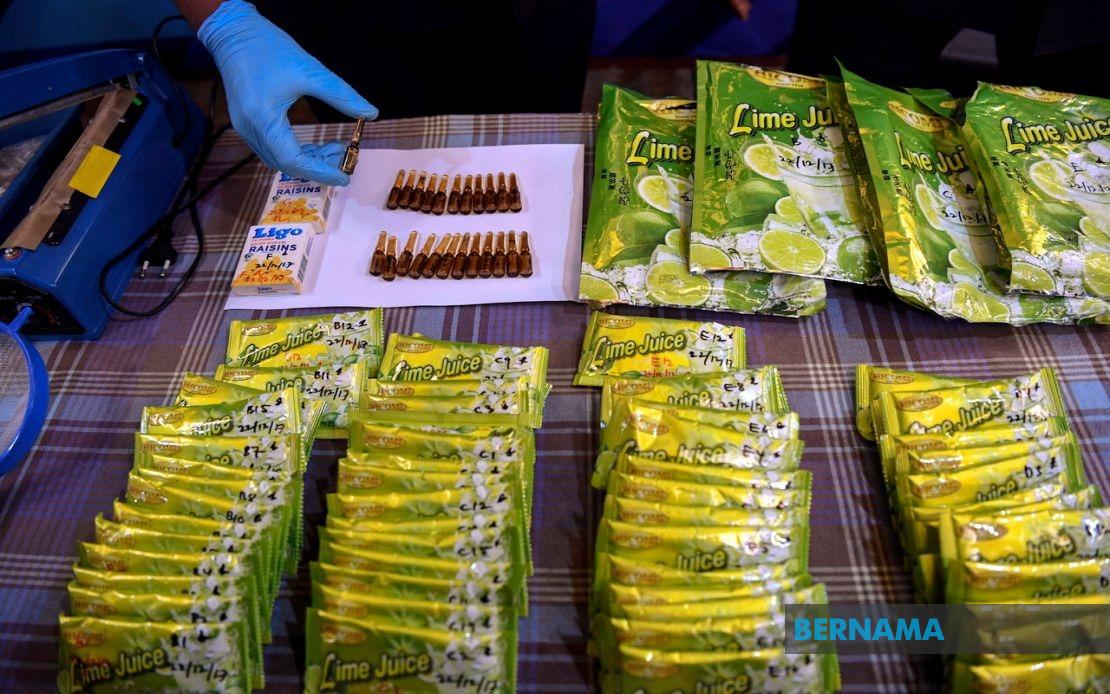
The Malaysian government is tightening its grip on synthetic drug trafficking after identifying a dangerous acceleration in the circulation of methamphetamine, fentanyl, and psychoactive tablets colloquially known as "piu-piu" across the nation. Home Minister Datuk Seri Saifuddin Nasution Ismail has sounded the alarm over these substances, which pose unprecedented risks including rapid addiction cycles, lethal overdose incidents, and downstream criminality that destabilises communities from urban centres to the country's most isolated regions.
The scale of the problem is staggering. Between 2023 and June 2026, the Royal Malaysia Police documented 238,704 arrests linked to synthetic drug offences nationwide. This figure underscores the magnitude of enforcement challenges facing authorities and suggests that the drug landscape is evolving faster than policy and law enforcement frameworks can adapt. The prevalence of such narcotics reflects global trafficking patterns flowing into Southeast Asia, where Malaysia's geographic position and port infrastructure make it a vulnerable transit hub.
Responding to parliamentary questions from Mohamad Shafizan Kepli, the GPS representative for Batang Lupar, Saifuddin Nasution outlined a multifaceted enforcement strategy centred on two major operations: Op Tapis and Op Tapis Khas. These initiatives blanket urban settlements, rural communities, and the hardest-to-reach remote territories through coordinated action involving the National Anti-Drugs Agency, Royal Malaysian Customs Department, and local police units. The emphasis on geographic reach acknowledges that drug problems transcend city boundaries—rural and remote areas, particularly in Sarawak, require customised enforcement responses.
Technology has become central to the Ministry's approach. Drones and surveillance cameras now augment traditional investigative work, allowing authorities to monitor trafficking corridors and suspected production or distribution points with greater precision. This technological layer represents a shift toward intelligence-driven operations, moving beyond reactive street-level arrests toward dismantling organised supply networks. The deployment of such assets reflects recognition that conventional policing alone cannot contain a problem that thrives in digital marketplaces and uses encrypted communications.
Legislative reform is advancing in parallel with enforcement efforts. The government is actively considering amendments to the Dangerous Drugs Act 1952 to formally classify newly emerging synthetic drugs and New Psychoactive Substances under the statute's regulatory schedules. This procedural step is critical because novel compounds often exist in legal grey zones until specifically prohibited; amendment would eliminate this loophole and accelerate prosecution timelines. The legislative pipeline demonstrates that policymakers understand the cat-and-mouse dynamic inherent in synthetic drug control, where chemists continuously reformulate banned substances.
Data from Sarawak illustrates the operational reality on the ground. During the first half of 2026, authorities arrested 7,097 individuals across the state, comprising 342 traffickers, 1,314 drug possessors, and 5,441 users. Seized quantities totalled 418.01 kilogrammes valued at RM53.73 million. Additionally, 13 individuals faced detention under the Dangerous Drugs (Special Preventive Measures) Act 1985, while action against 131 hardcore addicts proceeded under Section 39C of the principal narcotics statute. Syndicate asset confiscations reached RM1.95 million, a metric that strikes at trafficking organisations' financial viability. These statistics reveal an operation generating simultaneous pressure across supply, distribution, possession, and consumption stages.
Prevention and public awareness form the counterweight to enforcement. Between 2023 and June 2026, authorities conducted 1,144 drug prevention programmes across Malaysia designed to educate communities and build resistance to substance abuse. This community policing approach recognises that arrest-centric strategies, while necessary, prove insufficient without social intervention. Prevention programmes targeting youth, workplace settings, and family units attempt to reduce demand and weaken recruitment pipelines that criminal organisations depend upon.
Forensic capabilities are undergoing continuous enhancement to keep pace with chemical innovation. Laboratory facilities are being upgraded to profile fentanyl analogues and synthetic opioids, enabling faster identification of emerging drug types and supporting more targeted enforcement actions. Fentanyl's particular menace lies in its extreme potency—a few microgrammes can prove fatal—and its tendency to contaminate other drugs without users' knowledge, amplifying overdose risks across multiple substance categories. Laboratory profiling thus becomes a public health function, not merely a law enforcement tool.
The synthetic drug phenomenon poses acute challenges for Malaysian society that transcend traditional drug policy boundaries. These substances exploit gaps between legislative schedules and chemical innovation, thrive in globalised supply chains, and generate addiction and overdose patterns that stress healthcare systems. For Southeast Asian policymakers watching Malaysia's approach, the intensification signals that regional coordination on drug classification, intelligence sharing, and port security will become increasingly essential. The problem's velocity—reflected in the rapid emergence of novel compounds—demands that enforcement and legislative frameworks operate in real time rather than reactive cycles.
Sarawak's prominence in parliamentary questioning reflects legitimate concerns that rural and remote jurisdictions face particular vulnerabilities. Limited enforcement resources, geographic barriers to surveillance, and porous borders facilitate trafficking into these areas. The Ministry's acknowledgement of state-specific challenges and tailored operations suggests recognition that a one-size-fits-all national approach cannot adequately address regional variation. Continued investment in Sarawak's law enforcement and drug prevention infrastructure will test whether centralised strategies can be meaningfully localised.
The trajectory of Malaysia's synthetic drug problem remains uncertain. Arresting a quarter-million individuals over three years demonstrates enforcement momentum but offers no guarantee of supply reduction or abuse prevalence decline. The initiative's ultimate success will hinge on whether legislative amendments proceed swiftly, technology deployment scales beyond pilot phases, prevention programmes achieve measurable behavioural change, and international cooperation disrupts trafficking networks upstream. For Malaysian citizens, particularly in vulnerable communities, the coming months will reveal whether intensified government action translates into genuine protection or merely reactive management of an expanding crisis.

