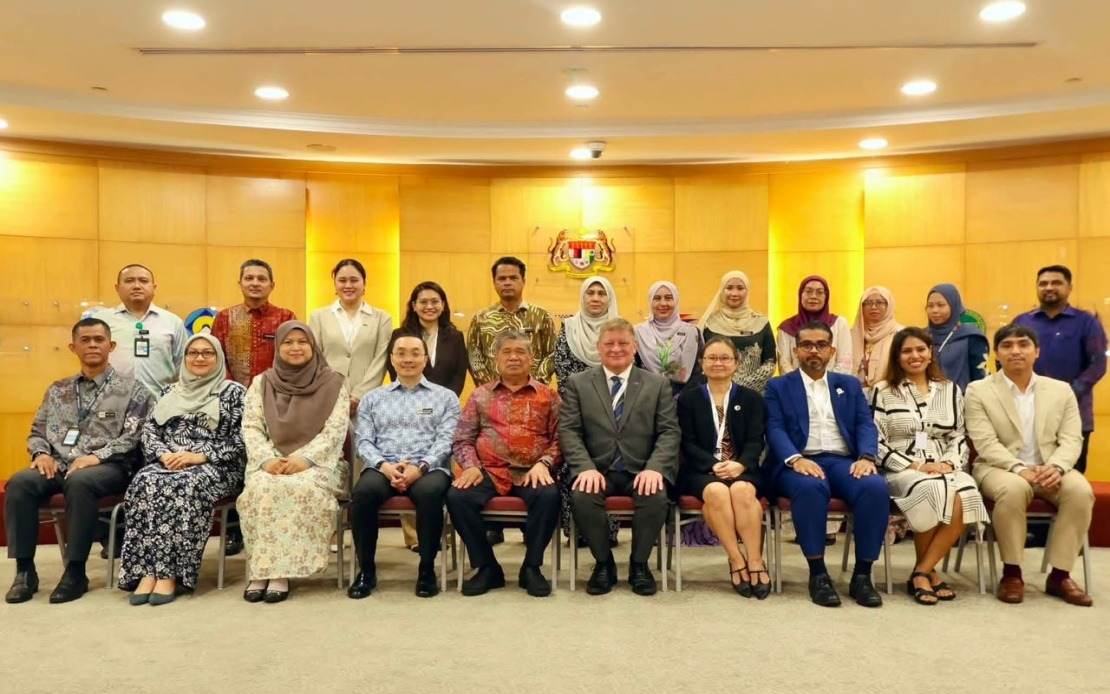
Malaysia is intensifying its agricultural partnership with the European Union, signalling a strategic push to modernise the nation's agri-food sector through technology and sustainable practices. Agriculture and Food Security Minister Datuk Seri Mohamad Sabu met with EU-ASEAN Business Council executive director Chris Humphrey and his delegation at the ministry headquarters in Putrajaya yesterday, underscoring the government's commitment to leveraging European expertise in transforming domestic farming systems.
The discussion centred on implementing the National Agro-Food Policy 2.0 (DAN 2.0), Malaysia's comprehensive framework for enhancing food self-sufficiency and agricultural resilience. This policy reflects growing global concerns about supply chain vulnerabilities and climate-induced food insecurity—challenges that have become increasingly pressing for Southeast Asian economies dependent on imports for critical foodstuffs. By partnering with EU entities, Malaysia aims to adopt technological solutions and best practices that can simultaneously boost productivity and environmental sustainability.
Artificial Intelligence and advanced agricultural technologies featured prominently in the talks, reflecting a broader regional shift towards precision farming and data-driven decision-making. The adoption of such technologies could help Malaysian farmers optimise resource use, reduce waste, and improve crop yields—particularly vital as the country grapples with land constraints and competing demands for agricultural space. European companies possess considerable expertise in these fields, making their involvement strategically valuable for capacity building among local producers.
Strengthening Malaysia's dairy supply chain emerged as another critical discussion point. The domestic dairy sector has long struggled with competitiveness and supply sufficiency, with Malaysia heavily reliant on imported milk and dairy products. EU involvement in this supply chain could introduce new production methodologies, quality assurance frameworks, and breeding programmes that elevate local competitiveness and reduce import dependency. Enhanced dairy production would also support nutritional security and create higher-value agricultural employment.
Biosecurity and animal health standards formed the fourth pillar of the meeting agenda. These measures are essential not only for protecting Malaysia's livestock populations from disease but also for meeting stringent international trade requirements. EU nations maintain some of the world's most rigorous Sanitary and Phytosanitary standards, and adopting compatible practices would facilitate market access and strengthen Malaysia's reputation as a reliable food supplier in global markets. This has direct implications for Malaysian agricultural exports to Europe and third-country markets that recognise EU standards.
Minister Mohamad emphasised that the European Union represents one of Malaysia's most significant commercial and technological partners in agricultural transformation. This partnership extends beyond bilateral trade to encompass knowledge transfer, research collaboration, and capacity development—components essential for building a truly resilient and modernised agri-food system. The minister framed this cooperation as integral to addressing interconnected global challenges: food security, climate change adaptation, and supply chain disruptions that have tested international food systems in recent years.
Both parties reaffirmed their commitment to the Malaysia-European Union Free Trade Agreement (MEUFTA) negotiations, which remain an important vehicle for deepening agricultural ties. A comprehensive trade agreement could reduce tariff barriers, facilitate regulatory harmonisation, and create more favourable conditions for Malaysian agricultural products entering European markets. For Malaysian farmers and agribusinesses, market access to the EU represents an opportunity to diversify revenue streams and achieve economies of scale in higher-value productions.
The government has called for intensified strategic cooperation between EU firms and Malaysian companies, particularly in agricultural technology. Such private-sector partnerships could accelerate the adoption of innovations in the local agro-food supply chain, from farm to consumer. Technology transfer and joint ventures would help domestic enterprises leapfrog developmental stages and compete more effectively in regional and global markets.
Capacity building for local farmers and breeders formed a central theme of the discussions. Improving compliance with international quality standards and SPS measures remains a persistent challenge for smallholder and medium-scale Malaysian farmers, who often lack resources for certification and upgrading. EU companies' involvement in training and certification programmes could systematically enhance farmer capabilities, enabling them to access premium export markets and command better prices for their products.
The minister seized the opportunity to invite the EU-ABC delegation to MAHA 2026, the Agriculture, Horticulture and Agro-Tourism Exhibition scheduled for August 28 to September 6 at the Malaysia Agricultural Expo Park in Serdang, Selangor. This invitation signals Malaysia's intent to showcase its agricultural sector to international partners and attract further investment and collaboration. MAHA provides a platform for networking, technology showcasing, and deal-making that could translate strategic discussions into concrete partnerships and commercial arrangements.
For Malaysian stakeholders, this engagement holds significant implications. The agriculture sector employs substantial portions of Malaysia's rural workforce and remains integral to food security and rural incomes. By anchoring agricultural development to European expertise and markets, Malaysia positions itself within a more sophisticated global value chain while maintaining food supply stability. The focus on technology and sustainability also aligns with international climate commitments and consumer preferences for responsibly produced food, enhancing long-term market competitiveness.

