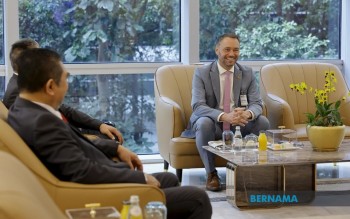
Belgium's Deputy Prime Minister Maxime Prévot has thrown his support behind the Malaysia-European Union Free Trade Agreement as a critical instrument for unlocking trade potential between the two regions. During a visit to Kuala Lumpur, Prévot emphasised that completing the MEUFTA remains a strategic priority for both the EU and Belgium, suggesting the agreement holds particular importance for Brussels even as it manages broader trade commitments across the continent. The pact is expected to facilitate expanded commercial exchanges and create fresh business opportunities while simultaneously strengthening the economic foundations of both Malaysia and the EU, reflecting a shared commitment to deeper regional integration.
Accelerated finalisation of negotiations appears within reach, with diplomatic sources indicating completion could occur within the next several months or by the end of the coming year. This timeline reflects the importance both parties attach to the agreement and suggests that outstanding technical and regulatory hurdles may be relatively manageable. For Malaysia, timely conclusion would provide crucial certainty for businesses planning regional expansion and investment, while for the EU, securing this agreement demonstrates continued engagement with a strategically significant Southeast Asian economy.
Prévot's emphasis on trade's centrality to Belgium's prosperity offers instructive context for understanding the European approach to the MEUFTA. Despite its modest population of 11.77 million people, Belgium operates as an exceptionally outward-oriented economy, with exports representing approximately 85 per cent of its gross domestic product. This extraordinary dependence on international commerce—among the highest globally—means that Belgium views every new trading relationship as potentially significant, regardless of the partner nation's size. The Belgian perspective underscores why European negotiators view the Malaysian market as valuable beyond immediate trade volumes, recognising its gateway function within ASEAN.
Current bilateral trade figures demonstrate the existing commercial relationship's substantial scale. During 2025, two-way trade between Malaysia and Belgium reached RM9.74 billion, with Malaysian exports accounting for RM6.85 billion while Belgian imports totalled RM2.89 billion. This trade composition reflects Malaysia's established strength in supplying raw materials and processed goods to European markets, alongside Belgium's role as a distribution and processing hub for European-bound commodities. The asymmetry in trade direction—with Malaysian exports exceeding imports by more than double—suggests significant untapped potential for Belgian manufactured goods and services once trade barriers diminish through the FTA framework.
Belgian investment presence in Malaysia already demonstrates substantial confidence in the market's prospects. As of 2025, 67 projects involving Belgian investors had secured Malaysian investment approvals, collectively representing RM5.1 billion in committed capital and anticipated job creation exceeding 4,605 positions. These figures indicate that Belgium ranks among Malaysia's significant European investors, though the scale of this engagement pales in comparison to total Belgian global investments, hinting at considerable expansion potential should the trade agreement remove regulatory obstacles and reduce operational costs. The job creation component holds particular relevance for Malaysian policymakers evaluating the agreement's domestic benefits.
The timing of Prévot's Malaysia visit, commencing July 2, marks his inaugural trip to the country since his appointment to office in February of the previous year. This delayed first bilateral engagement, while seemingly routine, carries symbolic weight in diplomatic protocol, suggesting elevated priority for Malaysia-EU relations within the Belgian government's portfolio. His status as both Deputy Prime Minister and Foreign Minister—controlling economic diplomacy, European affairs, and development cooperation—indicates that Malaysia discussions occur at the highest decision-making level, reinforcing the significance attached to negotiation progress.
Scheduled meetings with Malaysia's Deputy Prime Minister Datuk Seri Fadillah Yusof, who simultaneously oversees the Energy Transition and Water Transformation Ministry, reveal deliberate alignment of bilateral engagement toward future-facing economic sectors. Proposed discussion topics encompassing renewable energy development, rare earth element supply chains, and the halal industry certification sector reflect recognition that Malaysia-EU economic partnership should transcend traditional commodity trade toward strategic cooperation in emerging global industries. Each sector represents areas where Malaysian capabilities align with European demand and investment capacity, suggesting the FTA framework will merely formalise cooperation already developing through private channels.
The renewable energy cooperation dimension carries particular resonance for Malaysian policy objectives. As Malaysia advances ambitious domestic targets for solar and wind capacity expansion, European technology providers, financing expertise, and equipment manufacturers represent invaluable partners. Belgium itself operates sophisticated renewable energy sectors and hosts EU research institutions focused on clean energy transitions, positioning it as an ideal knowledge and technology transfer partner. FTA provisions reducing tariffs on renewable equipment and facilitating service provider mobility would accelerate Malaysia's energy transition while creating new market opportunities for Belgian firms.
Rare earth element discussions acknowledge an asymmetry of strategic importance for both nations. Malaysia's traditional strength in rare earth processing gives it leverage in global supply chains increasingly stressed by geopolitical tensions and concentrated supplier bases. Europe's technological industries depend heavily on consistent, diversified rare earth sourcing, making Malaysian supply security a legitimate European strategic concern. Bilateral discussions around supply stability, processing standards, and long-term contracts suggest both parties recognise mutual benefit from formalising these relationships through trade agreement mechanisms that provide dispute resolution frameworks and predictability.
The halal industry aspect of proposed discussions reflects recognition of a distinctive Malaysian competitive advantage increasingly valued in European markets. Malaysia's established halal certification infrastructure, government support, and religious scholarship have positioned it as the world's credible halal standards authority. European Muslim communities' expanding market share and mainstream corporate demand for halal-certified products create substantial opportunities for Malaysian halal-certified exports of food, cosmetics, and pharmaceuticals. Prévot's inclusion of this sector in bilateral discussions signals European recognition of Malaysia's competitive position in this rapidly growing global niche market.
Broader Malaysia-EU relations and regional international developments mentioned in the diplomatic agenda reflect standard bilateral engagement protocols while hinting at deeper strategic considerations. The EU maintains significant strategic interests in South China Sea stability, ASEAN cohesion, and Myanmar's political trajectory—issues where Malaysian perspectives as both ASEAN member and regional heavyweight carry diplomatic weight. Prévot's discussions on these matters, alongside FTA progress, illustrate that economic negotiations increasingly intersect with geopolitical positioning, particularly in Southeast Asia where great power competition intensifies.
For Malaysian stakeholders, the FTA's completion offers multiple dimensions of benefit extending beyond simple tariff reduction. The agreement would provide regulatory certainty for enterprises planning European market entry, potentially facilitating Malaysian service providers' access to EU professional services markets. It would strengthen Malaysia's position within ASEAN as a principal European commercial gateway, attracting regional investment targeting EU market access. Simultaneously, reduced barriers on Belgian and broader European investment would inject fresh capital and technology into Malaysian manufacturing, potentially shifting the nation's industrial base toward higher-value production.
The negotiation timeline, extending to late this year or into the next, permits sufficient opportunity for resolving contentious issues frequently arising in EU trade agreements, including environmental standards, labour rights provisions, and intellectual property protections. Malaysia's engagement at ministerial level throughout this period suggests the country's commitment to achieving terms balancing commercial openness with domestic policy autonomy, particularly regarding halal industry protections and rare earth strategic interests. How these sensitive issues resolve will set important precedents for future ASEAN-EU trade relations.

