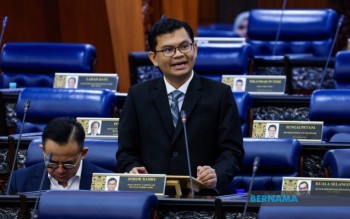
Malaysia's government is pursuing an ambitious economic stabilisation programme comprising 120 separate interventions designed to insulate the nation from the cascading effects of global supply chain breakdowns, according to remarks delivered to Parliament by Economy Minister Akmal Nasrullah Mohd Nasir on June 29. The scale of the initiative underscores the severity with which policymakers regard ongoing disruptions to international trade flows and demonstrates a comprehensive, multi-agency approach to shielding both consumers and the business sector from supply-related shocks.
The implementation status reveals varying degrees of progress across the government's action plan. Twenty-seven of the 120 decisions have already been fully realised, whilst the remaining 93 are currently in execution stages, indicating an ongoing deployment rather than a static response. This staggered rollout reflects the dynamic nature of supply chain problems, which continue to evolve as different sectors and supply routes experience different pressures. The minister's emphasis on active monitoring suggests that the government recognises the need for adaptive management as circumstances shift, rather than relying on predetermined solutions alone.
The breadth of the intervention strategy spans immediate relief measures targeting vulnerable populations alongside structural support for micro, small and medium enterprises—a demographic crucial to Malaysia's economic resilience. By directing attention to MSMEs, which typically lack the buffers of larger corporations and often serve as crucial nodes in broader supply networks, the government acknowledges that supply chain stability depends on supporting firms at every scale. The package also incorporates mechanisms designed to maintain consistent availability of essential goods, a concern that extends beyond economics into social stability and public confidence.
Central to the government's posture is an acknowledgement that global supply disruptions will not resolve quickly, a sober assessment that contrasts sharply with earlier optimism about rapid normalisation. Rather than adopting a wait-and-see approach that could prove costly if problems persist, Malaysian policymakers have committed to sustained intervention throughout the expected recovery period. This proactive stance signals that the government will not allow supply chain uncertainties to unnecessarily compound pressure on households and businesses, but rather will actively manage the transition period.
Longer-term projections offered by the minister suggest energy markets—a critical component of global supply chains—may gradually stabilise beginning in the third quarter of 2026, though this timeline remains contingent on geopolitical stability and the restoration of normal shipping routes. The conditional nature of these forecasts underscores how geopolitical risks and security concerns related to maritime trade remain significant wildcards in the recovery equation. For Malaysia, a nation highly dependent on seaborne commerce and vulnerable to disruptions in strategic waterways, this uncertainty carries particular significance. The minister cautioned that energy price volatility and supply uncertainty could exert market influence for a further one to two years, suggesting that near-term relief should not be anticipated.
The government's analytical framework appears grounded in data rather than wishful thinking, with officials emphasising structured, prudent monitoring through the National Economic Action Council and relevant agencies. This institutional emphasis suggests that decisions will be informed by real-time economic indicators and supply chain intelligence rather than political considerations alone. The commitment to transparent information sharing represents an attempt to anchor public expectations and business planning in reliable data, potentially reducing the anxiety and speculative behaviour that supply chain crises can trigger.
Managing public and business expectations has emerged as a critical component of crisis response, since perception of supply instability can become self-fulfilling as consumers hoard goods and firms stockpile inputs. By pledging to communicate clearly and accurately with all stakeholders, the government aims to sustain confidence in Malaysia's economic management whilst avoiding either complacency or panic. This balanced communication strategy reflects sophisticated crisis management that recognises psychological and informational dimensions alongside material interventions.
Acknowledging that prolonged supply disruptions carry genuine economic risks, the minister nevertheless emphasised that these risks are being managed through deliberate, methodical processes rather than ad-hoc responses. This framing attempts to reassure markets and business partners that whilst Malaysia faces real challenges, the authorities are equipped and organised to navigate them. The stress on risk management rather than risk denial represents a mature approach that maintains credibility by acknowledging reality whilst demonstrating competent stewardship.
The government's stated approach aspires to a delicate balance: remaining vigilant without succumbing to panic, maintaining realism without excessive defensiveness, and responding proactively to genuine challenges whilst preserving economic stability and public confidence. This multifaceted orientation suggests that policymakers recognise supply chain crises as contests not merely of logistics and finance, but also of institutional capacity and public trust. For Malaysia, maintaining this equilibrium whilst ensuring that intervention efforts genuinely reach vulnerable MSMEs and households will determine whether the 120-measure programme becomes a model for crisis response or a cautionary tale about ambitious planning exceeding execution capacity.

