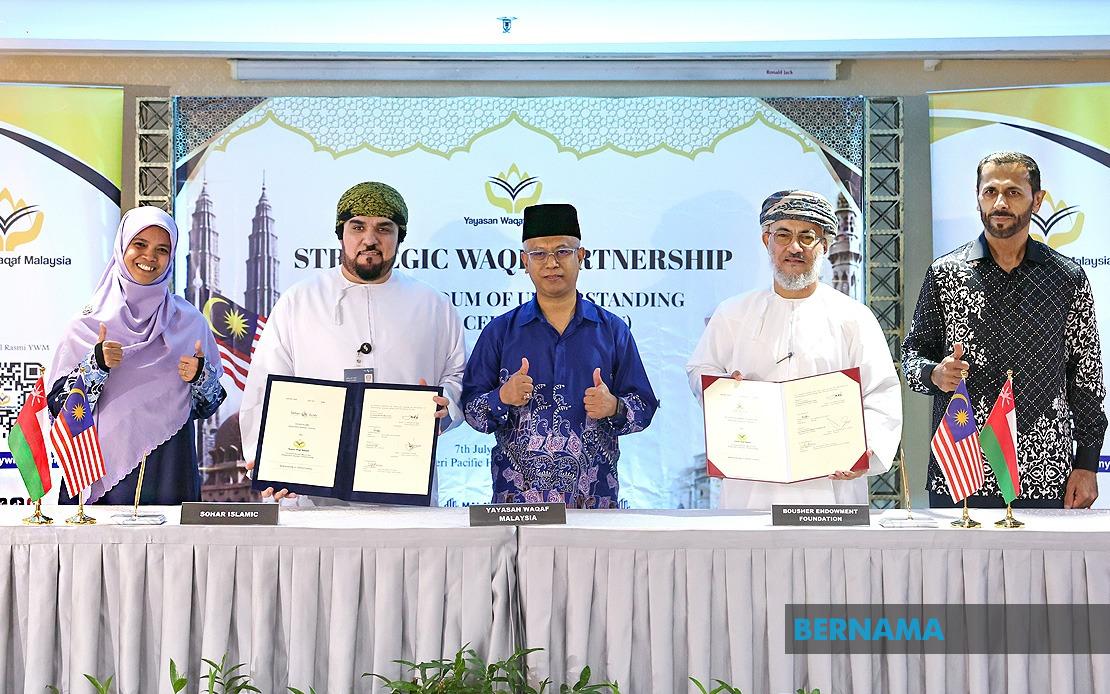
Malaysia has taken a significant step in projecting its expertise on the international stage by entering into a formal partnership with two major Omani financial institutions focused on waqf—Islamic endowments that serve as crucial pillars of social welfare and economic empowerment across Muslim communities. The collaboration marks a shift in how Malaysia positions itself globally, moving from importing foreign expertise to exporting homegrown knowledge in Islamic financial architecture.
The Malaysian Waqf Foundation has signed memoranda of understanding with Sohar Islamic and the Boushar Endowment Foundation, establishing frameworks for sustained cooperation in asset development, governance systems, and innovation within the waqf sector. These agreements transcend ceremonial bilateral relations; they represent concrete mechanisms for knowledge exchange, technology sharing, and the transfer of proven management methodologies that Malaysia has developed over years of building a sophisticated waqf infrastructure. The partnership emerged from deliberate outreach during 2023 and 2024, when Malaysian officials initiated exploratory missions to identify synergies with Gulf state institutions.
Deputy Minister Marhamah Rosli emphasized the diplomatic significance of this arrangement, noting that the relationship exemplifies international confidence in Malaysia's capacity to construct an integrated, adaptive, and results-oriented waqf ecosystem. Her comments highlight a crucial turning point in Malaysia's soft power within the Islamic world—the country has historically imported expertise from established financial centres, yet is now recognized as a source of specialized knowledge. This recognition carries particular weight given Malaysia's multi-ethnic, multi-faith context, where waqf institutions have developed sophisticated governance structures and investment vehicles that operate across diverse regulatory environments.
A particularly telling dimension of the partnership is the appointment of Malaysian Waqf Foundation chief executive officer Dr Ridzwan Bakar as a formal waqf adviser to the Omani institutions. This advisory role signals that the Gulf state views Malaysian practitioners as possessing insights applicable to its own development priorities. The appointment also provides concrete professional opportunities for Malaysian expertise holders while creating ongoing touchpoints for institutional learning between the two nations. Such advisory positions typically involve periodic consultation, training initiatives, and collaborative strategy development—mechanisms that deepen relationships beyond initial agreements.
The strategic expansion extends beyond Oman alone. The Malaysian Waqf Foundation is simultaneously cultivating connections with institutions in Kuwait, Qatar, and the United Arab Emirates, suggesting a deliberate regional engagement strategy. This multi-country approach indicates Malaysian officials are systematically building a network of relationships rather than pursuing isolated partnerships. The Gulf Cooperation Council states, with their substantial wealth and Islamic governance frameworks, represent natural partners for Malaysia's waqf expertise. Success in these relationships could position Malaysia as a consulting hub for waqf optimization across the Arab world, generating both professional prestige and economic returns through advisory services and institutional knowledge products.
A crucial dimension of this partnership lies in its investment implications. The Malaysian Waqf Foundation currently operates three investment products through Kenanga Investors, designed to channel capital into waqf-backed enterprises and development projects. These platforms create conduits through which Gulf investors can access Malaysian opportunities while strengthening the domestic waqf asset base. As waqf institutions in Oman and other Gulf states modernize their approaches based on Malaysian models, they may increasingly consider Malaysia as a viable investment destination. This represents an indirect but potentially substantial economic benefit—foreign capital inflows that support waqf-backed development projects, infrastructure, and social enterprises across Malaysia.
The functional approach to waqf development reflected in these partnerships emphasizes asset productivity before distribution. Rather than viewing waqf primarily as immediate charitable transfer mechanisms, the Malaysian model prioritizes building endowment portfolios that generate sustainable returns. These returns subsequently fund interventions targeting not only traditional asnaf categories but also broader lower-income segments including B40 and M40 household groups. This philosophy represents a departure from traditional waqf administration in some contexts, positioning the asset-building phase as foundational to expanded welfare impact. Oman's receptiveness to this model suggests appetite among Gulf states for reimagining endowment deployment as a tool for long-term economic strengthening rather than short-term charity distribution.
The broader context for this partnership involves Malaysia's strategic initiative to establish itself as a centre for Islamic finance innovation. Over the past two decades, Kuala Lumpur has developed regulatory frameworks, institutional infrastructure, and human capital that attract Islamic finance professionals and operations from across the Muslim world. Waqf expertise represents one component of this broader positioning. The International Islamic Financial Centre located in Malaysia has facilitated connections between domestic institutions and international partners. This new Oman partnership builds upon established institutional relationships and regulatory sophistication that distinguish Malaysia's Islamic finance sector.
The implications for Malaysia's diplomatic standing in the Islamic world warrant consideration. Economic partnerships in Islamic finance create durable relationships grounded in mutual benefit rather than aid dependency or political alignment alone. Oman, a sultanate maintaining diplomatic independence and positioning itself as a neutral actor in Gulf regional dynamics, has historically pursued partnerships based on substantive functional benefit. That this nation has chosen Malaysia as a knowledge partner in waqf development reflects genuine assessment of Malaysian capabilities rather than diplomatic courtesy.
Regionally, this arrangement may influence how Southeast Asian Islamic finance develops. Indonesia, as the world's largest Muslim-majority nation, maintains significant waqf institutions but has historically concentrated on domestic asset management. Thailand's growing Islamic finance sector could observe Malaysian-Oman collaboration as a model for international institution-building. Singapore's role as a financial hub may intersect with Malaysian waqf expertise as cross-border transactions increase. The partnership thus contains precedent-setting dimensions for how Southeast Asian Islamic finance engages with the broader Muslim world.
For Malaysian policymakers, the successful execution of this Oman partnership could justify increased investment in waqf institutional development and expertise cultivation. If Oman and other Gulf partners derive demonstrated value from Malaysian advisory services and investment products, this creates momentum for deepening commitments. The Malaysian government may subsequently allocate additional resources toward waqf capacity-building and innovation, knowing these investments generate international returns.
The partnership also illustrates how Malaysia's domestic development in Islamic social finance translates into international competitive advantage. The country's diverse population required developing waqf mechanisms that function across different community contexts and economic circumstances. This diversity, historically viewed as a domestic governance challenge, has become a source of institutional innovation that appeals to international partners seeking proven approaches. Oman can benefit from institutional designs already tested within Malaysia's multicommunal environment.
Looking forward, successful implementation of this partnership hinges on establishing clear mechanisms for ongoing collaboration, ensuring that initial enthusiasm translates into sustained institutional engagement. Joint working groups on specific waqf development challenges, regular training programmes for Omani practitioners, and coordinated investment initiatives will determine whether this partnership becomes a model for further Malaysian-Gulf cooperation or remains a symbolic arrangement. The appointment of Dr Ridzwan as waqf adviser creates accountability structures and ongoing engagement points that suggest seriousness of intent from both sides.

