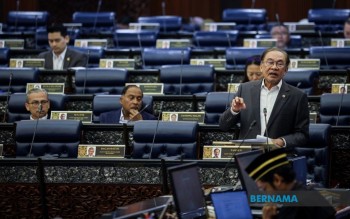
The Malaysian government has launched a landmark voluntary declaration scheme for e-invoicing that will run through December 31, 2027, offering businesses unprecedented relief from tax penalties during the correction and compliance period. Prime Minister Datuk Seri Anwar Ibrahim, speaking in Parliament on July 7, framed the initiative as part of broader efforts to reduce administrative costs facing Malaysia's micro, small and medium enterprises, which collectively form the backbone of the national economy and employment landscape.
The e-Invoice Voluntary Declaration Programme represents a significant departure from conventional revenue administration practice, particularly in income tax matters where penalty structures typically serve as enforcement mechanisms. Under this scheme, any amendments, clarifications or corrections that businesses submit willingly during the designated timeframe will not trigger punitive measures from the Inland Revenue Board of Malaysia (IRBM). This approach signals a policy shift toward incentivising voluntary compliance rather than relying solely on enforcement and deterrence, a principle that resonates with the MADANI administration's stated commitment to supporting entrepreneurship and economic resilience.
Anwar, who serves concurrently as Finance Minister, emphasised that such an accommodating regulatory posture is uncommon in the income tax context, underscoring the exceptional nature of the concession. The announcement came in response to parliamentary questioning from Lee Chuan How, the Member of Parliament for Ipoh Timor from the Pakatan Harapan coalition, who had raised concerns about government support mechanisms for the business sector during a period of economic uncertainty and geopolitical volatility affecting global trade patterns.
Beyond the penalty reprieve, the government has sanctioned an accelerated depreciation allowance specifically targeting e-Invoice implementation costs. Eligible businesses may now claim full capital allowances within a single financial year for expenditures incurred in deploying the e-invoicing system. This tax acceleration effectively front-loads deductions, reducing immediate tax liabilities and freeing up working capital during the critical implementation phase—a period when many MSMEs face simultaneous operational costs and technology investment demands. The measure acknowledges the financial strain that digitisation can impose on businesses operating on thin margins.
The timing of these announcements reflects government recognition of mounting compliance fatigue within the MSME sector. Earlier in December 2025, policymakers had already adjusted the e-Invoice exemption threshold upward, raising it from RM500,000 to RM1 million in annual turnover. This threshold revision directly benefited more than one million taxpayers, significantly reducing the number of small operators required to navigate the e-invoicing system immediately. The cumulative effect of these staggered policy adjustments—higher exemption thresholds, extended voluntary declaration windows, and accelerated capital allowances—reveals a deliberate strategy to manage the rollout of digital tax administration tools in a manner sensitive to business readiness and financial capacity.
For the broader Malaysian MSME ecosystem, which comprises approximately three million enterprises and accounts for a substantial portion of GDP and employment, these measures carry meaningful implications. Many operators still operate partially on legacy accounting systems and lack dedicated finance personnel, making regulatory transitions inherently challenging. The penalty-free correction window provides a buffer period during which businesses can audit their e-invoicing compliance, identify discrepancies, and rectify records without fear of prosecution or additional assessments—a significant reduction in compliance risk.
The e-invoicing framework itself forms part of Malaysia's digital economy modernisation agenda, aligning with regional trends across Southeast Asia where countries including Thailand, Indonesia and Singapore have progressively implemented similar systems. However, Malaysia's approach to implementation appears more measured and accommodative, potentially positioning the country as a business-friendly jurisdiction during the transition phase. This positioning matters for competitiveness, as enterprises comparing operating costs and regulatory environments often factor in the ease of compliance alongside statutory tax rates.
From a macroeconomic perspective, reducing MSME compliance costs directly supports consumption and investment, as businesses redirect resources from administrative overhead toward productive activities. The capital allowance acceleration additionally incentivises technology investment during a period when Malaysia seeks to enhance digital infrastructure across its productive base. These considerations align with the government's broader objective of sustaining economic growth amid external headwinds.
The voluntary declaration programme also addresses a perennial challenge in tax administration: the gap between formal regulatory requirements and practical capability, particularly in developing economies with heterogeneous business sophistication. By permitting penalty-free corrections through 2027, authorities signal flexibility without abandoning compliance standards, a balance that encourages honest disclosure rather than non-compliance rooted in fear of punitive consequences. This philosophical approach contrasts with more rigid enforcement paradigms and may ultimately yield stronger voluntary compliance rates.
Implementation details regarding the voluntary declaration scheme—such as procedures for submission, documentation requirements, and verification protocols—will likely be clarified through IRBM administrative guidance. The three-year window allows sufficient time for businesses to integrate e-invoicing into their operational routines while the accelerated allowance structure provides immediate financial incentive to undertake the necessary system investments and staff training. Together, these measures constitute a comprehensive effort to manage technological transition across Malaysia's diverse business sector.

