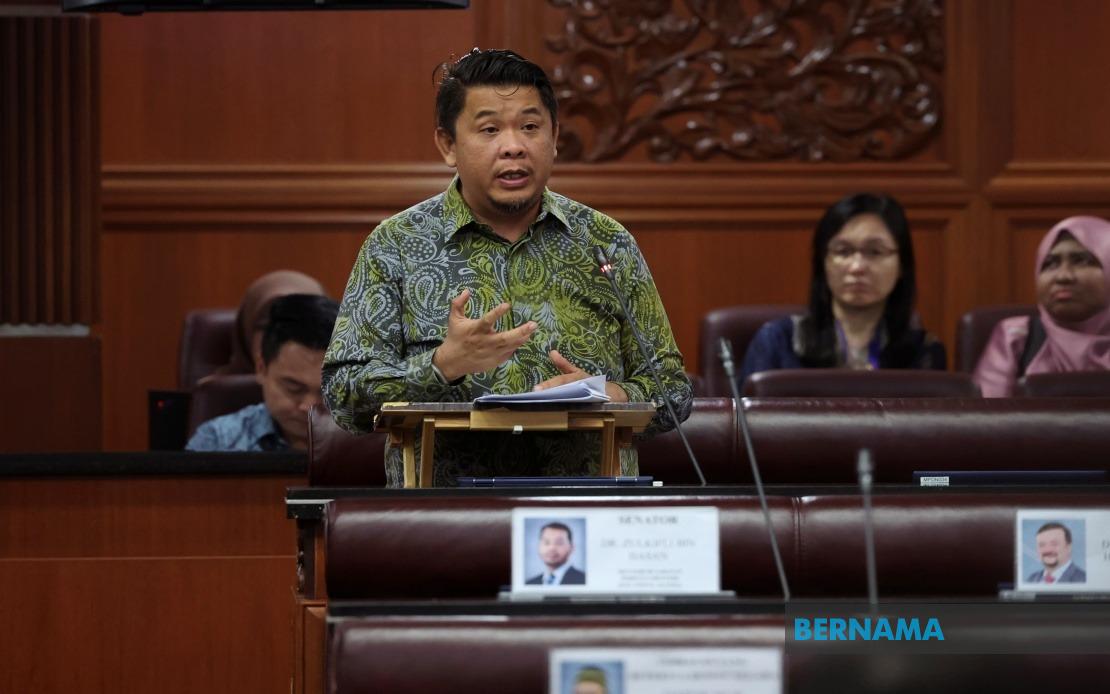
Malaysia's Cabinet has directed the United Nations High Commissioner for Refugees to suspend all refugee registration activities while the country establishes a new domestic registration framework. Deputy Foreign Minister Datuk Lukanisman Awang Sauni announced the decision on July 23, signalling a significant shift in how the government intends to manage its growing refugee population through the newly created Refugee Registration Document (DPP) programme.
The decision reflects mounting pressure on Malaysia's immigration infrastructure and social services as the country continues to host one of Southeast Asia's largest refugee populations without having signed the 1951 Refugee Convention. By halting UNHCR registrations, Kuala Lumpur aims to reduce its dependency on the international body's systems and instead consolidate refugee data under direct government oversight. Lukanisman emphasised that this restructuring would enable more efficient coordination between Malaysian authorities and enforcement agencies.
Under the proposed DPP system, refugee registration will proceed through rigorous verification procedures conducted jointly with immigration and law enforcement entities. The government hopes this approach will enable stricter screening to distinguish genuine asylum seekers from individuals attempting to enter the country illegally. The new framework represents an attempt to balance Malaysia's humanitarian obligations with domestic security concerns and resource constraints.
The timing of this announcement comes amid ongoing debates over the country's capacity to absorb additional displaced persons. Malaysia has expressed concern about the strain on local communities and public services, particularly in urban centres where refugee populations are concentrated. Officials have previously warned that continued high arrivals could exacerbate tensions with local residents and complicate integration efforts.
The suspension specifically addresses the situation of Rohingya refugees from Myanmar, many of whom lack identity documentation or any recognition from their home country. Senator Hussin Ismail had raised parliamentary questions about how Malaysia would manage stateless individuals without access to citizenship papers from Myanmar. Lukanisman's response indicated that the government is pursuing a comprehensive approach combining domestic registration mechanisms with multilateral diplomatic efforts.
Regionally, Malaysia is coordinating with ASEAN partners and Myanmar's authorities to address root causes of the refugee crisis. The government believes that strengthening diplomatic engagement with Myanmar and fellow ASEAN states offers a more sustainable path to resolving displacement than solely managing refugee arrivals through traditional humanitarian channels. This positions Malaysia's refugee policy within a broader regional security and political framework.
Simultaneously, the government is accelerating the repatriation of Myanmar nationals currently held in immigration detention facilities. Approximately 5,000 individuals detained at immigration depots are scheduled for return to Myanmar using naval vessels, contingent upon the Myanmar government's readiness to receive them. This parallel operation suggests that Kuala Lumpur intends to reduce its overall migrant detention population while implementing the new registration system.
The shift toward government-managed registration rather than UNHCR-coordinated processing marks a departure from Malaysia's historical reliance on international humanitarian organisations. While this offers authorities greater control over documentation and verification, it also creates administrative burdens that Malaysian agencies must shoulder independently. The government has not specified timelines for the DPP programme's implementation or detailed protocols for verifying eligibility.
For Malaysian citizens and communities hosting refugee populations, this development signals a tightening of immigration management. The emphasis on preventing irregular entry and verifying status more stringently may affect existing refugee communities awaiting documentation or those dependent on UNHCR services. Conversely, the government's stronger hand in registration could address public concerns about undocumented migrants within Malaysian territory.
The policy shift also reflects broader regional trends in Southeast Asia, where countries are increasingly asserting national sovereignty over refugee management rather than deferring to international frameworks. Thailand, Indonesia, and Bangladesh have similarly pursued domestic approaches to managing displaced populations, sometimes with mixed humanitarian outcomes. Malaysia's move suggests that burden-sharing among ASEAN states remains elusive, with individual nations prioritising domestic interests.
Looking ahead, the success of the DPP programme will depend on institutional capacity, resource allocation, and coordination between multiple government agencies. Experts have noted that Malaysia's immigration infrastructure has been stretched by rapid urbanisation and the scale of irregular migration. The transition from UNHCR-managed registrations to government-administered systems requires substantial technical and human resources that may not be immediately available.
The suspension also raises questions about interim protection for individuals currently applying for asylum recognition. UNHCR has historically provided temporary documentation and assistance to those in registration queues. The halt creates uncertainty for vulnerable populations waiting for status clarification. The government has not addressed how asylum seekers will receive interim protection or services during the transition period to the DPP system.
Ultimately, Malaysia's decision reflects a government determined to exert firmer control over refugee administration while questioning the sustainability of existing burdens. Whether the DPP system delivers on its promises of efficiency and security, or simply creates bureaucratic delays, will influence Malaysia's approach to humanitarian obligations in the coming years.

