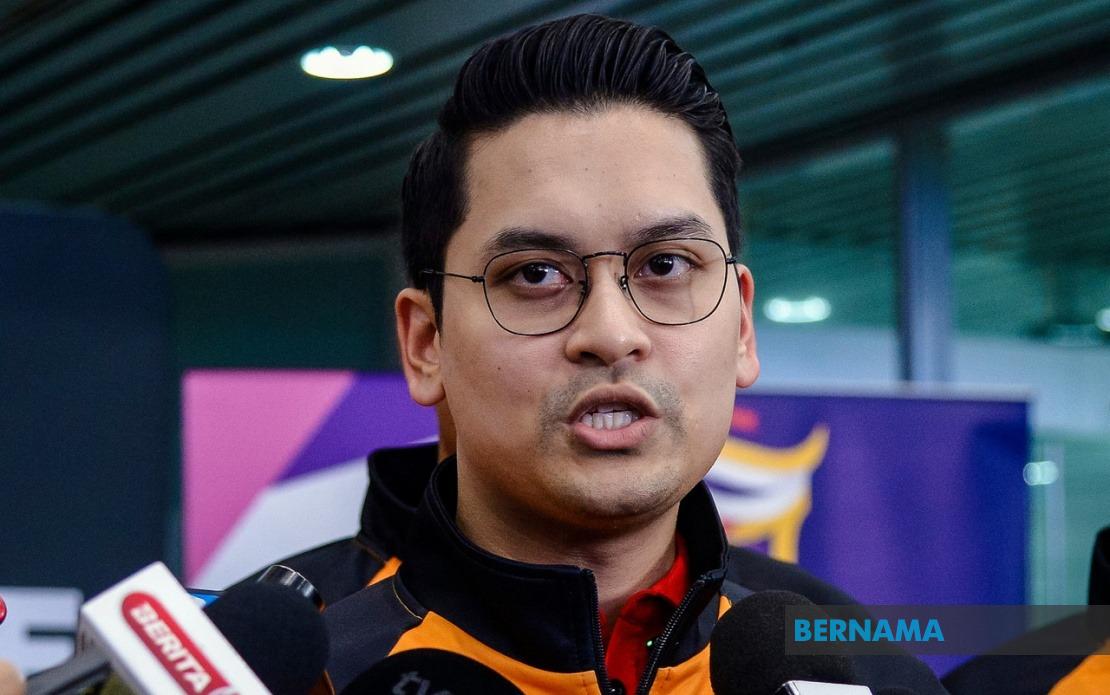
The Youth and Sports Ministry (KBS) has positioned weightlifting as a priority sports investment, announcing an allocation of RM4.1 million for 2026 development initiatives while signalling openness to supplementary funding. Minister Dr Mohammed Taufiq Johari revealed the ministry's commitment during remarks made at Kuala Lumpur International Airport following the return of Malaysia's Commonwealth Games delegation, emphasizing the sport's exceptional potential for future Olympic success.
The allocated funds are earmarked for a comprehensive ecosystem spanning athlete development, coaching infrastructure, and multiple talent pipeline programmes. These include the Road to Gold initiative designed to nurture elite prospects, the Podium programme targeting competitive athletes, the Pelapis scheme for intermediate-level competitors, and grassroots initiatives aimed at building a robust foundation from the ground up. This layered approach reflects a strategic recognition that sustainable success requires investment across all development stages rather than concentration at the elite level alone.
Weightlifting has emerged as a standout performer for Malaysia on the international stage, particularly at the recent Commonwealth Games where the sport delivered an impressive seven medals comprising five gold, one silver, and one bronze. This contribution represented a significant portion of Malaysia's overall medal tally of eight gold, three silver, and five bronze, underscoring weightlifting's outsized impact relative to the number of athletes competing. The sport's demonstrable capacity to produce medal-winning performances has reinforced government backing and elevated its status within the national sports strategy.
The Malaysia Weightlifting Federation's request for an additional RM1 million in annual funding has attracted ministerial consideration, with Dr Taufiq indicating willingness to engage substantively with the proposal. The federation, led by president Datuk Ayub Rahmat, has framed the supplementary funding as essential for addressing specific operational gaps, notably in coaching compensation and professional salaries. These elements are recognized as fundamental to retaining expertise and maintaining competitive coaching standards necessary for medal-level preparation.
Ministerial discussions with the federation are ongoing and emphasize the need for detailed examination before final budget decisions are finalized. Dr Taufiq stressed that the government's investment philosophy prioritises sports demonstrating genuine potential to secure Malaysia's maiden Olympic gold medal, a threshold that weightlifting increasingly satisfies given recent international performances. The cautious but receptive stance suggests the ministry views additional funding as potentially justified if detailed justifications align with broader sporting objectives.
The current athlete pipeline already encompasses nine competitors distributed across the strategic programmes. Two weightlifters are enrolled in the elite Road to Gold initiative representing the highest tier of support, eight athletes participate in the Podium programme indicating readiness for international competition, and two additional competitors are in the Pelapis development stage. This stratified distribution indicates the ministry has already invested in identifying and nurturing talent across multiple competitive levels, creating continuity and succession planning within the sport.
Beyond budget allocations, the ministry has committed to addressing the broader welfare ecosystem supporting weightlifting's development infrastructure. Dr Taufiq identified the compensation and working conditions of state-level coaches overseen by the National Sports Council as requiring immediate attention, acknowledging that coaching quality directly correlates with athlete performance and retention. This recognition extends the government's responsibility beyond athletes to encompass the technical and coaching personnel whose expertise underpins competitive outcomes.
The emphasis on coach welfare reflects an understanding that Malaysia's competitive capacity depends not merely on identifying talented lifters but on retaining experienced coaches capable of translating that potential into international success. State-level coaches operate across Malaysia's diverse geography, often with limited resources and recognition compared to their counterparts at national facilities. Addressing their compensation and conditions represents both an equity concern and a practical investment in the distributed coaching infrastructure necessary for competitive strength.
Weightlifting's trajectory within Malaysian sports policy illustrates a broader shift toward identifying and concentrating resources on sports with demonstrable international potential rather than distributing support thinly across numerous disciplines. The sport's combination of relative cost-efficiency, technical development pathways, and proven medal-winning capacity makes it an attractive investment compared to more resource-intensive sporting programmes. The seven Commonwealth Games medals validate this strategic choice and provide political justification for continued investment elevation.
The regional context further amplifies weightlifting's significance for Malaysia. Southeast Asia has emerged as a competitive weightlifting region with strong programmes across multiple countries, yet Malaysia has positioned itself as increasingly competitive at regional and international levels. The Commonwealth Games success demonstrates the sport can compete at major multi-sport events, positioning weightlifting as a potential source of Olympic medals and international prestige during the broader pursuit of hosting and performing at future Olympic Games.
Government commitment to weightlifting development also reflects recognition that Olympic success requires strategic foresight and sustained investment extending years beyond major competitions. The 2026 allocation and consideration of additional funding represent medium-term commitment rather than ad-hoc support. This continuity is essential for athletes in sports like weightlifting where technical mastery and physical development require years of consistent training and competition experience to reach peak international competitiveness.
The outcomes of ongoing discussions between the ministry and the Malaysia Weightlifting Federation will likely influence whether weightlifting receives the additional RM1 million annually or whether the current RM4.1 million allocation proves sufficient for maintaining competitive trajectory. Dr Taufiq's indication that detailed examinations will precede funding decisions suggests the ministry is exercising fiscal responsibility while remaining genuinely open to supporting a sport with proven potential for returning medals to Malaysia.

