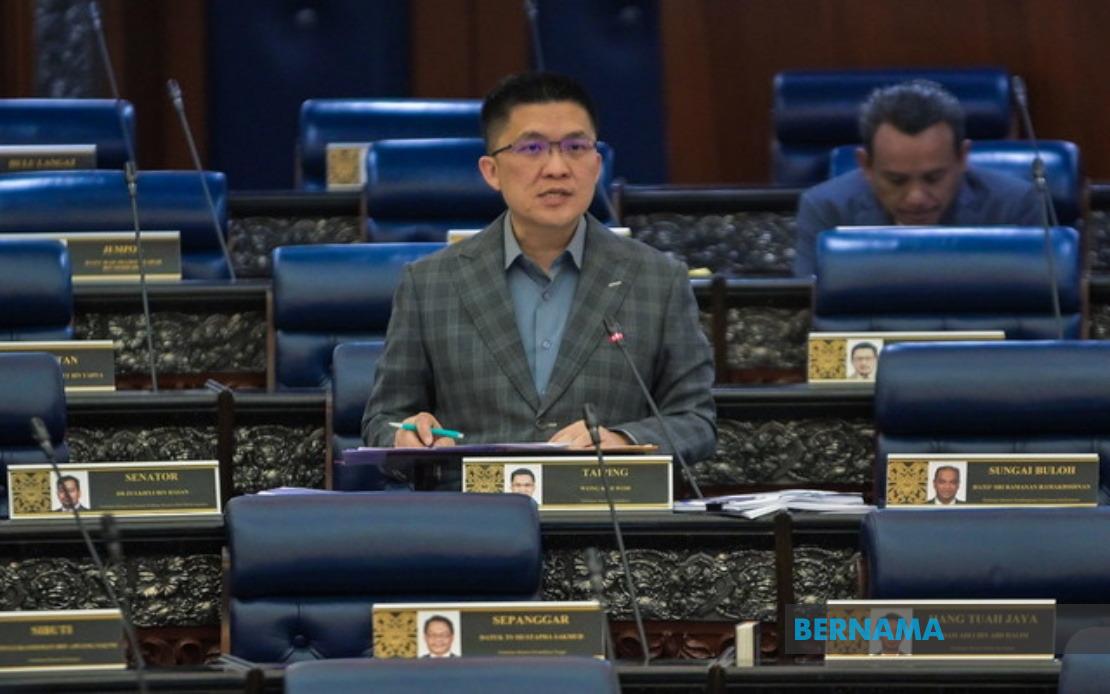
Malaysia's Education Ministry has committed RM4.6 billion to rehabilitating crumbling school infrastructure across Sabah during the four-year period from 2023 to 2026, underscoring the government's determination to address the educational estate backlog in the state. Deputy Education Minister Wong Kah Woh disclosed the allocation while responding to parliamentary questions about efforts to remedy the longstanding problem of deteriorating school facilities that continue to hamper the quality of learning environments for students in Sabah.
The RM4.6 billion investment represents a substantial portion of the broader RM6.6 billion directed towards school redevelopment projects nationally over a decade commencing in 2016. This concentration of resources reflects the acute infrastructure challenges confronting Sabah's education system, where many institutions have accumulated significant maintenance backlogs. The scale of commitment signals recognition that addressing dilapidated facilities is essential to ensuring equitable access to quality educational spaces across Malaysia's eastern corridor.
According to Wong, the portfolio of approved projects currently spans multiple development stages, ranging from pre-construction planning through active construction to completed installations. This staggered approach allows for systematic implementation while managing fiscal constraints and ensuring quality oversight. The ministry's characterisation of the dilapidated school inventory as dynamic reflects the reality that facility conditions continuously evolve as remedial works progress, making real-time assessment crucial for prioritising interventions where infrastructure deficiencies are most acute.
Beyond capital expenditure on infrastructure, the ministry has substantially elevated recurrent maintenance allocations for Sabah's educational institutions. The state received RM135.24 million for maintenance operations in 2024, a figure that expanded to RM196.14 million in 2025, comprising RM174.19 million directed specifically to school maintenance and RM21.95 million for non-school educational facilities. This ascending trajectory continued into 2026, with allocations reaching RM175.18 million by July, positioning Sabah as the recipient of the largest maintenance budget among all Malaysian states and regions. This preferential funding reflects policy priorities to address years of under-investment in facilities management.
The operational context reveals that Sabah faces particular challenges in maintaining aging infrastructure across dispersed geographic terrain. The elevation of maintenance funding represents tacit acknowledgment that preventive maintenance and timely repairs are more cost-effective than allowing structural deterioration requiring wholesale reconstruction. For Malaysian educators and parents in Sabah, these allocations translate into potential improvements in classroom functionality, safety standards, and learning conditions that directly impact educational outcomes.
Within the 13th Malaysia Plan framework, the ministry secured approval for 437 development initiatives across Sabah, subdivided between 31 newly sanctioned projects and 406 ongoing interventions. This combination of fresh initiatives and sustained commitment to existing projects indicates a structured approach to systematically addressing the infrastructure deficit. The emphasis on completing long-running projects while simultaneously launching new schemes reflects pragmatic portfolio management balancing the urgency of immediate needs against longer-term facility modernisation objectives.
Teacher deployment represents an equally critical dimension of educational quality in Sabah, where geographic remoteness and infrastructure limitations have historically complicated recruitment and retention. The ministry remains steadfast in implementing the 90:10 policy, designed to ensure that at least 90 percent of educators serving in Sabah are locally recruited personnel. As of June 2026, this initiative had achieved 89.72 percent compliance, demonstrating near-complete realisation of the localisation target. The overall teacher placement rate across all Sabah schools stood at 97.45 percent, indicating near-universal staff assignment despite vacancies.
Addressing persistent recruitment gaps, the ministry established a coordinated secretariat jointly operated by the Education Ministry and the Ministry of Higher Education in March 2025. This institutional mechanism accelerates the process of filling vacant positions through enhanced coordination between education and higher education portfolios. The synergistic approach recognises that deploying graduates through streamlined inter-ministerial procedures reduces delays that might otherwise leave classrooms under-staffed or require temporary assignments that disrupt instructional continuity.
A circular directive issued in May 2026 reinforced commitment to equitable teacher distribution by instructing State Education Departments to prioritise placing newly appointed educators in rural and remote school locations. This proactive targeting acknowledges geographic disparities in school accessibility and the particular disadvantage faced by students in outlying areas where teacher shortages have been endemic. By channelling fresh recruits to frontier schools, the policy aims to progressively remediate long-standing inequities in human resource allocation that have disadvantaged rural communities throughout the state.
For Malaysian stakeholders monitoring educational development in Sabah, these coordinated investments in facilities and human resources signal a comprehensive strategy moving beyond piecemeal responses to structural deficiencies. The integration of capital redevelopment, maintenance augmentation, and targeted teacher deployment reflects policy sophistication recognising that quality education requires simultaneous attention to physical infrastructure and instructional capacity. The magnitude of financial commitment, combined with institutional mechanisms designed to accelerate implementation, suggests determination to substantially upgrade Sabah's educational ecosystem during the remaining tenure of the current government framework.
The implications extend beyond Sabah to regional competitiveness within Southeast Asia. As Malaysia seeks to position itself as an education hub attracting international recognition, addressing infrastructure deficits in peripheral states becomes strategically important. Students learning in deteriorating facilities unavoidably experience educational disadvantage relative to peers in well-maintained institutions, potentially widening achievement gaps that manifest in subsequent workforce preparedness and economic productivity. Investment in Sabah's school infrastructure thus serves both equity imperatives and broader national development objectives.

