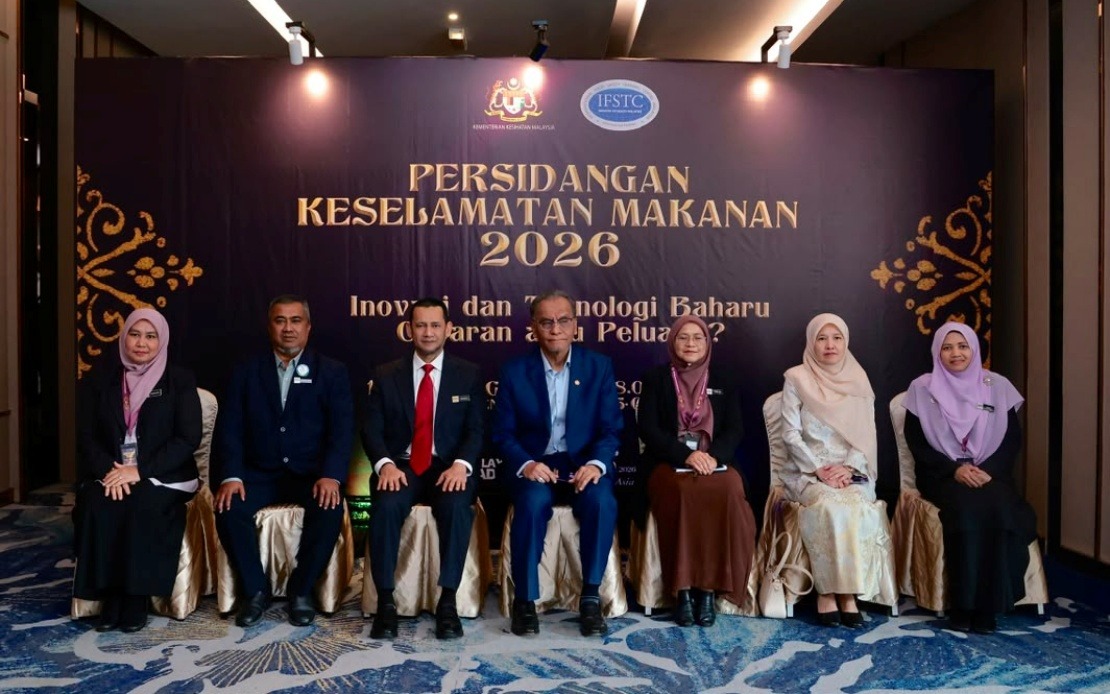
Malaysia has taken a significant step in regional food safety collaboration by formally joining the Asia-Pacific Food Regulatory Authority Summit (APFRAS), marking a strategic commitment to protecting public health amid unprecedented growth in the country's reliance on imported foodstuffs. Health Minister Datuk Seri Dr Dzulkefly Ahmad announced the development at a membership signing ceremony held in Putrajaya during the opening of the 2026 Food Safety Conference, underscoring the move as a critical response to evolving challenges within Malaysia's food supply ecosystem.
The Cabinet had approved Malaysia's membership in APFRAS during its June 12 meeting, paving the way for the country to assume a leadership position in shaping food safety standards across the Asia-Pacific region. This multilateral engagement represents more than a symbolic gesture; it positions Malaysia as what Dr Dzulkefly described as a "Smart Gatekeeper" capable of influencing how the region approaches the complex intersection of food security, regulatory innovation, and technological advancement.
The urgency behind this regional alliance becomes apparent when examining Malaysia's food import trajectory. Over the past decade, from 2013 to 2023, Malaysia's food imports have surged dramatically from RM42.6 billion to RM78.9 billion—an 85 per cent increase that fundamentally reshapes the country's food security landscape. This exponential growth means that the typical Malaysian household now depends on food products that have traversed lengthy, intricate global supply chains involving multiple countries, each with potentially different regulatory standards and food safety protocols.
The complexity introduced by these extended supply chains creates genuine vulnerability. Food products entering Malaysia's borders pass through numerous checkpoints and handling environments before reaching consumers, multiplying the potential points where contamination or quality degradation might occur. Traditional inspection methods, relying primarily on manual processes and periodic sampling, struggle to provide the comprehensive oversight necessary for managing such vast quantities of incoming food products. The regulatory challenge is not merely one of scale but of coordinating oversight across jurisdictions with divergent standards and enforcement mechanisms.
Through APFRAS membership, Malaysia positions itself to participate in harmonising food safety regulations across the region, creating more coherent standards that reduce confusion and facilitate smoother trade flows while maintaining stringent safety requirements. Dr Dzulkefly highlighted the government's intention to use this platform to lead digital transformation initiatives in food safety governance, moving away from legacy systems towards technology-enabled monitoring. This represents a modernisation imperative that extends beyond Malaysia's borders, acknowledging that regional standardisation and technological cooperation produce greater protection than isolated national efforts.
The Health Ministry is actively exploring deployment of artificial intelligence and predictive analytics technologies to enhance how Malaysia monitors and controls food safety at entry points. These tools can process vastly larger datasets than human inspectors, identifying patterns and potential risks with greater speed and accuracy. AI systems can flag anomalies in shipment documentation, temperature records, supplier histories, and chemical composition data, allowing regulatory officers to direct physical inspections towards higher-risk consignments. This risk-based approach maximises the effectiveness of limited inspection resources.
Regulatory harmonisation through APFRAS extends beyond safety monitoring to encompassing emerging policy areas where Malaysia intends to play a leadership role. The government has signalled its commitment to regulating biodegradable packaging materials, recognising that environmental sustainability and food safety represent interconnected rather than competing priorities. As consumers and governments worldwide push for reduced plastic consumption, the food industry is rapidly adopting alternative packaging materials, yet their safety implications for food preservation and contamination prevention remain incompletely understood. Malaysia's willingness to pioneer regulatory frameworks for these innovations positions the nation as a thoughtful adopter of new technologies rather than a passive recipient of external standards.
The harmonisation of legislative frameworks for new food innovations represents another dimension where Malaysia seeks regional influence. The global food industry continuously develops novel products and processing methods—from plant-based proteins to precision fermentation techniques to molecular farming—that fall into regulatory grey areas. Coordinated APFRAS action can establish clear approval pathways and safety assessment criteria that encourage innovation whilst protecting consumers. Without such frameworks, manufacturers face a fragmented landscape where products approved in some countries face indefinite regulatory limbo elsewhere.
Dr Dzulkefly positioned Malaysia's APFRAS participation as directly supporting both the National Food Safety Policy and the National Food Security Policy, indicating that the government views import management and domestic production support as complementary strategies. Strengthening oversight of imports reduces risks to consumers whilst potentially creating market confidence that encourages domestic producers. When international buyers and local consumers trust Malaysia's food safety systems, both imported and locally-produced food gain competitive advantages in quality-conscious markets.
The 2026 Food Safety Conference itself, bringing together over 300 participants to examine food safety challenges and technological solutions, reflects growing recognition that food safety governance requires multidisciplinary collaboration. Policymakers, industry representatives, scientists, and enforcement officials must maintain ongoing dialogue about emerging risks and best practices. The conference theme—"New Innovations and Technologies – Challenges or Opportunities?"—captures the fundamental tension regulators face: technological change creates both new vulnerabilities and new tools for addressing them.
Malaysia's increased reliance on imported food reflects both globalisation and comparative advantage, with the country importing substantial quantities of grains, oils, and proteins where other nations possess greater production capacity. Rather than attempting the economically irrational goal of complete food self-sufficiency, Malaysian policy increasingly emphasises intelligent risk management of import dependency. APFRAS membership provides institutional infrastructure for that management strategy, allowing Malaysia to shape regional standards rather than merely adapting to standards developed elsewhere.
For Malaysian consumers and the food industry, APFRAS membership signals that the government takes seriously the task of safeguarding food security amidst rising import volumes. The initiative demonstrates recognition that modern food safety demands sophisticated technological infrastructure, continuous regulatory adaptation, and regional cooperation. As Malaysia navigates the coming years of continued globalisation and supply chain complexity, participation in forums like APFRAS may prove as essential to public health as the inspection systems and enforcement mechanisms of previous decades.

