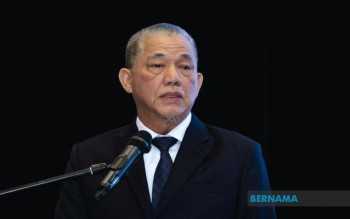
Malaysia is preparing to repurpose retiring coal-fired power plant sites into renewable energy hubs and battery energy storage facilities through a proposed National Coal Site Repurposing Framework, according to Deputy Prime Minister Datuk Seri Fadillah Yusof. The announcement, made during the World Economic Forum's Malaysia's Energy Future conference in Kuala Lumpur, signals a strategic pivot in how the country manages its transition away from thermal generation. Rather than allowing valuable infrastructure to become economically redundant, the government intends to unlock new opportunities for clean energy development and industrial growth on existing coal plant locations.
Fadillah, who also serves as Energy Transition and Water Transformation Minister, emphasised that retiring coal stations represent far more than aging generators. The sites embody substantial national assets in the form of established transmission networks, industrial facilities, and strategically positioned land holdings that have accumulated value over decades of operation. This existing infrastructure base provides a significant competitive advantage when developing alternative energy systems, potentially reducing both construction timelines and capital outlays for new renewable facilities. The framework therefore reflects a pragmatic approach to stranded asset management, converting potential liabilities into economic catalysts.
The repurposing strategy aligns with findings from a World Economic Forum insight paper titled "Beyond Coal: Building a Flexible, Resilient and Clean Power System for Malaysia." This document provides the conceptual foundation for the proposed framework and outlines pathways for continued collaboration among government agencies, regulatory bodies, utility operators, private investors and affected communities. By establishing a structured engagement mechanism, the framework aims to ensure that coal site conversion proceeds with stakeholder buy-in and addresses legitimate concerns about employment, regional development and energy security throughout Malaysia's power sector transformation.
From an economic development standpoint, Fadillah articulated that each decommissioned power station creates opportunities to establish new industries, magnetise capital investments and equip workers with skills suited to emerging clean energy sectors. This framing rejects narratives portraying coal retirement as purely extractive—a loss of jobs and regional vitality—and instead positions the transition as generative, capable of spawning fresh economic ecosystems around battery manufacturing, solar integration, grid modernisation and related services. For coal-dependent communities, particularly those centred around Collie-style operations or mining towns, such reorientation could cushion the socioeconomic shocks typically accompanying industrial restructuring.
Malaysia's stated energy commitments provide important context for this initiative. The government has committed to ceasing new coal-fired power plant construction, phasing out coal-dependent electricity generation by 2044, and achieving 70 percent renewable energy installed capacity by 2050. These targets represent substantial shifts in Malaysia's generation mix, requiring careful orchestration of retirement schedules, investment deployment and grid modernisation. The coal site repurposing framework functions as an enabling mechanism within this broader decarbonisation roadmap, ensuring that infrastructure transitions support rather than undermine the nation's climate commitments.
Critically, Fadillah warned against a strategic pitfall common in energy transitions: simply replacing coal dependence with equivalent reliance on imported liquefied natural gas. This risk emerges when renewable deployment lags coal retirement schedules, creating capacity gaps that utilities fill with LNG imports. Such substitution perpetuates Malaysia's vulnerability to global fuel price volatility and exposes the country to geopolitical uncertainties surrounding energy supply chains. A genuine transition, he argued, must reduce overall import dependence rather than shifting it between fossil fuel types. This insight reflects growing recognition across Southeast Asia that energy security demands diversification away from imported hydrocarbons entirely, not merely between different categories of imported fuels.
To operationalise this vision, the Energy Transition and Water Transformation Ministry is prioritising several complementary initiatives. Large-scale solar deployment expansion, the Corporate Renewable Energy Supply Scheme enabling business participation in renewable generation, battery energy storage system development and smart grid modernisation represent the core pillars of Malaysia's near-term transition strategy. These programmes create integrated pathways for deploying renewable capacity at scale while addressing intermittency challenges that have historically complicated high-penetration renewable systems. Smart grid technology proves particularly crucial, enabling utilities to balance variable solar and wind generation while maintaining system stability and reliability.
Beyond domestic measures, Fadillah reaffirmed Malaysia's commitment to regional energy architecture development through the ASEAN Power Grid initiative and cross-border electricity trading arrangements. These mechanisms allow Southeast Asian nations to pool renewable resources, balance generation across different climate zones and weather patterns, and achieve economies of scale in clean energy infrastructure investment. For Malaysia specifically, integration with regional grids expands the effective capacity and reliability of domestic renewable systems whilst diversifying energy sources beyond purely national assets. This regional cooperation approach recognises that energy security in Southeast Asia increasingly depends on interconnected systems rather than isolated national grids.
Addressing longer-term decarbonisation challenges, the Deputy Prime Minister indicated Malaysia would continue investigating advanced nuclear technologies and small modular reactors as potential low-carbon baseload options. This exploration reflects pragmatic acknowledgement that renewables alone may insufficient to meet electricity demand growth whilst simultaneously displacing coal and fossil gas. However, Fadillah emphasised that nuclear deployment remains contingent upon establishing robust safety frameworks, effective regulatory governance, technical preparedness and sustained public confidence. Malaysia's consideration of nuclear energy signals maturation in energy transition thinking, moving beyond simplistic renewable-only scenarios toward technology-neutral decarbonisation strategies grounded in realistic system engineering and political feasibility.
The coal site repurposing framework ultimately reflects Malaysia's strategic recognition that successful energy transitions require managing not only generation mix changes but also the spatial, economic and social dimensions of industrial restructuring. By converting coal plant sites into renewable energy hubs, the government attempts to preserve regional economic value, maintain workforce continuity through reskilling programmes and ensure that decarbonisation strengthens rather than destabilises coal-dependent communities. This comprehensive approach distinguishes Malaysia's transition strategy from purely technological framings and positions the coal site initiative as a cornerstone of just, inclusive decarbonisation across Southeast Asia's largest coal consumer.

