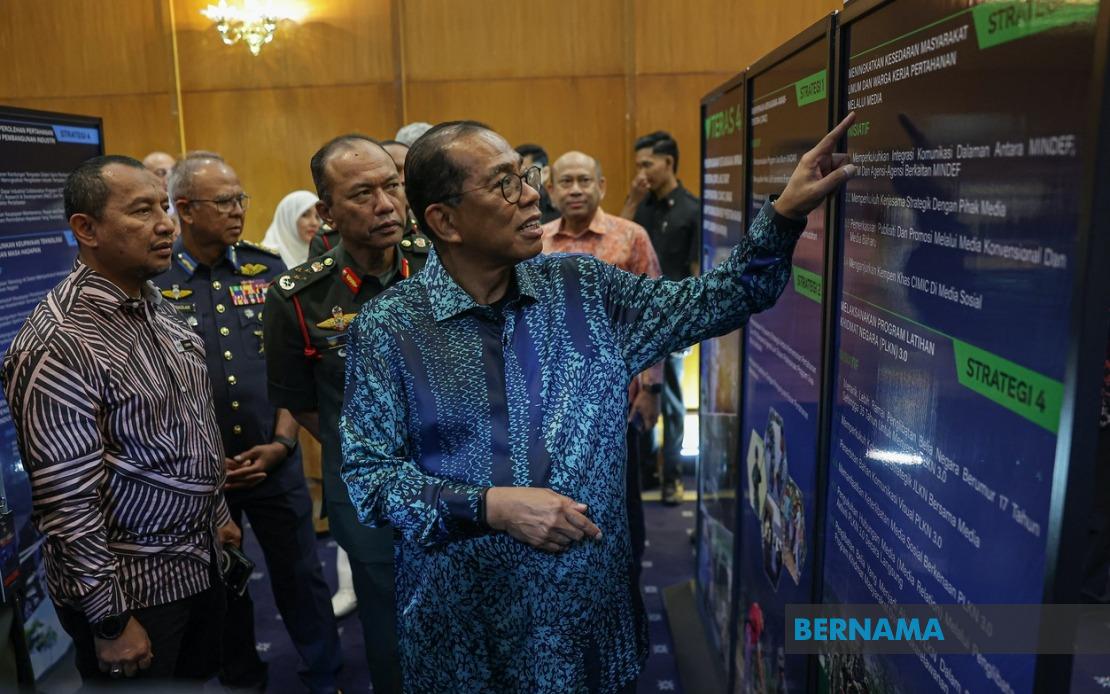
Malaysia's Defence Ministry has unveiled a comprehensive two-part strategic framework designed to navigate an increasingly complex and unpredictable security environment. Defence Minister Datuk Seri Mohamed Khaled Nordin launched both the National Defence Strategic Plan (PSPN) and the Defence Capacity Blueprint (RTKP) 2026-2030 in Kuala Lumpur, positioning these documents as essential complements to the existing Defence White Paper. The dual approach reflects recognition that having clear strategic direction means little without the institutional and material capacity to execute it—a lesson Malaysia appears to have learned from earlier defence planning cycles.
The geopolitical backdrop driving this initiative is sobering. The minister highlighted escalating global tensions, technological disruption through artificial intelligence and automation, and an expanding array of non-traditional security threats ranging from cyber-attacks to environmental degradation and transnational crime. Malaysia, positioned at the crossroads of vital sea lanes and surrounded by complex regional dynamics, faces particular vulnerability to these multi-faceted challenges. The Mid-Term Review of the Defence White Paper exposed gaps in previous planning assumptions, prompting the ministry to construct a more agile framework capable of responding to contingencies that were difficult to predict when the original white paper was drafted.
The PSPN itself rests upon seven strategic pillars that collectively address Malaysia's defence ecosystem holistically. These pillars span the operational readiness of the Malaysian Armed Forces, systematic enhancement of defence capabilities, personnel welfare and veteran support, and critically, defence technology and innovation. This last pillar signals an important shift toward self-reliance and indigenous capability development rather than exclusive dependence on foreign procurement. By emphasising technological advancement and research, the framework acknowledges that future defence advantage will accrue to nations capable of rapid innovation cycles and adaptation rather than static force structures.
What distinguishes the RTKP from conventional capacity-building exercises is its explicit recognition that strategy without resources remains merely aspiration. The blueprint systematically addresses the foundational enablers required to translate the PSPN into operational reality. Financial resources naturally top this list—defence modernisation requires sustained budget allocation, a politically sensitive issue in Malaysia where competing demands for healthcare, education, and infrastructure constantly vie for government spending. Beyond money, the framework identifies human capital as equally critical, acknowledging that advanced military systems are only as effective as the personnel operating them. This includes recruitment pipelines, training infrastructure, and retention mechanisms.
Technological expertise constitutes another pillar of capacity-building that carries particular significance for Malaysia. The region faces rising competition for advanced defence technology and restricted access to certain systems due to international arms control regimes. By deliberately prioritising indigenous technological capability and research capacity, Malaysia signals intent to reduce dependence on external suppliers for critical systems while building long-term industrial self-sufficiency. Inter-agency coordination across government ministries and with private sector partners represents the final capacity dimension, recognising that modern security challenges—whether cybersecurity, maritime domain awareness, or humanitarian assistance—cannot be addressed by the defence ministry in isolation.
Minister Mohamed Khaled articulated the relationship between strategy and capacity through an accessible metaphor: if the PSPN determines the destination, the RTKP ensures possession of the vehicle to reach it. This framing underscores that the two documents form an integrated package rather than separate initiatives. The capacity blueprint encompasses not merely procurement budgets but the institutional infrastructure—leadership development, professional competency standards, research ecosystems, and coordination mechanisms—that transform resource allocation into sustained capability improvement. This systems-level thinking represents a maturation in Malaysian defence planning compared to earlier approaches sometimes characterised by ad-hoc acquisitions.
The ministry's assertion that defence constitutes a whole-of-government and whole-of-society responsibility reflects international best practice while acknowledging Malaysian realities. Defence cannot succeed if industry fails to provide logistics support, if universities do not generate relevant research, if civil society remains disconnected from security awareness, or if other government agencies operate in isolation from defence priorities. This broader conceptualisation is particularly relevant for Malaysia given the non-military dimensions of contemporary security threats and the interconnections between defence requirements and national economic vitality.
Concrete procurement announcements accompanying the strategy announcement demonstrate that planning is translating into action. Malaysia has already received three ANKA Medium Altitude Long Endurance Unmanned Aircraft Systems in March, now operational at Labuan Air Base. These systems represent critical modernisation of airborne surveillance and reconnaissance capabilities, particularly valuable for maritime domain awareness across Malaysia's vast territorial waters. The unmanned platform approach also offers cost advantages and reduces pilot fatigue compared to conventional aircraft for extended patrol missions typical in Southeast Asian operating environments.
Additional equipment procurements scheduled through 2030 strengthen multiple defence dimensions simultaneously. The FA-50M light combat aircraft programme addresses air defence and ground support requirements while maintaining interoperability with allied air forces. Maritime patrol aircraft procurement directly addresses Malaysia's vulnerability to illicit activities in its coastal zones and exclusive economic zone, including illegal fishing, piracy, and smuggling. Littoral Mission Ships represent another capability gap filler, providing Malaysia with platforms optimised for operations in shallow waters and constrained straits typical of the Straits of Malacca and surrounding regions where much of Malaysia's maritime security challenges concentrate.
The timing of this strategic framework carries regional significance beyond Malaysia's borders. Southeast Asia faces mounting security pressures from major power competition, maritime disputes, and transnational threats. Malaysia's explicit commitment to defence modernisation and capacity building, pursued through transparent strategic planning rather than opaque arms accumulation, sets an example for regional stability and reassures smaller neighbours. Simultaneously, Malaysia's emphasis on technology indigenous development and inter-agency coordination rather than arms race escalation signals a preference for sustainable security approaches aligned with ASEAN principles.
Looking ahead, the PSPN and RTKP face critical implementation challenges. Defence modernisation programmes frequently encounter cost overruns, technological delays, and shifting threat assessments that render assumptions obsolete. Malaysia must establish robust monitoring mechanisms and regular review cycles to ensure the strategy remains relevant throughout the 2026-2030 period and beyond. Budget discipline will prove essential; defence spending must grow sufficiently to fund planned capabilities without creating fiscal strain that undermines broader economic stability. Personnel retention in competitive labour markets represents another practical challenge, particularly for technical and professional military specialties where civilian employment opportunities often offer superior remuneration.
The strategic framework also requires political durability transcending election cycles and ministerial transitions. Defence planning horizons extend beyond typical political terms, necessitating cross-party consensus and institutional commitment to long-term programmes. Malaysia's experience suggests this remains achievable but requires deliberate cultivation of bipartisan support and communication with opposition parliamentarians involved in defence oversight. Finally, the success of a whole-of-government approach depends fundamentally on coordination mechanisms that prevent bureaucratic silos and ensure defence priorities receive appropriate weight in related policy decisions affecting technology development, industrial policy, and human resource investment.

