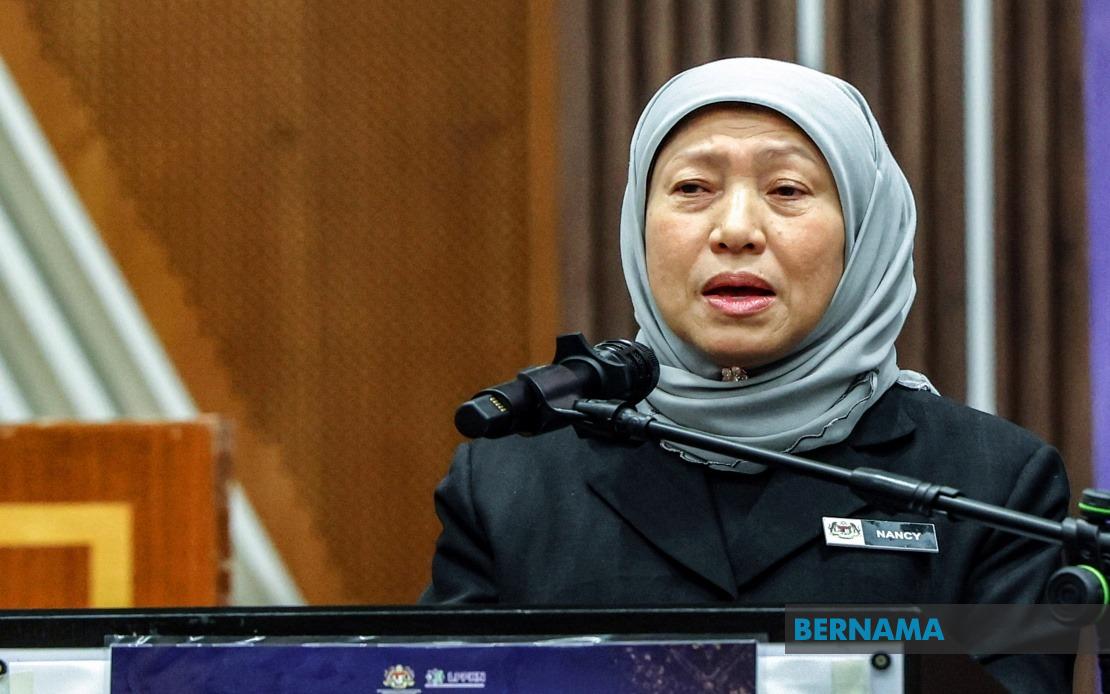
The Ministry of Women, Family and Community Development (KPWKM) is set to commence an ambitious 18-month research initiative this month designed to examine and advance men's empowerment across Malaysia. The National Gentleman Study, championed by Minister Datuk Seri Nancy Shukri, represents a significant pivot in how the government approaches gender-focused social policy, moving beyond traditional frameworks to encompass the broader challenges confronting Malaysian men in contemporary society.
At the heart of this initiative lies a reconceptualized understanding of male empowerment that transcends conventional notions of economic participation and leadership roles. Rather, the government now recognizes that meaningful men's empowerment must incorporate dimensions of emotional resilience, psychological well-being, personal maturity and the capacity to discharge family and civic responsibilities with integrity. This holistic approach acknowledges that men face increasingly multifaceted social pressures and psychological strains that require targeted policy intervention and programmatic support.
Central to the study's philosophical foundation is the principle of gender respect and mutual partnership. Minister Shukri articulated a vision of masculinity rooted not in dominance or authority but in wisdom, shared responsibility and recognition of women as co-equal contributors to family stability and societal advancement. This reframing challenges traditional patriarchal models whilst positioning men's empowerment as complementary to—rather than competitive with—broader gender equality objectives. The approach underscores that genuine male development strengthens rather than undermines gender equity within Malaysian families and communities.
The empirical case for this national study is compelling and sobering. Malaysia's male suicide rate stands at nearly three times the female rate, signalling a profound public health crisis that has received insufficient policy attention. The 2023 National Health and Morbidity Survey documented that 4.6 per cent of Malaysians aged 16 and above live with diagnosed depression, a figure that likely masks higher rates of undiagnosed or untreated mental health conditions among men who may resist seeking psychological support due to stigma or cultural expectations surrounding masculinity.
Economic pressures constitute another critical dimension driving the empowerment agenda. Household debt in Malaysia has reached 84.3 per cent of gross domestic product according to Bank Negara Malaysia, creating sustained financial strain that destabilizes family relationships and compromises men's capacity to fulfil traditional provider roles. This economic vulnerability intersects dangerously with other stressors, amplifying psychological distress and precipitating family breakdown. The 2024 divorce statistics reveal a 4.1 per cent increase to 60,457 cases, with financial hardship, inability to meet maintenance obligations and sustained domestic tensions identified as principal contributing factors.
The connection between male distress and domestic violence represents perhaps the most urgent concern underlying this research initiative. Royal Malaysia Police data from 2025 indicates that 95 per cent of recorded domestic violence perpetrators are men, a statistic that demands careful contextual analysis. Rather than attributing violence solely to individual pathology or inherent male aggression, the study framework implicitly recognizes that violence often emerges from the intersection of economic desperation, mental health crisis, insufficient emotional coping mechanisms and lack of constructive support systems—all conditions potentially addressable through comprehensive empowerment programmes.
The Men's Empowerment Consultative Forum, convened to launch this research process, represents a strategic commitment to stakeholder engagement through the Public-Private-People Partnership (4P) approach. This methodology ensures that findings will incorporate diverse perspectives from government agencies, private sector organizations, civil society groups and affected communities. By creating space for multiple voices to contribute insights on male challenges and viable solutions, the process itself models collaborative rather than hierarchical approaches to problem-solving.
For Southeast Asian observers, Malaysia's initiative offers important lessons about expanding gender policy frameworks. Historically, gender-focused programmes across the region have concentrated on women's empowerment, often implicitly treating men's issues as peripheral to development agendas. Malaysia's explicit acknowledgment that men face distinct and serious challenges—whilst maintaining commitment to gender equality and women's advancement—demonstrates that comprehensive gender development actually requires attending carefully to how contemporary pressures shape masculine identity and male vulnerability. This inclusive approach may influence policy direction across ASEAN member states grappling with similar demographic and social trends.
The study's findings and recommendations will subsequently inform Malaysian policymaking and programme development architecture. Potential outputs could include mental health interventions specifically designed for male audiences, family support services addressing economic stress, skills development initiatives promoting financial literacy and responsibility, and community engagement strategies normalizing male help-seeking behaviour. Additionally, the research may generate insights applicable to workplace wellness programmes, educational curricula and health system design.
For Malaysian families navigating contemporary pressures, this study signals governmental recognition that male well-being constitutes a legitimate and important policy concern. Rather than framing men's issues as oppositional to gender equality, the KPWKM framework positions comprehensive male development as integral to stable, healthy families and social cohesion. The study's emphasis on emotional resilience and shared responsibility offers alternative models of masculinity that may resonate particularly with younger Malaysian men seeking identities unburdened by impossible traditional expectations.
The timing of this initiative reflects broader regional and global trends toward recognizing men's mental health as a public health priority. Countries including Australia, Canada and Scandinavian nations have pioneered men-focused empowerment research and programming, generating evidence about effective interventions. Malaysia's study will contribute crucial regional data whilst potentially establishing frameworks adaptable across diverse cultural contexts within Southeast Asia.
As the 18-month research unfolds, success will ultimately depend on whether findings translate into concrete, funded programmes capable of reaching Malaysian men across socioeconomic strata and geographic regions. The study must move beyond documentation of problems to generate actionable recommendations that social workers, community leaders, health providers and educators can implement. Equally important, programme development must avoid replicating traditional patriarchal frameworks whilst genuinely addressing the legitimate psychological, economic and relational challenges confronting contemporary Malaysian men.

