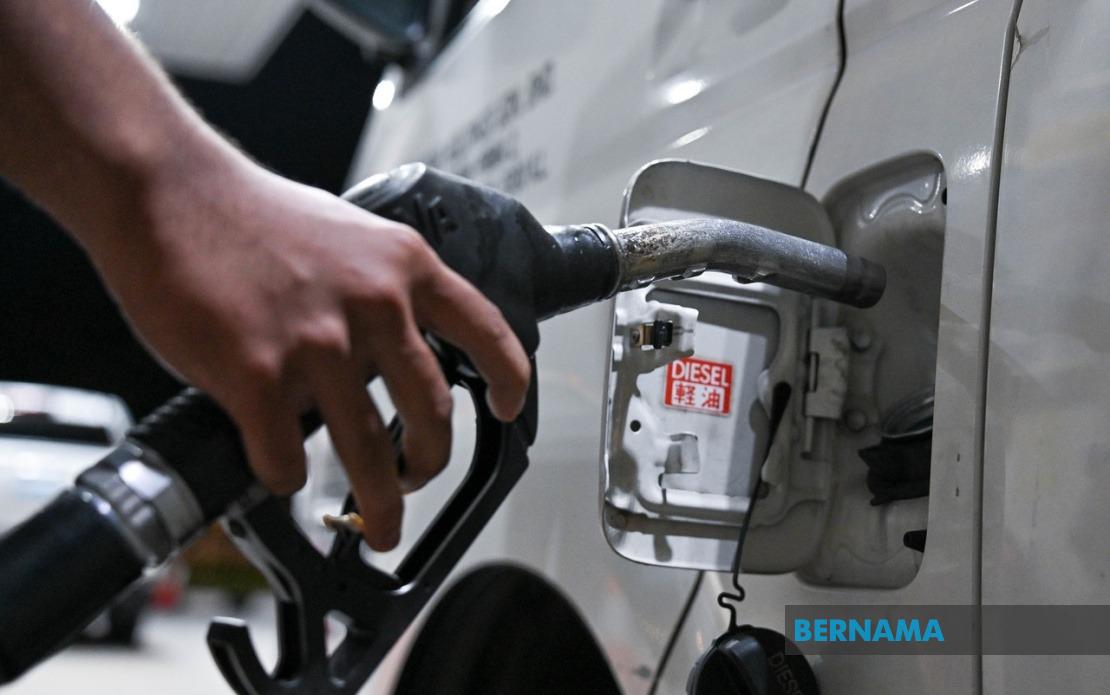
The Ministry of Domestic Trade and Cost of Living has dismantled longstanding restrictions on diesel purchases across the three eastern regions, marking a significant shift in how the government manages fuel subsidies in areas that have historically faced supply challenges. Effective July 1, the cancellation of the Directive on Implementing Control of Diesel Sales to Land Transport Vehicles will eliminate the tiered purchase caps of 50 liters, 100 liters, and 150 liters that have constrained commercial transport operators for more than a year. The move represents the latest evolution in Prime Minister Datuk Seri Anwar Ibrahim's approach to fuel subsidy administration, which has undergone repeated recalibration as the government seeks to balance fiscal sustainability with the needs of transport operators and rural communities.
According to Datuk Azman Adam, the KPDN's Director-General of Enforcement, the removal of these purchase restrictions directly follows the Prime Minister's June 21 announcement establishing a unified subsidised diesel price of RM2.10 per litre nationwide under the BUDI Diesel Programme. This standardisation resolves longstanding regional disparities that had created confusion among retailers and sparked occasional shortages in Sabah and Sarawak, where transport costs significantly impact the broader economy. The original directive, issued in March 2026, was intended as a temporary measure to prevent cross-border smuggling and ensure equitable access to subsidised fuel, but enforcement complications and complaints from legitimate operators eventually convinced policymakers that a different approach was necessary.
The transition to a new purchasing mechanism represents the operational centrepiece of this reform. Beginning July 1, eligible consumers will authenticate diesel purchases using their MyKad at fuel stations, replacing the previous paper-based permit system that required drivers to qualify through their respective transport associations. This digital verification approach mirrors broader government efforts to streamline subsidy distribution and reduce administrative overhead. The MyKad system allows the government to track purchasing patterns in real time, flagging anomalies that suggest resale activity or attempts to circumvent eligibility criteria. For the transport sector, the shift promises faster transactions at pumps, eliminating the bureaucratic friction that previously delayed fuelling operations.
The regional dimension of this policy change carries particular importance for Southeast Asia's third-largest economy. Sabah and Sarawak, which together account for approximately 27 per cent of Malaysia's landmass but house only about 13 per cent of its population, have historically experienced logistical disadvantages in receiving fuel subsidies allocated by the federal government. Land transport in these states relies disproportionately on diesel-powered vehicles, given the sparse road networks and distances between towns. Commercial haulage operators, agricultural transport providers, and public bus services have consistently cited fuel costs as their primary operational constraint. By removing volumetric caps, the government implicitly acknowledges that previous restrictions were impeding legitimate economic activity rather than preventing leakage.
Retail fuel station operators in the three jurisdictions now face fresh compliance obligations centred on the MyKad authentication system. The KPDN has directed all holders of retail scheduled controlled goods licenses to ensure their point-of-sale systems integrate with the national digital identity framework. While the ministry expressed confidence that the new mechanism would function smoothly, industry observers anticipate a transition period during which technical glitches could create sporadic disruptions. Petrol retailers have previously flagged concerns about system reliability, particularly in remote areas of Sabah and Sarawak where internet connectivity remains inconsistent. The KPDN's statement urged stakeholders to cooperate fully, implying that implementation challenges would not excuse regulatory non-compliance.
The policy shift also reflects evolving government thinking about subsidy targeting and fraud prevention. Rather than restricting the quantity an individual can purchase, the revised approach allows unlimited purchases by verified users while relying on digital auditing to detect suspicious patterns. Analysts suggest this represents greater faith in technological solutions and reduced confidence in the viability of volume-based rationing. The previous system, which categorised vehicles into three tiers based on usage classification, generated persistent grievances about boundary cases and incentivised strategic vehicle registration to access higher purchase limits. A MyKad-linked system, provided it functions reliably, offers greater transparency and reduces opportunities for gaming the rules.
From a fiscal perspective, the standardised RM2.10 per litre price carries significant budget implications. Before standardisation, Sabah and Sarawak received slightly higher subsidies to account for higher distribution costs, reflecting the greater distances and transportation challenges involved in serving these markets. The unified pricing structure may actually represent a cost reduction for the federal government in those states, though this depends on the baseline from which prices were previously set. The government has not publicly disclosed the annual fiscal cost of the standardised BUDI Diesel Programme, but transport industry associations estimate that removing quantity restrictions could increase subsidy outlays if previous caps were artificially suppressing demand among eligible users.
The timing of these changes coincides with mounting fiscal pressures on Malaysia's budget. The government has been attempting to narrow its fiscal deficit while maintaining popular support, a balancing act that increasingly influences subsidy policy. Fuel subsidies, which represent one of the largest recurring expenditure items, have become a focal point for reform efforts. By moving toward a more efficiently targeted system, the government aims to reduce leakage while maintaining support for core constituencies including commercial transport operators who have political influence. The MyKad mechanism provides data that could support future refinements to eligibility criteria, offering policymakers a tool for gradual recalibration without sudden price shocks.
Regional observers note that Malaysia's approach to fuel subsidy reform differs markedly from neighbouring Indonesia, which has periodically attempted broad fuel price liberalisation with mixed results. Malaysia's incremental strategy, adjusting mechanisms rather than withdrawing subsidies outright, has proven more politically palatable. The decision to remove quantity restrictions while maintaining price subsidies represents a middle path that acknowledges fiscal constraints without abandoning transport operators entirely. However, this approach requires constant administrative attention and technical investment to prevent circumvention and ensure the digital systems function as intended.
The international context also matters for Malaysia's fuel policy trajectory. Global crude oil prices, which have stabilised around $80-90 per barrel in recent months, provide the government with a relatively manageable subsidy burden compared to the volatility experienced between 2022 and 2024. This breathing room has allowed policymakers to undertake structural reforms rather than merely reacting to price shocks. The MyKad-based system represents the kind of institutional investment that the government would struggle to afford during periods of elevated global energy prices when subsidy costs demand immediate cost-cutting.
Looking forward, the efficacy of this reform will depend heavily on technical execution and stakeholder compliance. Fuel retailers must invest in system upgrades, drivers must familiarise themselves with the new authentication process, and the KPDN must maintain consistent enforcement. Early implementation problems could trigger demands to revert to simpler, albeit less efficient, systems. The government's confidence in the new mechanism will be tested during the first months of operation, particularly during peak travel periods when pump volumes surge. Success would vindicate the government's preference for technology-enabled targeting over blunt quantity restrictions, establishing a template for reforms across other subsidy programmes including cooking oil, sugar, and flour.

