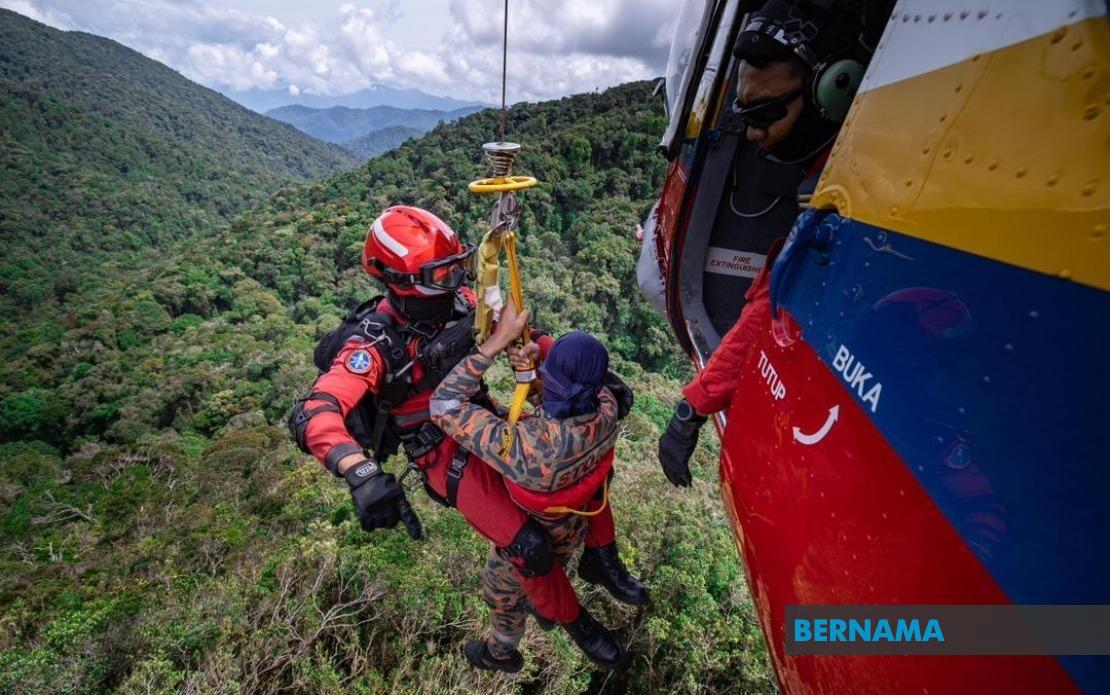
Malaysia has recorded 1,059 accidents related to hiking activities nationwide over the past five years, resulting in 63 deaths and 87 injuries, according to figures presented to Parliament by Deputy Minister of Natural Resources and Environmental Sustainability Syed Ibrahim Syed Noh. The alarming statistics, drawn from data compiled by the Fire and Rescue Department of Malaysia, underscore the growing safety risks accompanying the surge in outdoor recreational activities across the country's forests and mountainous terrain.
The rising accident toll reflects a broader challenge facing Malaysian authorities as recreational hiking has become increasingly popular among both domestic and international visitors. The concentration of incidents across the nation's extensive network of hiking trails has prompted comprehensive policy responses aimed at preventing future tragedies while maintaining access to these natural attractions. Syed Ibrahim emphasised during his parliamentary address that these figures necessitate a fundamental reassessment of how hiking activities are regulated and monitored across the country's diverse geography.
In response to the documented dangers, the Peninsular Malaysia Forestry Department has developed the Mountain Risk Assessment and Management Guideline, known as MoGRAM, in partnership with the United Nations Development Programme. This technical framework establishes standardised protocols for identifying hazards on hiking trails and determining safe carrying capacity—the maximum number of hikers a trail can accommodate without compromising safety or environmental integrity. The guideline represents a significant shift toward evidence-based management of recreational activities in Permanent Reserved Forests, moving beyond ad-hoc approaches that previously characterised trail oversight.
A cornerstone of the enhanced safety regime involves the deployment of certified Forestry Mountain Guides across high-risk terrain. The government has made it mandatory to engage these trained professionals in 189 designated high-risk hiking areas throughout Peninsular Malaysia. These guides, who receive certification through a dedicated skills development programme, serve multiple critical functions including direct hiker supervision, coordinating emergency response procedures, and enforcing established hiking safety protocols. To date, the programme has certified 2,322 individuals, many drawn from local and indigenous communities, creating employment opportunities while simultaneously strengthening safety infrastructure.
The geographic distribution of certified guides reflects deliberate targeting of Malaysia's most perilous hiking destinations. By concentrating resources on high-risk areas, the government acknowledges that not all trails present equivalent dangers; topography, weather patterns, remoteness from emergency services, and trail condition variations create distinct risk profiles across different locations. The integration of local and indigenous guides carries particular significance, as their intimate knowledge of terrain, weather patterns, and survival techniques in specific regions enhances their effectiveness in emergency situations and demonstrates recognition of traditional environmental expertise.
Beyond human resources, the government is developing a sophisticated technological infrastructure to manage hiking activities more systematically. The ministry is collaborating with the Malaysian Space Agency to create a hiking trail management system leveraging geospatial technology, geographic information systems, and remote sensing capabilities. This integrated platform would enable comprehensive mapping and continuous monitoring of hiking trails, centralised access to trail information, and substantially improved search and rescue coordination through precise spatial analysis. The technology represents a marked advancement from current registration systems, which operate through disparate state-level mechanisms combining manual record-keeping and fragmented online platforms.
The fragmented nature of current registration arrangements, rooted in Malaysia's federal structure where states retain jurisdiction over forest management and permit issuance, has created significant coordination challenges. Different state forestry departments maintain separate registration systems with varying standards and data compatibility, complicating efforts to track hikers across state boundaries and slowing emergency response when incidents occur in remote areas. The ministry has identified establishment of a unified national digital hiking registration log as essential infrastructure for systematising safety monitoring. Such a system would create comprehensive records of hiker movements, accelerate identification and location of missing persons during emergencies, and enable coordinated search and rescue operations across jurisdictional boundaries.
The proposed digital registration framework addresses a fundamental vulnerability in current emergency response protocols. When hikers disappear in remote terrain, rescue teams currently struggle with incomplete information about their intended routes, expected return times, or actual hiking parties composition. A centralised system would provide search and rescue coordinators with real-time visibility into hiker movements, enabling faster deployment of resources to likely locations and more efficient allocation of personnel and equipment during time-critical operations. For Malaysia's mountainous regions, where weather can deteriorate rapidly and injuries in remote locations become life-threatening within hours, such efficiency gains carry enormous life-or-death implications.
Beyond structural and technological reforms, the government emphasises continuous professional development for guides and nature guides operating in recreational forest areas. Regular training programmes address hiking safety protocols, comprehensive risk management techniques, wilderness first aid, survival skills applicable to Malaysia's diverse ecosystems, and advanced search and rescue methodologies. This investment in human capital reflects understanding that even the most sophisticated technology and detailed guidelines require skilled practitioners capable of exercising judgment in dynamic, unpredictable field conditions. The welfare and morale of guides remains a government priority, recognising that these frontline professionals bear significant responsibility and emotional burden when accidents occur.
The multifaceted approach outlined by Syed Ibrahim—combining risk assessment frameworks, certified guides, technological infrastructure, and continuous training—reflects growing recognition that hiking safety cannot be addressed through isolated interventions. Rather, sustainable safety improvements require coordinated action across multiple dimensions including regulatory frameworks, human resources, technology, and institutional coordination. For Malaysia, where natural attractions drive both tourism revenue and domestic recreation, balancing accessibility with safety represents an ongoing challenge requiring sustained commitment and resource allocation.
The statistics presented to Parliament should prompt reflection among Malaysia's hiking community about individual responsibilities. While authorities work to strengthen systemic safety measures, hikers themselves must exercise appropriate caution, provide accurate registration information, adhere to trail closures and warnings, and carry necessary safety equipment. The 1,059 accidents documented since 2021 represent not merely statistical abstractions but profound human tragedies—families bereaved, survivors traumatised, rescue personnel exposed to dangerous operations. As hiking's popularity continues expanding, whether improvements in official safety infrastructure will sufficiently reduce accident rates remains an open question dependent partly on how seriously the public embraces enhanced precautions.