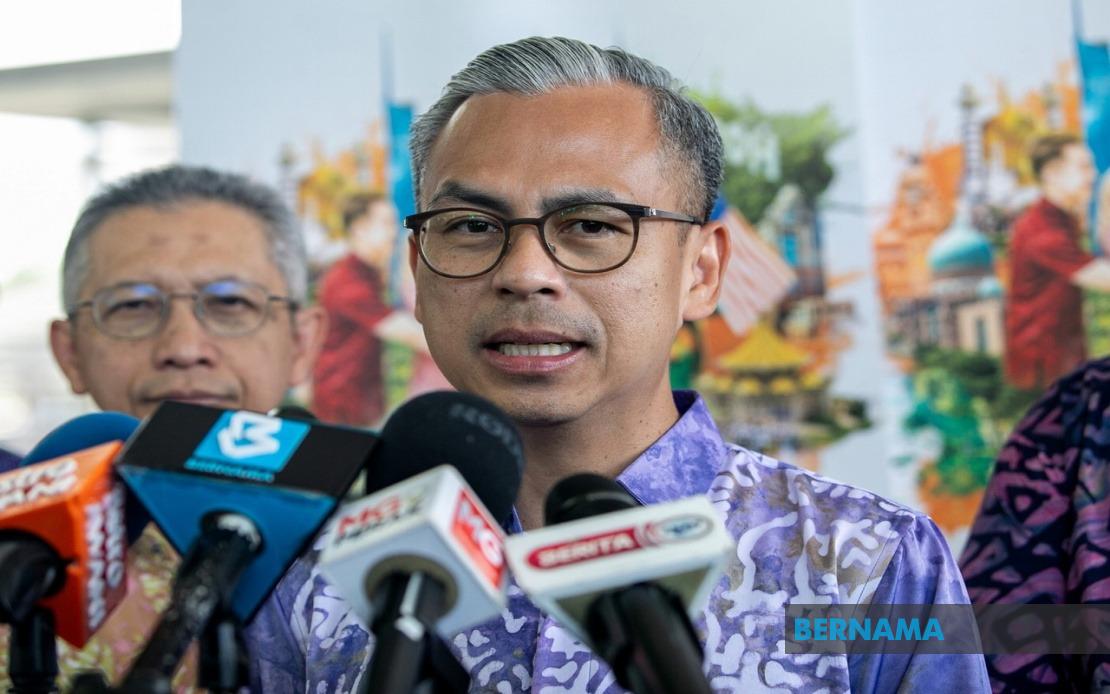
The government has unveiled its overarching vision for the 2026 National Day and Malaysia Day celebrations, centring the campaign on inclusive prosperity and collective advancement. Communications Minister Datuk Seri Fahmi Fadzil announced the theme 'Malaysia MADANI: Kesejahteraan Dinikmati' at the launch of the 2026 National Month campaign at the Sultan Azlan Shah Ministry of Health Training Institute in Tanjung Rambutan, Ipoh, with Prime Minister Datuk Seri Anwar Ibrahim officiating proceedings. The chosen messaging reflects a deliberate policy direction from the MADANI administration, signalling its intention to position national development as fundamentally inclusive and distributive in nature.
Fahmi articulated a governing philosophy that extends well beyond conventional economic metrics. Rather than narrowing shared prosperity to gross domestic product growth or aggregate wealth creation, the minister framed the concept as encompassing meaningful improvements in living standards, expanded access to opportunity structures, and fair allocation of development benefits across the Malaysian population. This rhetorical positioning carries significance for how the government justifies its policy trajectory and communicates development outcomes to diverse constituencies, each with distinct expectations regarding their stake in national progress.
The minister's emphasis on inclusivity cuts across traditional demographic divides. By explicitly referencing race, religion, geographical location, and socioeconomic background, Fahmi articulated a principle of non-discrimination in development gains, effectively positioning the MADANI government's approach as fundamentally different from models that concentrate prosperity in particular communities or regions. This framing addresses longstanding grievances in Malaysian political discourse about unequal distribution of development benefits and regional disparities in infrastructure and economic opportunity.
The principle of ensuring no citizen is left behind represents a notable commitment given Malaysia's complex social fabric. The nation's multiethnic and multireligious composition has historically required careful navigation of competing interests and aspirations. By invoking this principle explicitly within the national day campaign, the government signals its intention to address perceptions of marginalisation that have periodically emerged among various communities, from rural populations to urban working classes.
Fahmi situated Malaysia's diversity as both historical legacy and contemporary asset. Rather than treating pluralism as a governance challenge requiring management, the minister presented it as a foundational strength, characterising unity, mutual respect and harmony as natural outcomes of shared cultural inheritance. This framing positions diversity as integral to Malaysian identity rather than incidental to it, with preservation and celebration of this diversity positioned as a national duty incumbent on all citizens.
The broader context for these pronouncements includes Malaysia's positioning within international affairs. The minister linked preservation of domestic unity to the nation's international standing and respect, creating a connection between internal cohesion and external influence. This linkage reflects awareness that fragmented or divisive societies face diminished capacity to project power or shape regional outcomes, making internal unity a strategic imperative beyond its intrinsic value.
The government has organised multiple activations around the national day theme designed to translate abstract principles into tangible community engagement. The 'One House, One Jalur Gemilang' campaign and the Kembara Merdeka Jalur Gemilang convoy programme represent grassroots mobilisation strategies intended to distribute patriotic messaging and national unity concepts throughout the population. These initiatives suggest recognition that top-down rhetorical commitment requires corresponding grassroots reinforcement to achieve genuine embedding within public consciousness.
Implementation of the campaign theme will be coordinated through digital infrastructure, with the Merdeka 360 portal and Information Department social media channels serving as primary information repositories. This multi-channel approach reflects contemporary communication strategies that blend traditional institutional channels with digital platforms, acknowledging the diverse media consumption habits across Malaysian demographics.
National Unity Minister Datuk Aaron Ago Dagang and Perak Menteri Besar Datuk Seri Saarani Mohamad's attendance underscores whole-of-government commitment to the campaign. The involvement of state-level leadership, particularly from Perak as the host state, demonstrates alignment between federal and state administrations on development messaging and national identity framing, important given Malaysia's federal structure and periodic tension between levels of governance.
The 2026 celebrations represent the first major national day campaign under the fully-realised MADANI governance framework, providing opportunity to assess how effectively the administration's stated principles translate into programmatic reality. The emphasis on shared prosperity and inclusive development will likely become a benchmarking standard against which government performance is measured by both supporters and critics across the political spectrum.
For Southeast Asian observers, Malaysia's national day framing carries broader regional significance. As the region navigates questions of inequality, regional development disparities, and social cohesion amid rapid economic change, Malaysia's explicit commitment to equitable prosperity distribution offers a model for consideration. The effectiveness with which this vision translates into concrete outcomes will inform regional conversations about inclusive development approaches.
The campaign also signals the MADANI government's strategic priority on national unity messaging as a central pillar of governance legitimacy. In a political environment where previous administrations faced criticism regarding distributional equity and communal relations, positioning shared prosperity as core to governmental identity suggests deliberate effort to distinguish the current administration's approach and build political capital through commitment to a more inclusive development model.

