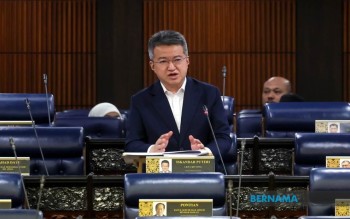
Malaysia's government has signalled stability in its fiscal planning despite mounting pressures from elevated global oil prices and geopolitical tensions in West Asia. Deputy Finance Minister Liew Chin Tong told Parliament on July 15 that current economic conditions do not warrant revisions to the budget framework being prepared for 2027, even as the nation grapples with substantially higher subsidy outlays. The assurance reflects official confidence in the government's ability to navigate near-term fiscal challenges through revenue gains and cost-management initiatives, though the final numbers will only be unveiled when Budget 2027 is formally presented in October.
The spike in global crude prices has created a complex fiscal equation for Kuala Lumpur. Higher petroleum costs have forced the government to increase subsidy expenditure by approximately RM40 billion, a significant burden that would normally trigger urgent budget reappraisal. Yet Liew emphasised that crude oil price movements carry a silver lining: for every US$1 increase per barrel in world prices, Malaysia's petroleum-related revenues climb by roughly RM300 million. This mechanical relationship between higher input costs and improved government receipts partly offsets the subsidy pressure, provided oil prices remain elevated. The dynamic underscores Malaysia's continued dependence on hydrocarbon revenues at a time when global energy markets remain volatile and unpredictable.
Liew's comments were delivered in response to a parliamentary query from Mohd Syahir Che Sulaiman, an opposition lawmaker representing Bachok, who had raised concerns about the fiscal framework's resilience. The legislator specifically questioned whether intensifying Middle Eastern instability and resulting fuel subsidies might force new taxation measures or compromise the government's medium-term fiscal deficit reduction targets. The question reflected broader anxiety within Malaysia's political establishment about whether the current budget framework could withstand sustained external shocks without compromising fiscal credibility or social stability through spending cuts or revenue increases.
The government's response hinges on several interlocking strategies that officials are deploying to maintain fiscal discipline. Beyond relying on petroleum revenue offsets, Liew flagged the importance of targeted subsidy restructuring—a euphemism for efforts to redirect assistance toward lower-income households rather than providing universal support. Such restructuring, if implemented effectively, can reduce overall subsidy bills without triggering widespread political backlash among poorer constituencies. The approach also encompasses broader expenditure prioritisation, with officials seeking to trim spending in less critical areas while preserving allocations for essential services and infrastructure investment.
Crucial to the government's confidence is an intensive revenue monitoring and collection apparatus now in place. Officials are conducting weekly engagement sessions through the National Economic Action Council's crisis management task force, demonstrating heightened vigilance over both spending patterns and income streams. This operational intensity suggests the administration recognises the fragility of its fiscal position and the need for real-time adjustments rather than relying solely on pre-set budget targets. The weekly monitoring mechanism also signals coordination between the finance ministry, central bank, and other economic agencies to ensure swift policy responses if conditions deteriorate rapidly.
Liew's assurances about maintaining fiscal consolidation carry particular weight given Malaysia's history of budget deficits and mounting public debt. The nation has pursued a medium-term consolidation trajectory aimed at gradually reducing the fiscal deficit relative to gross domestic product. This gradual approach offers flexibility during shock periods but also demands credible execution to maintain investor confidence and borrowing costs. Any perception that external pressures are forcing Manila to abandon consolidation plans could trigger market jitters, potentially raising interest rates on government debt and complicating future borrowing needs.
The geopolitical dimension adds another layer of complexity to Malaysia's fiscal calculus. The West Asia conflict has created sustained uncertainty around energy supply chains, pricing, and broader economic disruptions. Unlike purely domestic fiscal challenges that governments can address through policy levers, external geopolitical shocks impose constraints that transcend national borders. By maintaining its fiscal projections despite these headwinds, the government is essentially signalling that it views current oil price and supply disruptions as manageable within existing frameworks rather than as triggers for fundamental recalibration. This positioning reflects either genuine confidence in stabilisation or a deliberate choice to avoid alarming markets and investors through narrative shifts.
For Malaysian economic observers and regional investors, the stability message carries implications beyond budget mechanics. ASEAN economies broadly share exposure to energy price volatility and Middle Eastern instability, yet responses vary. Malaysia's insistence on maintaining projections without evident strain contrasts with more hawkish fiscal recalibration undertaken by some neighbouring economies. This differentiation may reflect Malaysia's larger hydrocarbon revenue base, which provides buffering capacity that smaller, energy-importing ASEAN nations lack. Alternatively, it may indicate policy preferences around the pace and messaging of fiscal adjustment.
The timing of the Budget 2027 announcement in October will be closely watched. Officials have promised that fiscal projections announced then will incorporate first-half 2026 performance data, current economic indicators, and updated assessments of geopolitical risks. This three-month window between now and the announcement provides opportunity for conditions to shift materially—oil prices could fall, regional tensions could ease, or economic growth could accelerate, all of which would alter the fiscal backdrop. By declining to revise projections now, the government preserves flexibility to either affirm stability or pivot to rebalancing as October approaches.
Malaysia's approach reflects a calculated balance between reassuring markets and maintaining policy flexibility. By holding current projections steady while intensifying internal monitoring, officials signal confidence without foreclosing options for adjustment. The strategy works only if external conditions remain broadly stable and revenue collection meets expectations. Should oil prices collapse or geopolitical shocks intensify, the government may face pressure to explain why September or October brought sudden changes to previously stable projections. For now, however, the administration is betting that proven revenue offsets and targeted expenditure management will sustain the fiscal path without forcing public acknowledgment of new pressures.

