The Malaysian government has pledged to preserve its comprehensive subsidy framework for ordinary citizens, even as petroleum product support expenditure balloons to nearly RM40 billion annually due to geopolitical instability in West Asia. Deputy Finance Minister Liew Chin Tong made this commitment during parliamentary proceedings, emphasising that the administration remains committed to protecting households from economic shocks regardless of mounting fiscal pressures.
The government's resolve to maintain assistance comes at a particularly challenging moment for public finances. Global oil price volatility, exacerbated by regional tensions that peaked during March and April when crude reached RM5 per litre, has forced the state to absorb substantial costs to shield consumers from market fluctuations. Yet officials argue that this burden is a deliberate policy choice reflecting the administration's social priorities rather than an unsustainable drain on resources.
Among the programmes the government will sustain are direct cash transfers through Sumbangan Tunai Rahmah and Sumbangan Asas Rahmah, complemented by ongoing school assistance schemes. These initiatives form part of a broader safety net designed to help lower and middle-income households manage living costs. The decision to preserve funding for these schemes suggests the government views social spending as a cornerstone of its economic management philosophy, even when confronting substantial revenue pressures.
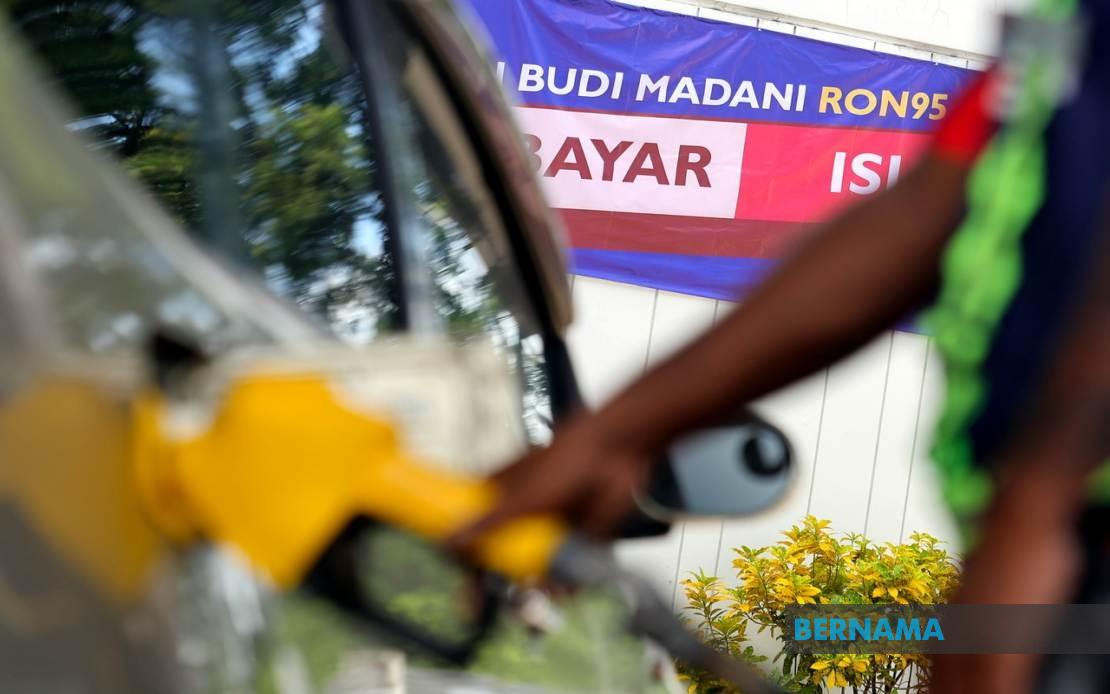
The BUDI MADANI RON95 programme, introduced since September of the previous year, has emerged as the centrepiece of Malaysia's strategy for managing fuel market volatility. The mechanism operates through a combination of price ceiling and supply quota mechanisms that effectively decouple domestic petrol costs from international benchmarks. This structure allowed Malaysian consumers to purchase fuel at RM1.99 per litre even when global prices spiked to RM5, demonstrating the substantial gap between what the state pays and what consumers bear.
Liew's parliamentary response addressed concerns that mounting petroleum subsidies might necessitate cuts to other social programmes. The supplementary question from MP Mohd Sany Hamzan specifically probed whether the government intended to reduce food subsidies, cash transfers, or educational assistance to offset fuel costs. The Deputy Finance Minister's firm refusal to contemplate such reductions indicates a political calculation that social spending reductions would prove more damaging than absorbing the petroleum burden directly.
The uniqueness of Malaysia's approach, according to Liew, lies in its ability to maintain both price stability and physical supply security simultaneously. He noted that while global uncertainties continue to buffet energy markets, Malaysian motorists enjoy reliable access to fuel at controlled prices—a privilege not universally available across comparable developing economies. This dual achievement reflects coordination between the government, the Central Bank, and state-owned energy enterprises to manage both affordability and logistics.
The West Asia conflict has served as a revealing test of Malaysia's subsidy infrastructure. When regional instability peaked in early spring, triggering international oil market gyrations, the BUDI MADANI mechanism successfully shielded households and businesses from direct exposure. This insulation proved particularly valuable for transport-dependent sectors, small traders reliant on fuel costs, and working Malaysians already managing tight household budgets. Without such protections, the economic ripple effects would likely have cascaded through multiple sectors.
For Malaysian citizens, the government's subsidy commitment carries both immediate and longer-term implications. In the near term, continued price controls mean household budgets remain predictable and manageable, supporting consumption patterns and business planning. Over the medium term, however, the escalating cost of subsidies raises questions about fiscal sustainability and whether such support levels can be maintained if oil prices remain elevated or geopolitical tensions persist indefinitely.
The parliamentary exchange also illuminates the political economy underlying Malaysia's approach to social policy. By refusing to reduce subsidies despite fiscal strain, the government signals that alleviating household cost pressures ranks among its highest policy objectives. This stance reflects both electoral considerations—subsidies enjoy broad popular support—and a conviction that social cohesion depends on maintaining purchasing power for ordinary Malaysians during volatile global periods.
Southeast Asian observers may find Malaysia's approach instructive amid broader regional debates about subsidy reform. While many countries face pressure to reduce support for fuel and food, citing fiscal unsustainability, Malaysia's government has chosen to absorb those costs directly. Whether this proves fiscally prudent or merely postpones necessary adjustments remains contested, but the political messaging is unambiguous: current living standards for ordinary Malaysians will not deteriorate as a consequence of global market shocks.

